Image sourcing: see credits & licences
The olm (Proteus anguinus) is an amphibian of the family Proteidae, in the order Urodela.
Quick answer
The olm (Proteus anguinus) is a blind, pale cave salamander of Dinaric Alps karst waters in Slovenia, Croatia, and Bosnia. It can live for decades, survives years without food, eats cave crustaceans and worms, and is listed Vulnerable as groundwater pollution and habitat disturbance threaten subterranean aquifers.
Top questions about the Olm
Olm facts at a glance
- Weight 20 g
- Length 30 cm
- Top speed 1 km/h
- Lifespan 70 years
| Scientific name | Proteus anguinus |
|---|---|
| Diet | Carnivore (cave invertebrates) |
| Habitat | Subterranean limestone caves and aquifers |
| Lifespan | Around 70 years in the wild (varies by population and captivity). |
| Weight | About 0.02 kg typical adult mass (sex and region vary). |
| Top speed | Up to roughly 1 km/h when moving at speed. |
| Conservation status | Vulnerable (IUCN) |
| Kingdom | Animalia |
|---|---|
| Phylum | Chordata |
| Class | Amphibia |
| Order | Urodela |
| Family | Proteidae |
| Genus | Proteus |
Where it lives
The olm (Proteus anguinus) is native to Underground karst waters of the Dinaric Alps in Slovenia, Croatia, and Bosnia. — recorded across Europe in this guide’s range summary.
For occurrence records, see GBIF species search and sources below.
How big is a olm?
An adult olm measures 30 cm long — about 17% of the height of an average adult person (1.73 m) — and weighs around 20 g, a small fraction of an average adult’s body weight (70 kg).
Length vs an average adult’s height (to scale)
What is a group of olms called?
Group name (collective noun)
A group of Olms is called a colony.
Baby name
A baby Olm is called a larva.
Explore more animal collective nouns and baby animal names .
Blind life underground
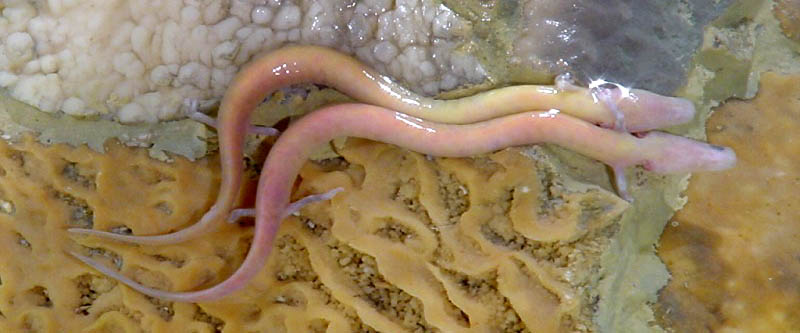
Eyes are regressed under skin; olms navigate by smell, water pressure, and electroreception. External gills and a elongated body suit permanent aquatic life in darkness. Skin is translucent pinkish-white.
Sparse cave prey
They eat small crustaceans, worms, and other invertebrates washed into or living in cave streams. Metabolism is extremely slow — individuals can endure long fasts.
Dinaric karst aquifers
Subterranean limestone caves and aquifers of the Dinaric Alps — Slovenia's Postojna region is famous — plus Croatia and Bosnia. Across its range it is tied to subterranean limestone caves and aquifers, and field accounts emphasise this species’ distinctive ecology rather than generic habitat labels.
Vulnerable groundwater icon
IUCN lists olms Vulnerable. Industrial and agricultural pollution entering karst sinks, water extraction, and tourist cave traffic can harm populations that reproduce rarely.
Explore the Olm
Close relatives
- Mudpuppy Same family
- Axolotl Same order
- Chinese Giant Salamander Same order
- Smooth Newt Same order
Collections
Range & geography
Conservation status of the Olm
The olm (Proteus anguinus) is listed as Vulnerable on the IUCN Red List. Vulnerable (VU) means a species faces a high risk of extinction in the medium-term future. It is the lowest-risk of the three 'threatened' IUCN categories — one step below Endangered, which is itself below Critically Endangered — and is often an early warning that a population is in trouble.
Main threats to the olm
- Groundwater pollution from agriculture and industry
- Hydrological changes to karst systems
- Collection for the pet trade
- Tourism disturbance in caves
Olm (Proteus anguinus) was most recently assessed for the IUCN Red List in 2021. Look up on the IUCN Red List .
Frequently asked questions about the Olm
Why are olms white and blind?
Living in perpetual darkness, they lost functional eyes and pigment — classic cave-animal traits.
How long can an olm live?
Decades; some estimates suggest lifespans approaching a century under ideal conditions.
Can olms go years without eating?
Yes — their slow metabolism allows survival through long periods of scarce food.
Where do olms live?
Underground karst waters of the Dinaric Alps in Slovenia, Croatia, and Bosnia.
Are olms protected?
Yes — they are legally protected in their range countries and listed Vulnerable by IUCN.
What is a group of olms called?
A group of Olms is called a colony.
What is a baby olm called?
A baby Olm is called a larva.
Sources & references
This guide is compiled and reviewed against established zoological and conservation references. Key sources for the Olm:
-
IUCN Red List of Threatened Species
Conservation status (Vulnerable) reflects the IUCN Red List category for Proteus anguinus, most recently assessed in 2021.
-
iNaturalist — observations & photos
Search citizen-science observations and community IDs for Proteus anguinus. Useful for range checks and recent sightings — not a substitute for formal Red List status.
-
GBIF — occurrence data
Global Biodiversity Information Facility species search for Proteus anguinus. Explore published occurrence records used in range research.
-
Global Animal Guide editorial standards
How we research, source, review, and update every guide for accuracy.