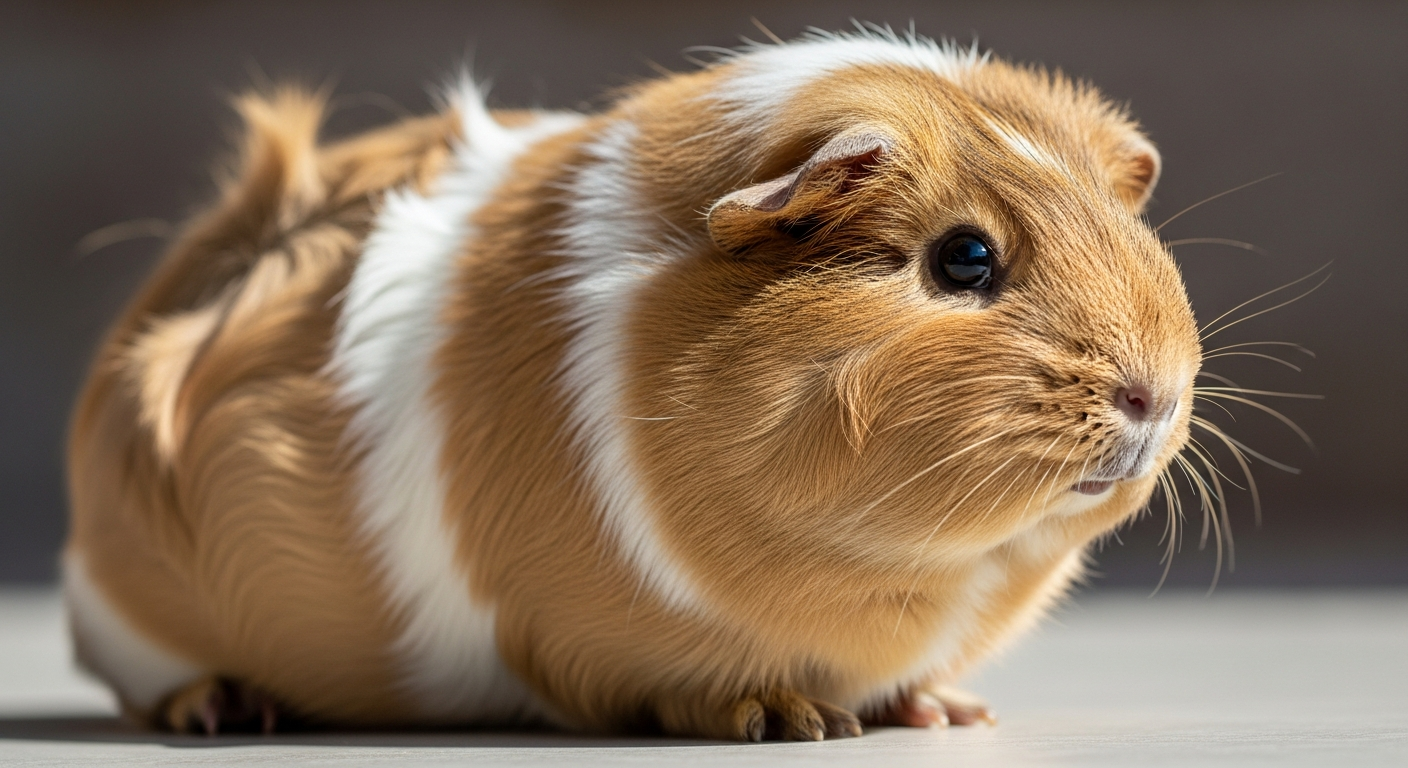
Abyssinian
Quick answer
The Abyssinian is a popular guinea pig breed famous for the rosettes, or swirling cowlicks, covering its short, rough coat. Lively, bold, and sociable, it makes an entertaining companion but suits owners ready to give it attention and gentle grooming.
Abyssinian at a glance
| Origin | South America (Andes) |
|---|---|
| Size | Medium (700–1,200 g) |
| Weight | 700–1,200 g (1.5–2.6 lb) |
| Lifespan | 5–7 years |
| Coat | Short, rough coat with rosettes; light regular brushing |
| Temperament | Playful, bold, sociable |
| Good with | Families, older children, owners who enjoy interaction |
History of the Abyssinian
The Abyssinian is one of the oldest guinea pig breeds, despite its name having no link to Abyssinia in Africa. It was a favorite show animal in Victorian-era England, where breeders prized the symmetry of its rosettes. The distinctive coat is created by a pattern of cowlicks that radiate from points across the body. Selectively bred for well-defined ridges and rosettes, the Abyssinian remains a beloved companion and show breed worldwide.
Interesting facts about the Abyssinian
- The Abyssinian's coat is covered in rosettes, swirls of fur that radiate from a center point.
- Show-quality Abyssinians are judged on having well-defined, symmetrical ridges and rosettes.
- Despite the name, the breed has no connection to Abyssinia in Africa.
- Abyssinians are often described as one of the most mischievous and energetic breeds.
Common health issues in the Abyssinian and how to help
Like all guinea pig breeds, the Abyssinian can be more prone to a few specific health conditions. Knowing the early signs helps you act quickly — always consult a qualified vet for diagnosis and treatment.
Vitamin C deficiency (scurvy)
What it is: Like all guinea pigs, Abyssinians cannot produce vitamin C, and a deficiency can lead to swollen joints, a rough coat, lethargy, and poor appetite.
How to help: Provide fresh greens, hay, and a vet-recommended vitamin C source daily, and consult a vet at the first sign of stiffness so it can be diagnosed and treated.
Skin issues and mites
What it is: The textured rosette coat can trap debris and is prone to mange mites, causing intense itching, scratching, hair loss, and flaky skin.
How to help: Check the coat and skin regularly during grooming and see a vet if you notice itching or bald patches, as a vet can diagnose mites and prescribe appropriate treatment.
Dental (overgrown teeth)
What it is: Their continuously growing teeth can overgrow without enough chewing, leading to drooling, dropped food, and weight loss.
How to help: Offer unlimited grass hay to promote natural wear and have a vet check the teeth at routine visits so any overgrowth can be trimmed.
This is general information for owners, not veterinary advice. If you are worried about your guinea pig's health, contact your vet.
Frequently asked questions about the Abyssinian
Why does the Abyssinian guinea pig have a rough coat?
Its coat grows in rosettes, swirling cowlicks that radiate from central points, giving the Abyssinian its signature spiky, textured look.
Are Abyssinian guinea pigs hard to groom?
Their short coat is fairly easy to maintain, but the rosettes can trap debris, so light regular brushing and occasional checks keep the fur clean and healthy.
Are Abyssinian guinea pigs good pets?
Yes. They are lively, sociable, and entertaining, making great pets for families and older children who enjoy interacting with an energetic guinea pig.