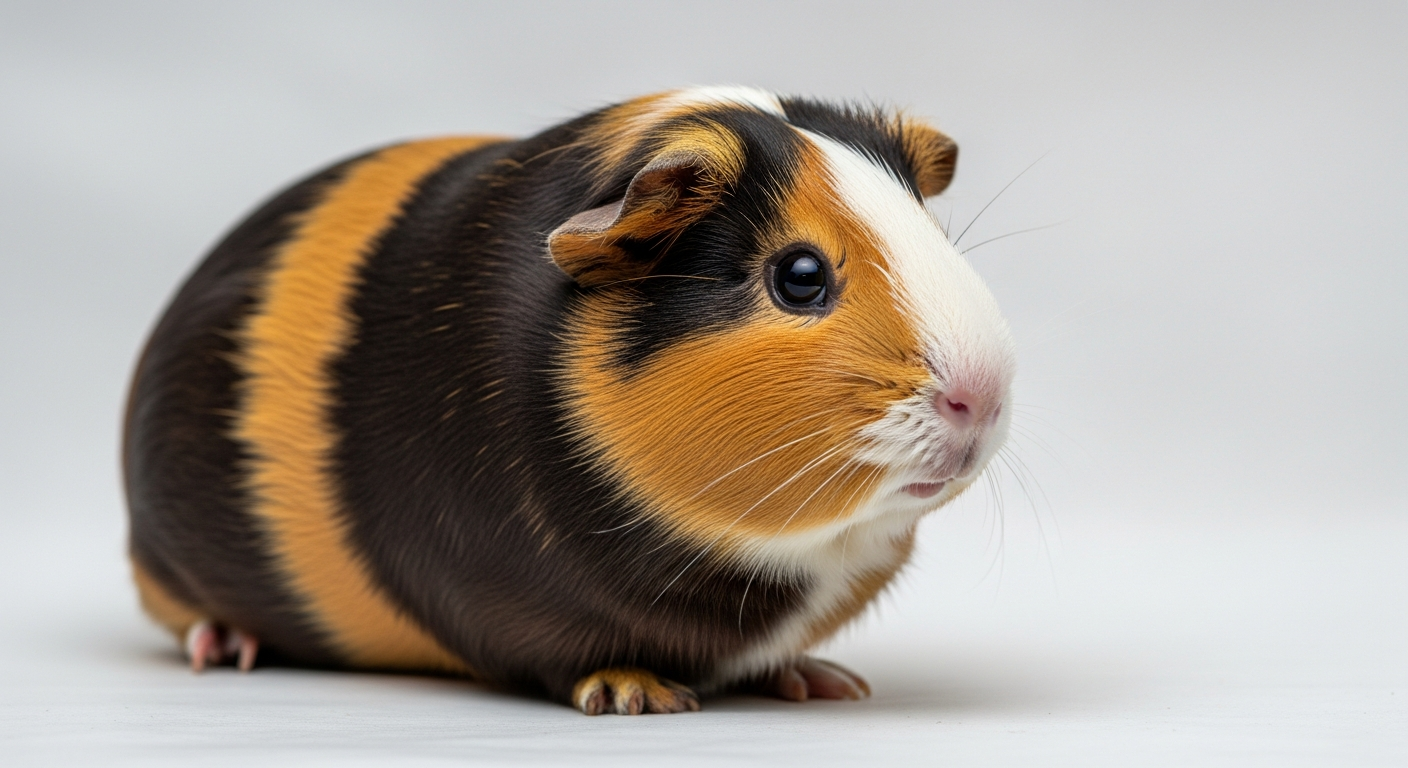
American
Quick answer
The American is the most popular guinea pig breed, recognized for its short, smooth coat and gentle, friendly temperament. Its very low grooming needs and tolerance of handling make it an ideal first pet for families and beginners.
American at a glance
| Origin | South America (Andes) |
|---|---|
| Size | Medium (700–1,200 g) |
| Weight | 700–1,200 g (1.5–2.6 lb) |
| Lifespan | 5–7 years |
| Coat | Short, smooth, glossy coat; very low grooming needs |
| Temperament | Calm, friendly, easygoing |
| Good with | Families, children, first-time owners, calm households |
History of the American
The American guinea pig descends from cavies domesticated thousands of years ago in the Andes of South America, where Inca peoples kept them for food and ceremony. European traders brought them home in the 1500s, and the short, smooth-coated type became the standard pet form. Once known as the English guinea pig, it was renamed the American in the United States and remains the breed most people picture when they think of a guinea pig.
Interesting facts about the American
- The American is the breed most people picture when they imagine a guinea pig.
- Its short, smooth coat needs almost no grooming compared with long-haired breeds.
- It was once called the English guinea pig before being renamed in the United States.
- Americans are often described as the most laid-back and easy to handle of all breeds.
Common health issues in the American and how to help
Like all guinea pig breeds, the American can be more prone to a few specific health conditions. Knowing the early signs helps you act quickly — always consult a qualified vet for diagnosis and treatment.
Vitamin C deficiency (scurvy)
What it is: Guinea pigs cannot make their own vitamin C, so a shortfall can cause a rough coat, swollen joints, reluctance to move, and poor appetite.
How to help: Offer fresh grass hay, leafy greens, and a vet-recommended vitamin C source daily, and see a vet promptly if you notice stiffness or weakness so it can be diagnosed and corrected.
Respiratory infections
What it is: Their sensitive lungs make guinea pigs prone to chest infections, with signs such as sneezing, discharge, wheezing, or labored breathing.
How to help: Keep housing clean, dry, and dust-free with good ventilation, and seek veterinary care quickly, as a vet can diagnose the cause and manage it before it becomes serious.
Dental (overgrown teeth)
What it is: A guinea pig's teeth grow continuously, and without enough to gnaw on they can overgrow, causing drooling, dropped food, and weight loss.
How to help: Provide unlimited grass hay to encourage natural chewing and have a vet check the teeth regularly, as they can trim and manage overgrowth.
This is general information for owners, not veterinary advice. If you are worried about your guinea pig's health, contact your vet.
Frequently asked questions about the American
Are American guinea pigs good for beginners?
Yes. The American's short coat needs very little grooming and its calm, friendly nature makes it one of the best guinea pig breeds for first-time owners and families.
How much grooming does an American guinea pig need?
Very little. Its short, smooth coat stays tidy with the occasional gentle brush, unlike long-haired breeds that need daily attention.
How long do American guinea pigs live?
With a good diet, clean housing, and veterinary care, American guinea pigs usually live 5 to 7 years, sometimes longer.