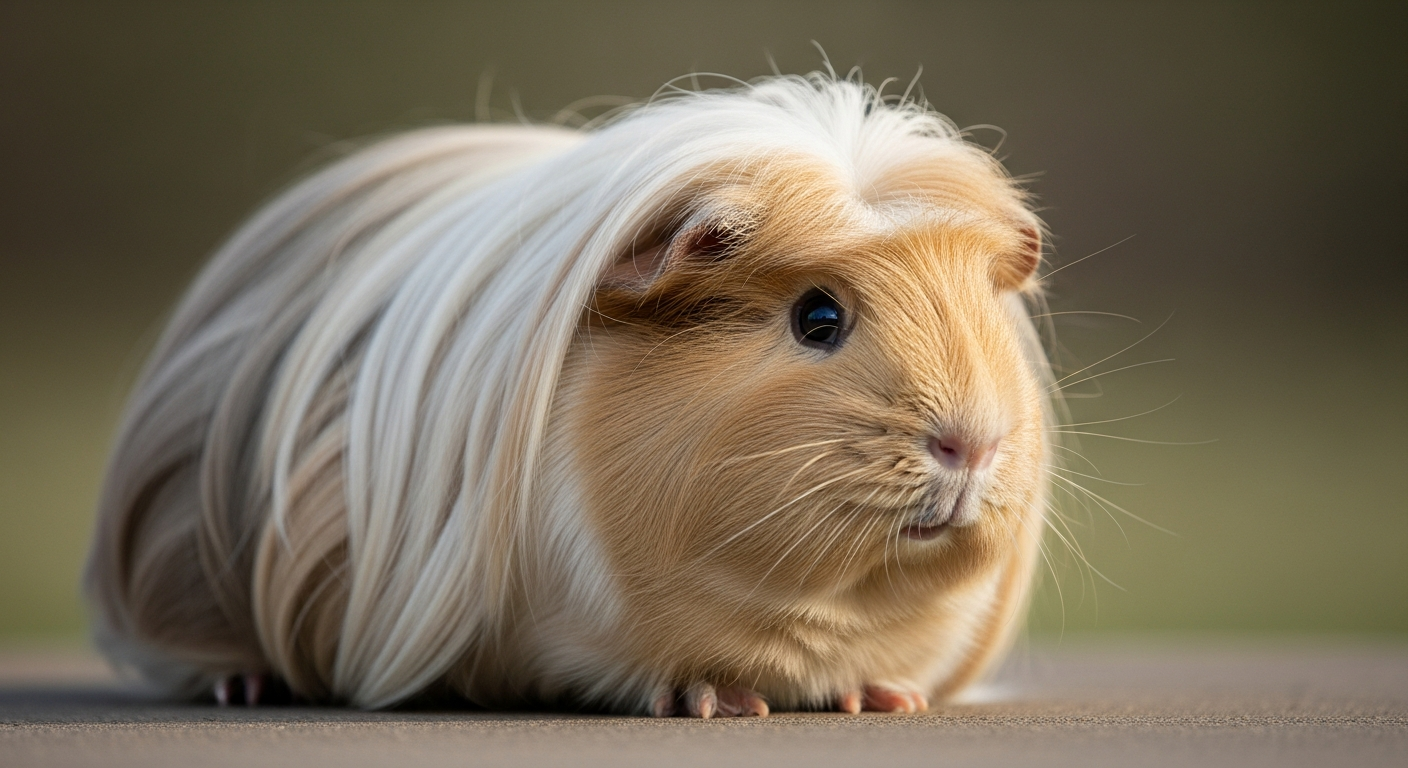
Peruvian
Quick answer
The Peruvian is a long-haired guinea pig breed famous for its silky coat that can grow over 30 cm long. Striking but high-maintenance, it suits owners willing to commit to daily brushing and trimming to keep the coat clean and tangle-free.
Peruvian at a glance
| Origin | South America (Andes) |
|---|---|
| Size | Medium (700–1,200 g) |
| Weight | 700–1,200 g (1.5–2.6 lb) |
| Lifespan | 5–7 years |
| Coat | Long, silky, fast-growing coat; needs daily brushing and trimming |
| Temperament | Curious, gentle, alert |
| Good with | Experienced owners, dedicated groomers, calmer homes |
History of the Peruvian
The Peruvian is one of the oldest long-haired guinea pig breeds, traced to South America and later refined as a show animal in France and England in the 1800s. Breeders selected for ever-longer, flowing hair that sweeps forward over the face. The coat grows from rosettes on the rump, creating a dramatic mane that has made the Peruvian a star of the show ring. Its glamorous looks come with demanding grooming needs that have kept it a specialist's favorite.
Interesting facts about the Peruvian
- A Peruvian's coat can grow more than 30 cm long and reach the floor.
- The hair sweeps forward over the face, sometimes making it hard to tell front from back.
- Show owners often wrap or trim the coat to keep it clean and tidy.
- It is considered one of the oldest long-haired guinea pig breeds.
Common health issues in the Peruvian and how to help
Like all guinea pig breeds, the Peruvian can be more prone to a few specific health conditions. Knowing the early signs helps you act quickly — always consult a qualified vet for diagnosis and treatment.
Skin issues from a soiled coat
What it is: The long coat easily traps droppings, urine, and bedding, which can irritate the skin and lead to sores or infection if left dirty.
How to help: Brush daily, trim the coat as needed, and keep bedding clean, and see a vet if the skin becomes red or sore so the cause can be diagnosed and treated.
Vitamin C deficiency (scurvy)
What it is: Peruvians cannot make their own vitamin C, so a shortfall can cause swollen joints, a dull coat, weakness, and reduced appetite.
How to help: Feed fresh greens, hay, and a vet-recommended vitamin C source each day, and consult a vet early if you notice stiffness or low energy.
Dental (overgrown teeth)
What it is: Continuously growing teeth can overgrow without enough chewing, causing drooling, difficulty eating, and weight loss.
How to help: Provide unlimited grass hay for natural wear and have a vet check the teeth regularly so any overgrowth can be managed.
This is general information for owners, not veterinary advice. If you are worried about your guinea pig's health, contact your vet.
Frequently asked questions about the Peruvian
How long does a Peruvian guinea pig's coat grow?
A Peruvian's silky coat can grow more than 30 cm long, sometimes reaching the floor, which is why regular trimming is common for pets.
Are Peruvian guinea pigs high-maintenance?
Yes. Their long coat tangles and traps debris easily, so they need daily brushing and trimming, making them better suited to experienced or dedicated owners.
Are Peruvian guinea pigs good for beginners?
They are gentle and curious but their demanding grooming needs make them less ideal for beginners than short-coated breeds like the American.