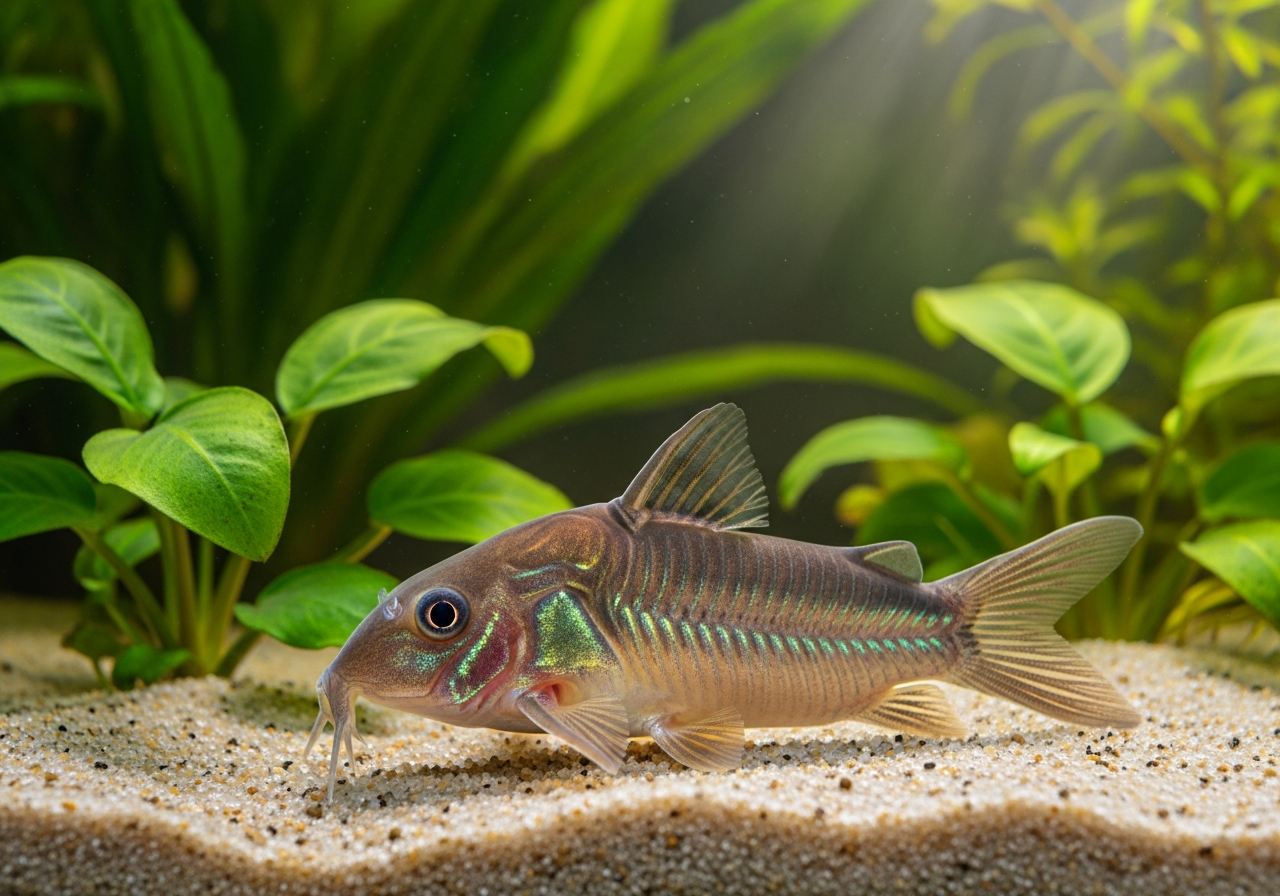
Corydoras Catfish
Quick answer
The Corydoras, often called a cory catfish, is a small, peaceful bottom-dwelling fish that is happiest in a group. It busily forages along the substrate and suits calm community tanks, where it needs a soft or smooth bottom to protect its delicate barbels.
Corydoras Catfish at a glance
| Origin | Streams and rivers of South America |
|---|---|
| Size | Small (about 4-7 cm depending on species) |
| Weight | A few grams |
| Lifespan | About 5-10 years |
| Appearance | Bronze, albino, spotted, and panda patterns with armored plates; sensitive barbels need a soft or smooth substrate |
| Temperament | Peaceful, social, busy bottom-dweller |
| Good with | Peaceful community tanks; must be kept in a group of their own kind |
History of the Corydoras Catfish
Corydoras catfish come from the streams and rivers of South America, where many species live in shoals along sandy and muddy bottoms. They became aquarium favorites for their gentle nature and charming, busy foraging behavior. Dozens of species are kept in the hobby, from the bronze cory to the spotted and panda varieties. Their peaceful temperament and useful clean-up habits have made them a beloved addition to community tanks worldwide.
Interesting facts about the Corydoras Catfish
- Corydoras can gulp air at the surface using part of their gut to breathe.
- They have sensitive barbels, like whiskers, for finding food on the bottom.
- They are protected by bony armored plates instead of typical scales.
- Many species are happiest foraging together in a shoal.
Common health issues in the Corydoras Catfish and how to help
Like all fish breeds, the Corydoras Catfish can be more prone to a few specific health conditions. Knowing the early signs helps you act quickly — always consult a qualified vet for diagnosis and treatment.
Barbel erosion
What it is: Corydoras can wear down or infect their delicate barbels on sharp gravel or in dirty substrate, which can affect their ability to find food.
How to help: A soft sand or smooth substrate and clean conditions protect the barbels, and an aquatic or exotics vet can advise if they become eroded or infected.
Ich (white spot)
What it is: Ich shows as tiny white spots and is common when fish are stressed or water conditions change quickly.
How to help: Stable, clean, warm water reduces the risk, and a vet can confirm the diagnosis and recommend a treatment that is safe for sensitive catfish.
Water-quality stress
What it is: As bottom-dwellers, corydoras are exposed to waste that settles on the substrate, so poor water quality can stress them and dull their activity.
How to help: Regular substrate cleaning and partial water changes keep conditions healthy, and a vet can help if fish remain unwell despite good water.
This is general information for owners, not veterinary advice. If you are worried about your fish's health, contact your vet.
Frequently asked questions about the Corydoras Catfish
How many corydoras should I keep together?
Corydoras are social fish and should be kept in a group of their own kind rather than alone. A small shoal helps them feel secure and shows off their busy, charming behavior.
What substrate is best for corydoras?
Soft sand or smooth, rounded substrate is best because corydoras forage with delicate barbels that can be damaged by sharp gravel. Keeping the bottom clean also protects them from infection.
Are corydoras good community fish?
Yes, corydoras are peaceful and get along well with calm tankmates, making them excellent community fish. They also help tidy up leftover food from the bottom of the tank.