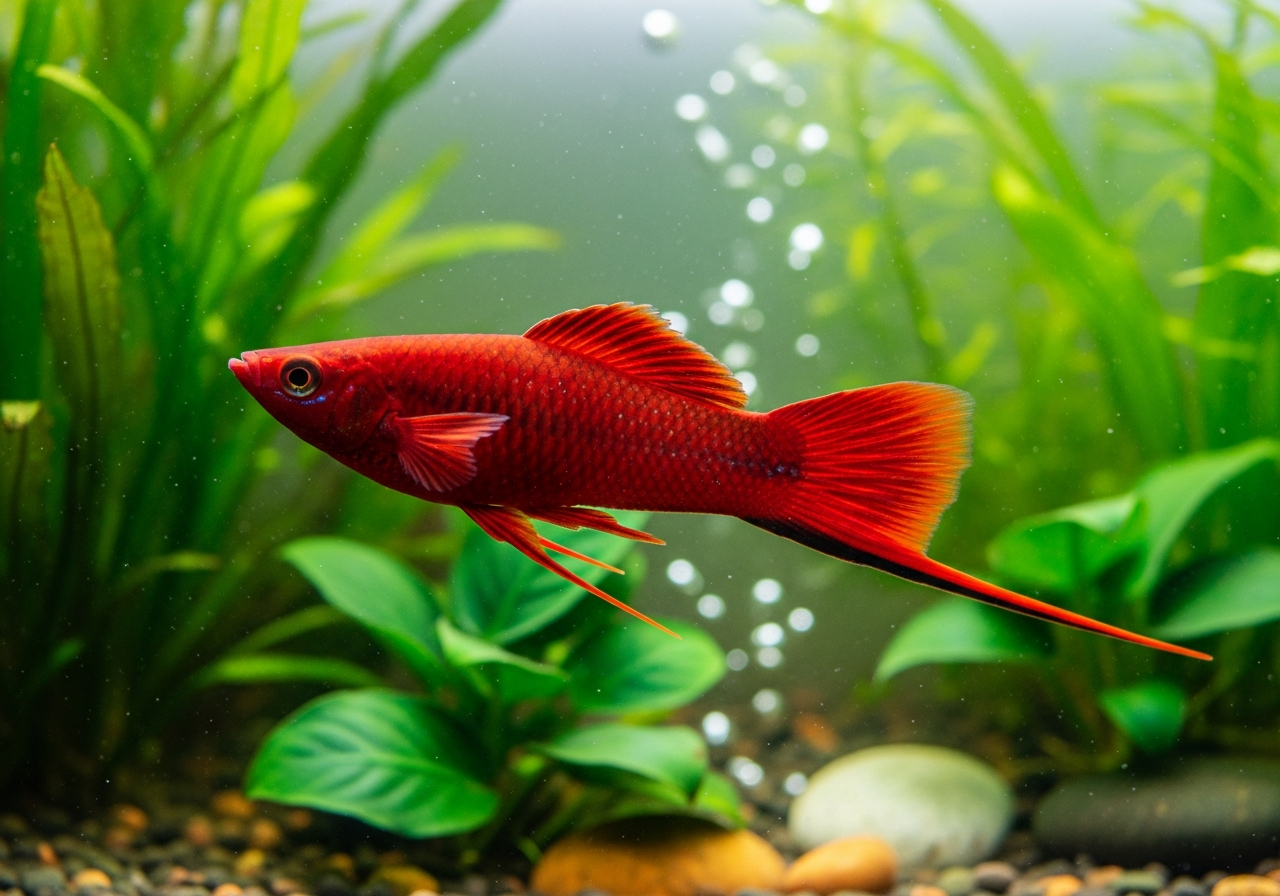
Swordtail
Quick answer
The Swordtail is a hardy, active livebearer named for the long sword-like extension on the male's tail. It is peaceful, easy to keep, and suits community tanks, though active males may chase, and like its relatives it breeds readily.
Swordtail at a glance
| Origin | Central America (Mexico and surrounding region); a global aquarium fish |
|---|---|
| Size | Small to medium (about 8-12 cm including the tail extension) |
| Weight | A few grams |
| Lifespan | About 3-5 years |
| Appearance | Red, green, orange, and tuxedo colors; males carry a long sword-shaped tail extension that thrives in open swimming space |
| Temperament | Active, peaceful, social |
| Good with | Community tanks and beginner aquarists with room to swim; best in small groups |
History of the Swordtail
The Swordtail is native to the fresh waters of Central America, particularly Mexico, and is a close relative of the platy. Its name comes from the long, sword-like lower edge of the male's tail. Breeders have developed many colors, including red, green, and tuxedo varieties, while keeping its easygoing nature. Hardy and lively, it has long been a popular choice for beginner and community aquariums around the world.
Interesting facts about the Swordtail
- Only the male swordtail has the long sword-like tail extension.
- Swordtails are close relatives of platies and can interbreed with them.
- They are strong, active swimmers that appreciate plenty of open space.
- Like other livebearers, they give birth to live young.
Common health issues in the Swordtail and how to help
Like all fish breeds, the Swordtail can be more prone to a few specific health conditions. Knowing the early signs helps you act quickly — always consult a qualified vet for diagnosis and treatment.
Ich (white spot)
What it is: Ich appears as small white spots and is common when swordtails are stressed or water conditions shift suddenly.
How to help: Stable, clean, warm water reduces outbreaks, and an aquatic or exotics vet can confirm the diagnosis and advise on safe treatment.
Fin rot
What it is: Fin rot frays the fins, including the male's sword, and is usually linked to poor water quality or crowding.
How to help: Good filtration, regular water changes, and sensible stocking help prevent it, and a vet can advise if the fins keep deteriorating.
Water-quality stress
What it is: Swordtails are hardy but still suffer in an uncycled or overstocked tank, showing faded color, clamped fins, or low energy.
How to help: Keeping a cycled tank with regular partial water changes protects them, and a vet can help if fish stay unwell despite clean water.
This is general information for owners, not veterinary advice. If you are worried about your fish's health, contact your vet.
Frequently asked questions about the Swordtail
Do female swordtails have a sword?
No, only male swordtails grow the long sword-like extension on the tail. Females have a plain, rounded tail and are usually a little larger in the body.
Are swordtails good community fish?
Yes, swordtails are generally peaceful and active, making them good community fish with calm tankmates. Active males may chase, so plenty of swimming space and a balanced group help.
Do swordtails jump?
Swordtails are strong, active swimmers and can jump, so a well-fitted lid is recommended. Plenty of open space and stable conditions help keep them settled.