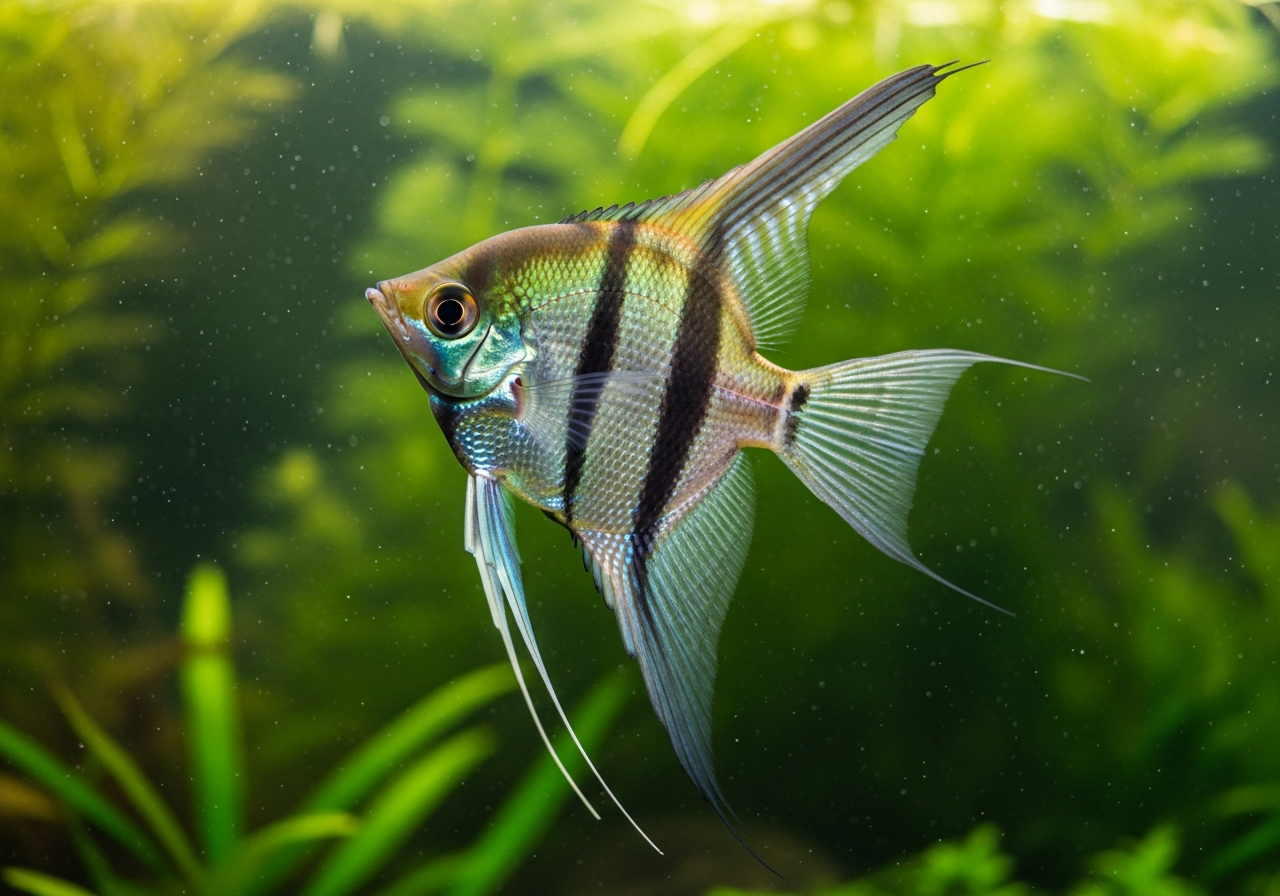
Angelfish
Quick answer
The Angelfish is a tall, elegant freshwater cichlid from the Amazon, popular as a graceful centerpiece fish. It needs a deep, roomy tank and can be territorial, especially when breeding, so tankmates should be chosen with care.
Angelfish at a glance
| Origin | Slow waters of the Amazon basin in South America |
|---|---|
| Size | Medium and tall (often 12-15 cm long, taller with fins) |
| Weight | A few grams |
| Lifespan | About 8-10 years |
| Appearance | Silver with dark bars, plus marble, koi, and gold varieties; tall trailing fins that need open, snag-free swimming space |
| Temperament | Graceful, intelligent, sometimes territorial |
| Good with | Experienced keepers with a tall, roomy tank; calm tankmates too large to be seen as food |
History of the Angelfish
The Angelfish comes from the slow, warm waters of the Amazon basin in South America, where its tall, flattened body helps it slip between plant stems. It became a hobby favorite for its graceful shape and has been bred into many colors and fin types, including marble, koi, and veil varieties. As a cichlid, it is more intelligent and territorial than typical community fish. Its striking silhouette has made it one of the most recognizable aquarium fish in the world.
Interesting facts about the Angelfish
- Angelfish are cichlids, a more intelligent and territorial family than most community fish.
- Their tall, flattened bodies help them hide among plant stems.
- Pairs often choose a flat surface to lay and guard their eggs.
- Selective breeding has produced marble, koi, gold, and veil varieties.
Common health issues in the Angelfish and how to help
Like all fish breeds, the Angelfish can be more prone to a few specific health conditions. Knowing the early signs helps you act quickly — always consult a qualified vet for diagnosis and treatment.
Ich (white spot)
What it is: Ich appears as small white spots and can affect angelfish when they are stressed or water conditions change quickly.
How to help: Stable, clean, warm water reduces outbreaks, and an aquatic or exotics vet can confirm the diagnosis and advise on safe treatment.
Fin rot
What it is: Their long, trailing fins are prone to fin rot, which frays or recedes the fins, often linked to poor water quality.
How to help: Clean water and snag-free decor help protect the fins, and a vet can advise if the fins keep deteriorating despite good conditions.
Water-quality stress
What it is: Angelfish are sensitive to poor or unstable water, which can dull their color, clamp their fins, and lower their appetite.
How to help: A mature, well-filtered tank with regular partial water changes keeps them stable, and a vet can help if fish remain unwell despite clean water.
This is general information for owners, not veterinary advice. If you are worried about your fish's health, contact your vet.
Frequently asked questions about the Angelfish
How big a tank do angelfish need?
Angelfish grow tall and need a deep, roomy tank rather than a shallow one. Adequate height and space let them swim comfortably and reduce territorial squabbles.
Are angelfish aggressive?
Angelfish are generally graceful but, as cichlids, they can be territorial, especially when breeding. Choosing calm tankmates that are too large to be eaten helps keep the peace.
Can angelfish live with small fish like neon tetras?
Large angelfish may view very small fish as food, so mixing them with tiny species can be risky. Tankmates of a moderate size and calm temperament are usually a safer choice.