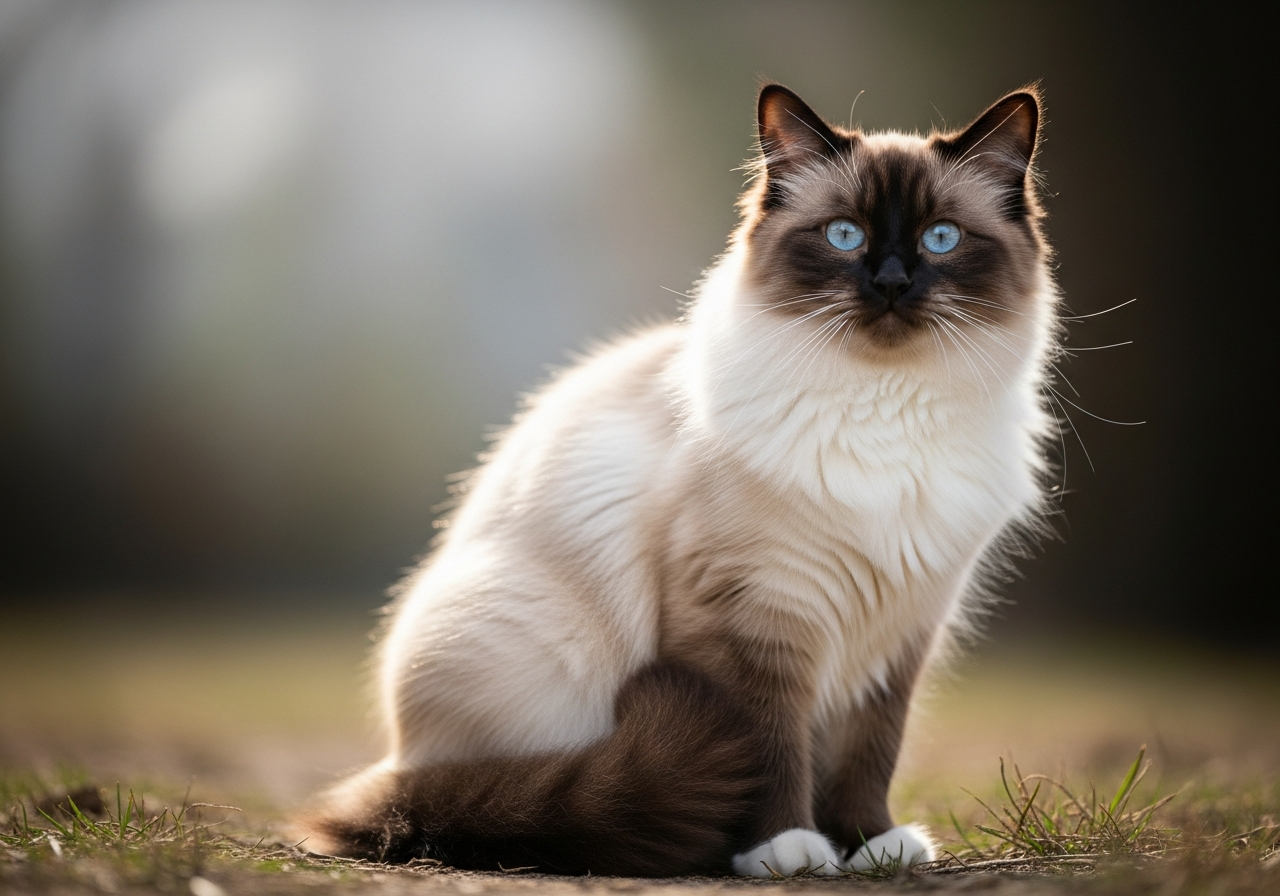
Ragdoll
Quick answer
The Ragdoll is a large, blue-eyed, semi-longhaired cat famous for relaxing and going limp when picked up. Gentle, affectionate, and people-oriented, it loves following owners around and makes a devoted, easygoing lap cat.
Ragdoll at a glance
| Origin | United States (California) |
|---|---|
| Size | Large (4.5–9 kg) |
| Weight | 4.5–9 kg (10–20 lb) |
| Lifespan | 12–17 years |
| Coat | Semi-long silky coat; needs brushing twice weekly |
| Temperament | Docile, affectionate, relaxed |
| Good with | Families, children, seniors, multi-pet homes |
History of the Ragdoll
The Ragdoll was developed in the 1960s by breeder Ann Baker in Riverside, California, who bred a longhaired white cat named Josephine with other gentle, docile cats. She selected for a placid temperament, large size, and striking blue eyes, and trademarked the name. The breed spread quickly thanks to its calm nature and pointed coloring, gaining recognition from major cat registries and becoming one of the most popular pedigreed cats in the world.
Interesting facts about the Ragdoll
- Ragdolls often go limp and relaxed when picked up, inspiring their name.
- Kittens are born white and develop their pointed colors over weeks.
- They are among the largest cat breeds, with males reaching 9 kilograms.
- Ragdolls are known for following their owners from room to room like dogs.
Love cats but can't take one in? You can sponsor a cat welfare programme through World Animal Rescue Network, which helps community cats get food and veterinary care.
Common health issues in the Ragdoll and how to help
Like all cat breeds, the Ragdoll can be more prone to a few specific health conditions. Knowing the early signs helps you act quickly — always consult a qualified vet for diagnosis and treatment.
Hypertrophic cardiomyopathy (HCM)
What it is: HCM thickens the heart muscle and can develop without clear early signs in Ragdolls.
How to help: A vet can screen with a heart scan and manage it with medication if needed; responsible breeders test their cats.
Urinary tract issues
What it is: Ragdolls can be prone to bladder and urinary problems, which may cause straining or frequent trips to the litter box.
How to help: Encouraging water intake helps, and a vet should be seen promptly for any straining, as urinary blockages can become serious.
Obesity
What it is: Their calm, laid-back nature means Ragdolls can gain weight easily.
How to help: Measured feeding and regular play help, and a vet can recommend a healthy weight and diet plan.
This is general information for owners, not veterinary advice. If you are worried about your cat's health, contact your vet.
Frequently asked questions about the Ragdoll
Why are Ragdoll cats so floppy?
Ragdolls were selectively bred for an exceptionally relaxed temperament, so many go limp and calm when held. This trademark trait is behavioral rather than a medical condition.
Are Ragdolls good with children and other pets?
Yes. Ragdolls are gentle, tolerant, and sociable, making them excellent companions for children and other pets. Their easygoing nature means they rarely react aggressively to handling.
Do Ragdoll cats shed a lot?
Ragdolls have a soft, semi-long coat that sheds moderately, especially in spring and fall. Brushing two or three times a week keeps the coat tangle-free and reduces loose hair.