Persian
Quick answer
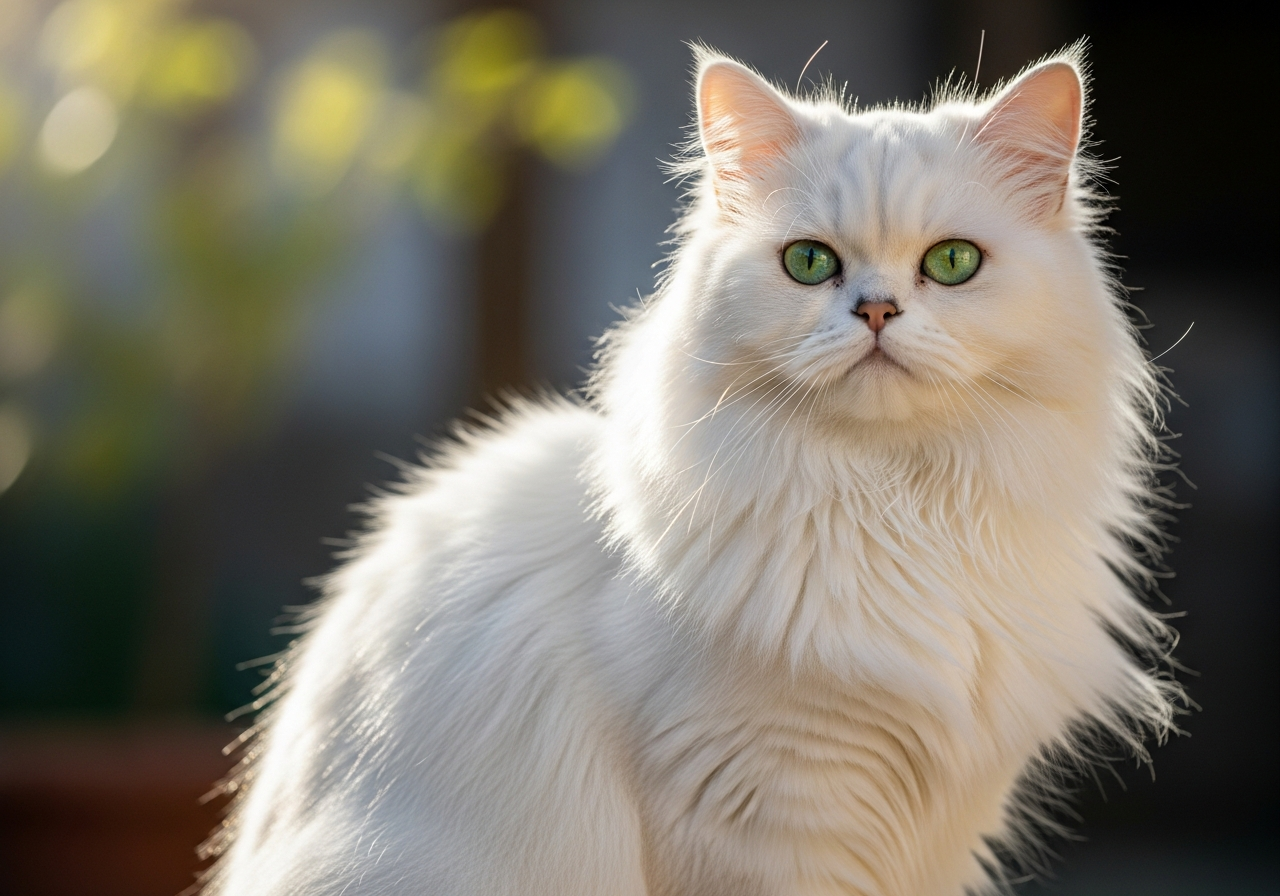
The Persian is a long-haired cat known for its flat face, round eyes, and luxurious flowing coat. Calm, sweet, and docile, it is one of the oldest and most recognizable breeds, suited to quiet indoor homes.
Persian at a glance
| Origin | Iran (Persia) |
|---|---|
| Size | Medium (3–5.5 kg) |
| Weight | 3–5.5 kg (7–12 lb) |
| Lifespan | 12–17 years |
| Coat | Long, dense coat; requires daily brushing to prevent mats |
| Temperament | Quiet, sweet, docile |
| Good with | Calm households, adults, gentle indoor families |
History of the Persian
The Persian traces back to long-haired cats brought to Europe from Persia (modern Iran) and surrounding regions in the 1600s. Selective breeding in Britain and later the United States refined its rounded features and dense coat. By the late 1800s it was a star of early cat shows. Over the twentieth century breeders developed the distinctive flat-faced 'Peke-face' look, making the Persian one of the most popular and pampered pedigreed cats worldwide.
Interesting facts about the Persian
- Persians are one of the oldest known cat breeds, recorded in Europe since the 1600s.
- Their flat-faced look was developed through selective breeding over the last century.
- Persians need daily grooming, as their long coat mats easily without care.
- They are typically quiet, low-energy cats that prefer calm, predictable homes.
If a cat of your own isn't practical right now, you can adopt a cat symbolically through World Animal Rescue Network — it funds rescue and care for community cats.
Common health issues in the Persian and how to help
Like all cat breeds, the Persian can be more prone to a few specific health conditions. Knowing the early signs helps you act quickly — always consult a qualified vet for diagnosis and treatment.
Polycystic kidney disease (PKD)
What it is: PKD is an inherited condition where cysts form in the kidneys and can affect kidney function over time, sometimes causing increased thirst or weight loss.
How to help: A vet can screen for it, and genetic testing of breeding cats helps prevent it; early detection allows supportive care to protect kidney health.
Breathing and tear-duct issues
What it is: Their flat faces can lead to noisy breathing and overflowing tears that stain the fur.
How to help: Gently wiping the face helps, and a vet can advise on managing breathing or tear-duct problems; more moderate facial features are favored in responsible breeding.
Dental disease
What it is: Persians can be prone to crowded teeth and gum problems, which may cause bad breath or discomfort.
How to help: Regular tooth brushing and dental checkups help, and a vet can perform professional cleanings when needed.
This is general information for owners, not veterinary advice. If you are worried about your cat's health, contact your vet.
Frequently asked questions about the Persian
Do Persian cats need a lot of grooming?
Yes. Persians have long, dense coats that tangle quickly, so they need daily brushing to prevent mats. Many also benefit from regular gentle face cleaning around the eyes and occasional baths.
Are Persian cats good for apartments?
Persians suit apartments well because they are calm, quiet, and low-energy. They prefer relaxed indoor environments and are content to lounge rather than climb or roam.
Why do Persian cats have flat faces?
The flat, or 'brachycephalic,' face was developed through selective breeding for a rounded look. Flatter-faced Persians can be prone to tear staining and breathing issues, so responsible breeding favors more moderate features.