The Truth About Lemmings Jumping Off Cliffs
Lemmings don't commit mass suicide — the famous 'lemming jump' was staged for a 1958 Disney film. Here's the truth behind one of nature's biggest myths.
Global Animal Guide · June 8, 2026
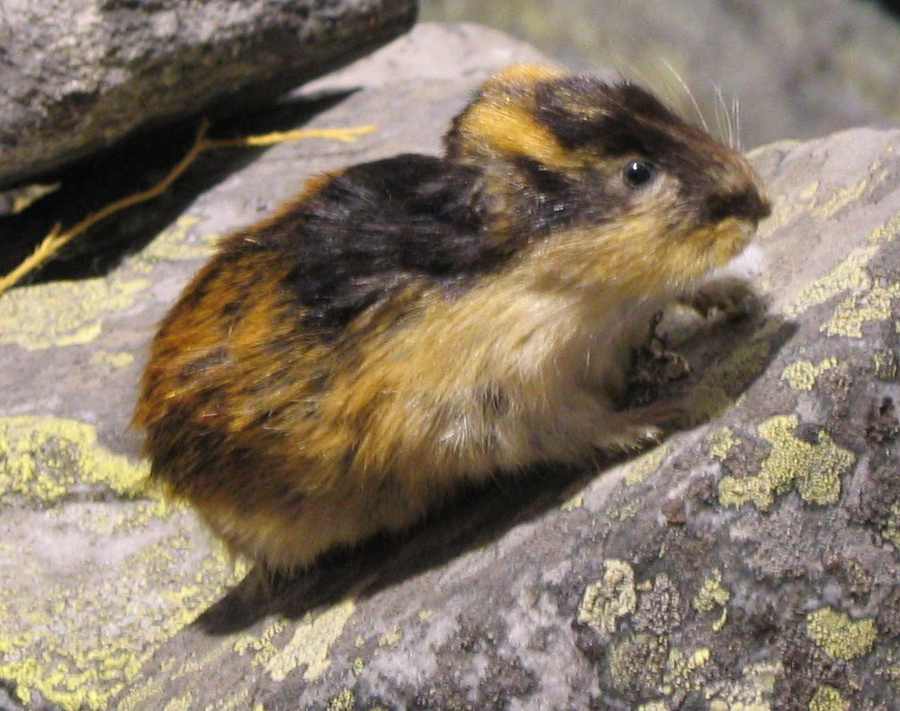
Image sourcing: see credits & licences
Quick answer
No — lemmings do not deliberately jump off cliffs or commit mass suicide. The myth was cemented by a 1958 Disney nature film that staged the footage, with crews driving lemmings off a cliff into a river. In reality, lemmings have dramatic population booms that trigger mass migrations, and some drown while crossing water — but it's not suicide.
No. Lemmings do not throw themselves off cliffs, and no animal known to science practises deliberate mass suicide. The image that everyone carries — a brown river of rodents pouring over a precipice into the sea — was manufactured for a film camera in 1958, and it has outlived every correction issued since.
Where the myth came from
The “suicidal lemming” idea was popularised by Disney’s 1958 documentary White Wilderness, which won an Academy Award. Investigations later revealed the lemming “death plunge” was faked: the animals weren’t even native to the filming location and were reportedly bought, herded onto a snow-covered turntable to create the illusion of a migrating horde, and then driven over a cliff edge into the water for the camera.
The details matter because each one is a separate fabrication stacked on the last. The filming took place far inland, nowhere near the sea the footage implies. The “horde” was a small number of animals recycled through shot after shot, the turntable supplying an endless stream of bodies from a handful of individuals. The cliff was not a migration route but a convenient drop, and the lemmings did not choose it. The narration then supplied the interpretation that the pictures could not: that these animals were compelled by some dark instinct to destroy themselves.
Disney did not invent the underlying folklore, though. Lemmings had been the subject of European tall tales for centuries. Their sudden appearance in enormous numbers across Scandinavian valleys, seemingly from nowhere, prompted early naturalists to speculate that they were generated spontaneously or fell from the sky during storms. A population that materialises out of nothing and then vanishes again invites supernatural explanation. White Wilderness simply gave the oldest confusion its most memorable modern image.
What lemmings actually do
Lemmings are small Arctic rodents with famously boom-and-bust population cycles. When numbers explode, food and space run short, and large numbers disperse in search of new territory. During these mass movements they sometimes cross rivers and lakes; lemmings can swim, but some drown when they misjudge a crossing or are simply overwhelmed in numbers. That’s the kernel of truth the myth grew from — dispersal and accidental drownings, not a death wish.
Dispersal is not migration in the sense that a bird migrates. There is no destination and no return leg. It is pressure release: young animals, mostly, pushed out of saturated ground by aggression and hunger and moving in whatever direction offers space. Because the terrain funnels them — down valleys, along shorelines — thousands of independent decisions can look like a single coordinated column. When that column meets water, individual lemmings do what a lemming does at a river: they swim. Most crossings succeed. Some do not, and the bodies wash up together, which is exactly the kind of evidence that makes a myth feel confirmed.
The Norway lemming is also nothing like the timid, herd-following creature the metaphor implies. It is conspicuously marked in black and yellow rather than camouflaged, and it is aggressive out of all proportion to its size, standing its ground, squeaking and lunging at animals — including humans — hundreds of times its mass. This is not the behaviour of an animal with no interest in survival.
The engine of the cycle
Lemming numbers rise and fall on a rough three-to-four-year rhythm across much of the Arctic, and explaining that rhythm has occupied ecologists for the better part of a century. Lemmings are superbly equipped to boom. They breed under the snow in the subnivean space — the insulated gap between snowpack and ground, where the temperature hovers near freezing regardless of the brutal air above — so reproduction never stops for winter. Litters can follow one another in weeks, and the young mature fast.
What stops them is contested. One line of explanation is food: the mosses and sedges they crop are slow-growing and, once flattened, take seasons to recover, so a peak population eats itself into a crash. Another emphasises predators, particularly small specialists like the stoat and the weasel, which are slim enough to hunt lemmings inside their own tunnels and which reproduce fast enough to follow the boom upward — arriving in force just after the peak and driving the crash deeper than food shortage alone would. A third points to changes within the lemmings themselves at high density: stress, aggression, and poorer-quality offspring. The honest position is that all three contribute, and the balance differs between sites.
Why the crash matters to everything else
The lemming cycle is the metronome of the tundra, because so many predators are geared to it. The snowy owl is the clearest case: in a peak lemming year it may raise a large brood, and in a crash year it may not breed at all, wandering vast distances instead. Skuas and jaegers respond the same way. The red fox, pushing steadily north as the Arctic warms, and the wolverine both take lemmings opportunistically.
The knock-on effects reach species that never eat a lemming. In peak years, predators are so occupied with rodents that ground-nesting birds such as the willow ptarmigan fledge chicks in relative peace. In crash years those same predators switch to eggs and chicks, and nesting success collapses across the tundra. This is not unique to lemmings — the snowshoe hare and lynx run a longer version of the same coupled cycle in the boreal forest — but the Arctic version is unusually tightly wound, in an ecosystem with few enough species that losing one link is felt everywhere.
There is a real conservation story hiding behind the fake one. In parts of Scandinavia the classic cycles have become weaker and less regular in recent decades, and warmer winters are a prime suspect: rain falling on snow forms ice layers that seal off the subnivean space, wrecking the insulated world lemmings depend on to breed through winter. A lemming population that cannot boom does not feed the owls, and the tundra’s rhythm falters — a quieter and far more consequential threat than any cliff.
Why the myth stuck
It’s a tidy, dramatic story, and once a striking image is on film and repeated for decades it becomes “common knowledge.” The lemming myth is now a textbook example of how staged nature footage and a catchy narrative can distort public understanding of animal behaviour — and the word “lemming” entered language as a metaphor for blind, herd-following behaviour that the animals never actually displayed.
It also survives because it flatters us. A story about animals mindlessly following each other to destruction is a ready-made parable about crowds and conformity, and the metaphor was too useful to give up merely because it was false. The correction — that lemmings disperse under population pressure, swim competently, occasionally drown, and drive one of the Arctic’s most important ecological cycles — is more interesting than the myth, but it does not fit in a single sentence.
Sources
Related reading: Browse all animals · Explore collections
Frequently asked questions
Do lemmings really commit mass suicide?
No — that's a myth from staged film footage.
Why do people think lemmings jump off cliffs?
Largely because of Disney's 1958 White Wilderness, which faked the scene.
Do lemmings ever drown in large numbers?
Occasionally, during mass dispersal migrations across water — but it's accidental, not deliberate.