Wolverine
Gulo gulo
Quick answer
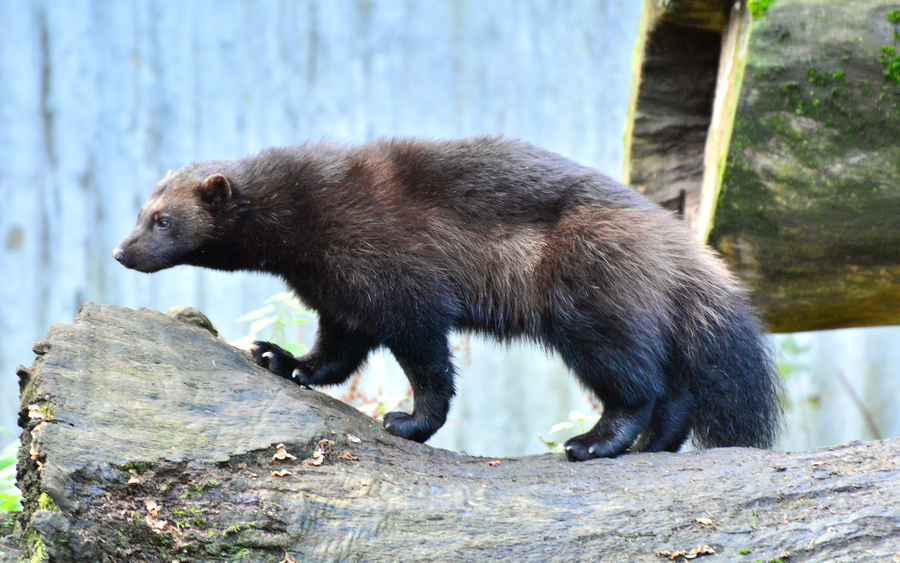
Wolverines are stocky, powerful mustelids of boreal forests and Arctic tundra. Despite weighing only 9–25 kg (20–55 lb), they can drive wolves and bears off kills and travel enormous daily distances. They are listed Least Concern globally but are rare and declining in southern parts of their range.
Wolverine facts at a glance
| Scientific name | Gulo gulo |
|---|---|
| Diet | Carrion, small and medium mammals, birds, berries |
| Habitat | Boreal forests, tundra, and alpine regions of northern North America, Europe, and Asia |
| Lifespan | 7–12 years in the wild (up to 17 in captivity) |
| Weight | 9–25 kg (20–55 lb); males larger |
| Top speed | Up to 40 km/h (25 mph); endurance traveller |
| Conservation status | Least Concern (IUCN) |
| Kingdom | Animalia |
|---|---|
| Phylum | Chordata |
| Class | Mammalia |
| Order | Carnivora |
| Family | Mustelidae |
| Genus | Gulo |
Where it lives
Boreal forests and tundra of Canada, Alaska, Scandinavia, Russia, and the Rocky Mountains.
What is a group of wolverines called?
Group name (collective noun)
A group of Wolverines is called a pack.
Baby name
A baby Wolverine is called a kit.
Explore more animal collective nouns and baby animal names .
Strength far beyond size
Wolverines have been filmed dragging carcasses many times their weight and breaking frozen bones to reach marrow. Broad paws act like snowshoes; keen smell detects carrion buried under metres of snow.
Huge territories
A single wolverine may patrol hundreds of square kilometres, especially males. Low population density makes them vulnerable to habitat fragmentation from logging, roads, and climate-driven snowpack changes.
Reproduction and kits
Females dig snow dens for delayed implantation — embryos develop after winter conditions improve. Kits stay with the mother through their first summer, learning to scavenge and hunt.
Southern range declines
While globally Least Concern, wolverines are extirpated or rare across much of the lower 48 United States and southern Scandinavia. Protected areas and connectivity corridors are key to persistence south of the Arctic.
Explore the Wolverine
Did you know? Wolverine facts
- Wolverines have been filmed dragging carcasses many times their own weight across snow.
- Despite the name, wolverines are the largest land-dwelling member of the weasel family.
- Individual home ranges can exceed 500 km² — among the largest of any carnivore relative to body size.
- Wolverines depend on persistent spring snowpack for denning — climate change threatens reproduction.
Diet & feeding
Carrion, small to medium mammals, birds, berries, and cached kills — opportunistic and capable of driving wolves from a carcass.
Adaptations
- Broad snowshoe-like paws and dense fur suit life on deep boreal snow.
- Powerful neck and jaw muscles crack frozen bones and tear hide.
- Anal gland scent is extremely pungent — used to mark food caches and territory.
Behaviour & ecology
- Solitary and wide-ranging — travel dozens of kilometres daily across home ranges.
- Cache surplus food under snow and boulders, relying on cold to preserve kills.
Communication
- Growls, snarls, and high-pitched vocalisations during disputes.
- Strong scent marking on rocks and snow along travel routes.
Habitat & range
Boreal forests, tundra, and alpine zones across northern North America, Scandinavia, and Russia.
Ecological role
Scavenger and mesopredator that cleans carrion and controls rodent and hare populations in remote ecosystems.
Frequently asked questions about the Wolverine
Are wolverines related to wolves?
No — wolverines belong to the weasel family (Mustelidae), not the dog family. The name reflects their reputation, not taxonomy.
Are wolverines dangerous to humans?
They avoid people; attacks are exceptionally rare. They will defend food or kits if cornered.
Where do wolverines live?
Boreal forests and tundra of Canada, Alaska, Scandinavia, and Russia, with small populations in the Rocky Mountains and Sierra Nevada.
How big is a wolverine?
Roughly the size of a medium dog — 9–25 kg — but far more powerful for their weight.
What do wolverines eat?
Mostly carrion and small mammals, plus birds, eggs, and berries. They often follow wolves to scavenge leftovers.
What is a group of wolverines called?
A group of Wolverines is called a pack.
What is a baby wolverine called?
A baby Wolverine is called a kit.
Sources & references
This guide is compiled and reviewed against established zoological and conservation references. Key sources for the Wolverine:
-
IUCN Red List of Threatened Species
Conservation status (Least Concern) reflects the IUCN Red List category for Gulo gulo.
- Copeland, J. et al. (2017). Gulo gulo. IUCN Red List of Threatened Species.
Status and climate vulnerability.
- Animal Diversity Web — Gulo gulo. University of Michigan Museum of Zoology.
Behaviour and morphology.
-
Global Animal Guide editorial standards
How we research, source, review, and update every guide for accuracy.