Image sourcing: see credits & licences
The jabiru (Jabiru mycteria) is a bird of the family Ciconiidae, in the order Ciconiiformes.
Quick answer
The jabiru (Jabiru mycteria) is the tallest flying bird of the Americas, with a massive black bill and white body patrolling Neotropical wetlands. Adults reach about 1.4 m tall and 8 kg, range from Mexico to Argentina, and are listed Least Concern.
Top questions about the Jabiru
Jabiru facts at a glance
- Weight 8 kg
- Length 1.4 m
- Top speed 40 km/h
- Lifespan 25 years
| Scientific name | Jabiru mycteria |
|---|---|
| Diet | Carnivore |
| Habitat | Flooded savannas and rivers |
| Lifespan | 25–30 years |
| Weight | 6–9 kg |
| Top speed | up to 40 km/h |
| Conservation status | Least Concern (IUCN) |
| Kingdom | Animalia |
|---|---|
| Phylum | Chordata |
| Class | Aves |
| Order | Ciconiiformes |
| Family | Ciconiidae |
| Genus | Jabiru |
Where it lives
The jabiru (Jabiru mycteria) is native to Wetlands from Mexico through Central America to Argentina. — recorded across North America, South America in this guide’s range summary.
For occurrence records, see GBIF species search and sources below.
How big is a jabiru?
An adult jabiru measures 1.4 m long — about 81% of the height of an average adult person (1.73 m) — and weighs around 8.0 kg, about 11% of an average adult’s body weight (70 kg).
Length vs an average adult’s height (to scale)
What is a group of jabirus called?
Group name (collective noun)
A group of Jabirus is called a mustering.
Baby name
A baby Jabiru is called a chick.
Explore more animal collective nouns and baby animal names .
Tallest stork of the Americas
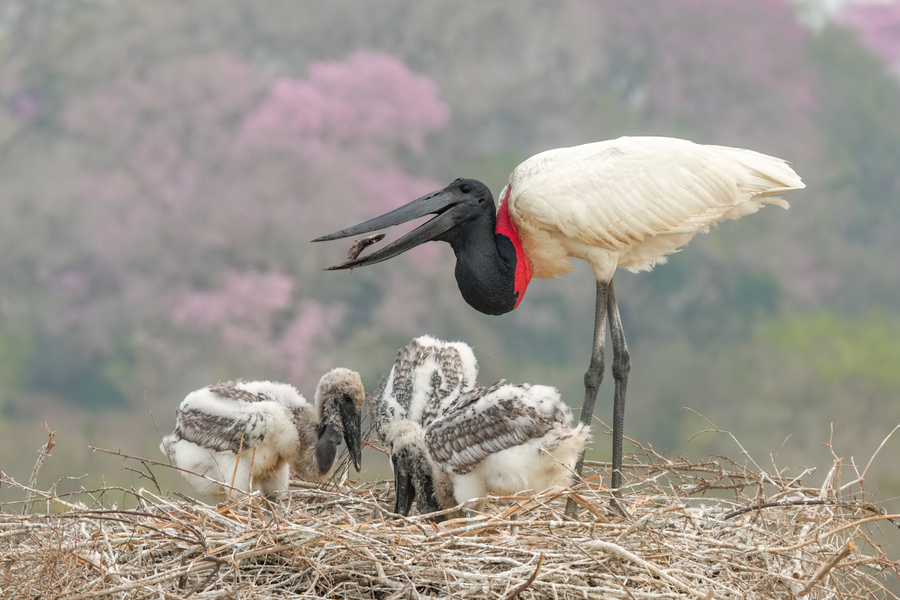
Jabirus stand nearly 1.5 m with broad wings suited to soaring between distant wetlands. A featherless red band at the neck base and a heavy black bill make adults unmistakable.
Fish, snakes, and carrion
They seize fish, amphibians, reptiles, and small mammals in shallow water, and will scavenge carrion. Pairs defend large territories around nest trees.
Flooded savannas of the Neotropics
Wetlands from Mexico through Central America into the Pantanal and Amazon basin and south to northern Argentina. Seasonal flooding concentrates prey and drives nesting timing.
Wetland guardians
Least Concern where large wetlands remain protected. Ranchers in the Pantanal often tolerate jabirus as indicators of healthy floodplain systems.
Explore the Jabiru
Close relatives
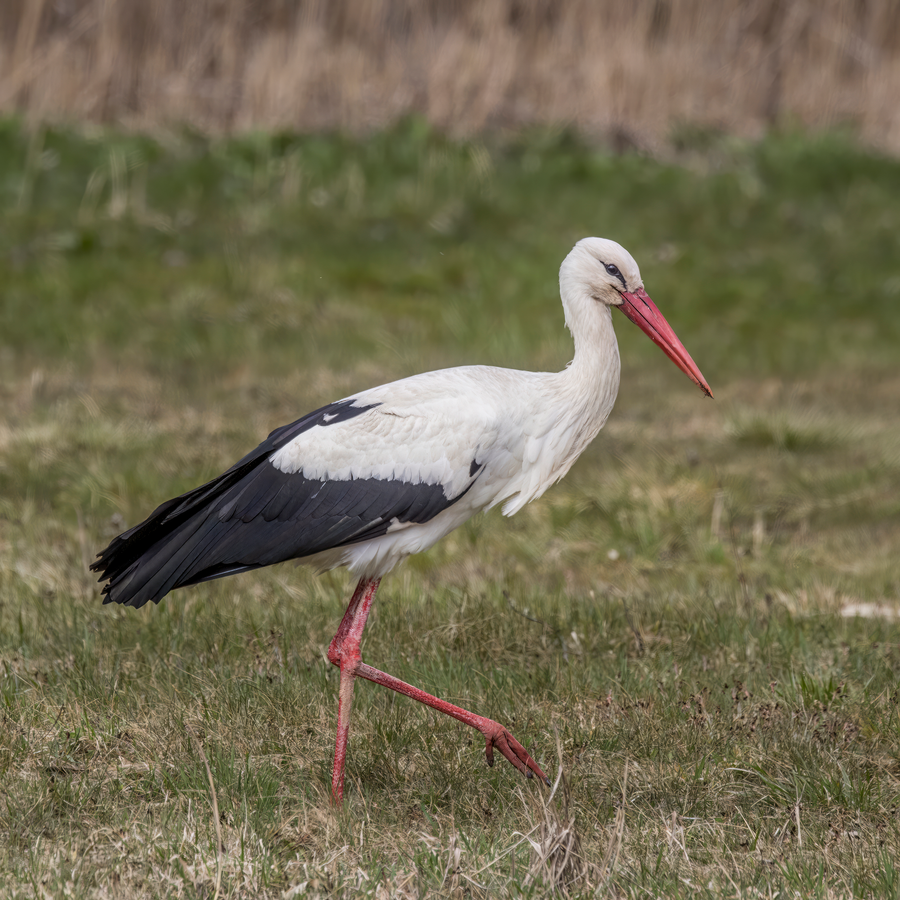
- White Stork Same family
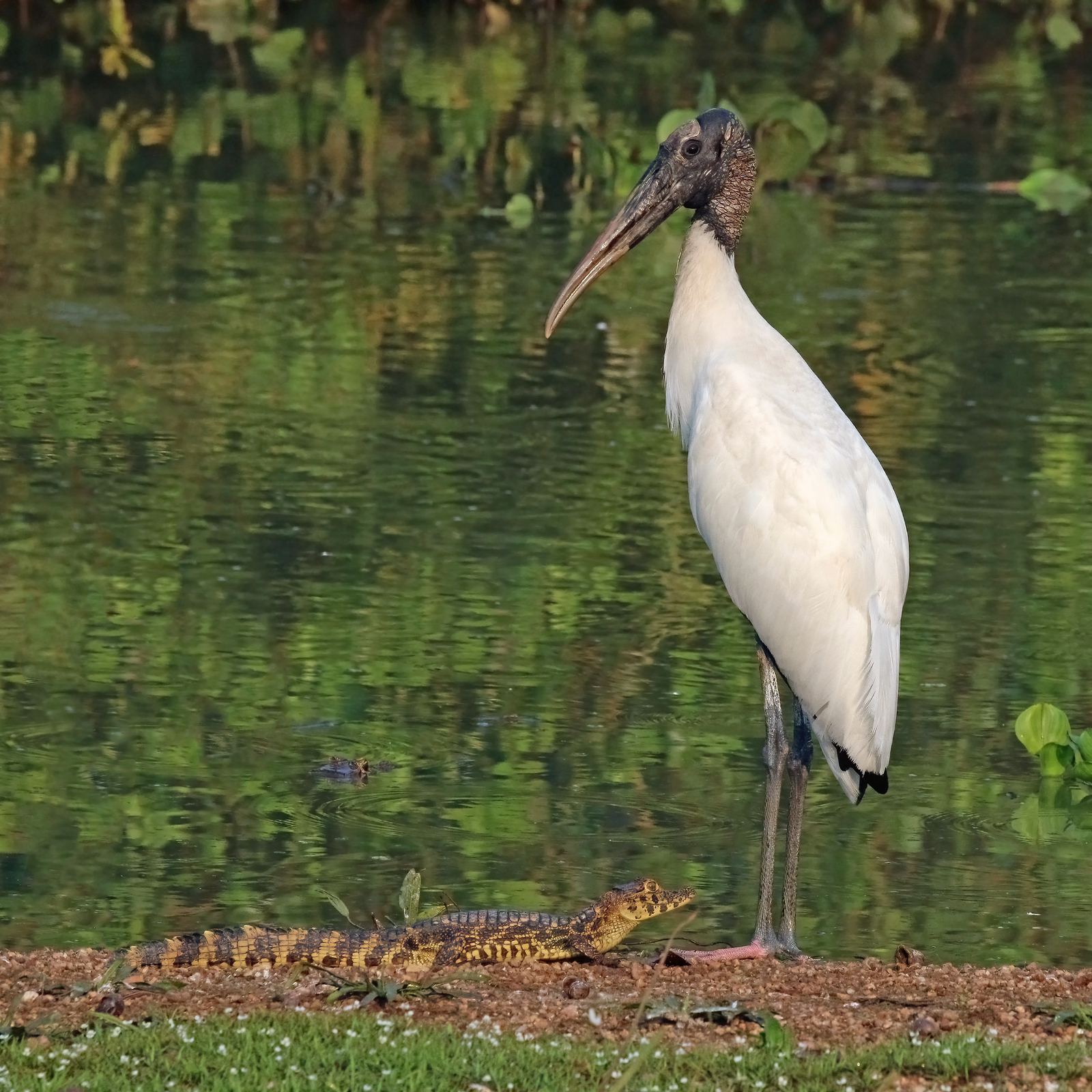
- Wood Stork Same family
- Chicken Same class
- Wandering Albatross Same class
Conservation status of the Jabiru
The jabiru (Jabiru mycteria) is listed as Least Concern on the IUCN Red List. Least Concern (LC) is the IUCN's lowest-risk category, assigned to widespread, abundant species that have been evaluated and found not to be threatened. It does not mean a species faces no pressures — only that it is not currently at risk of extinction.
The jabiru (Jabiru mycteria) is assessed on the IUCN Red List. Look up on the IUCN Red List .
Frequently asked questions about the Jabiru
How tall is a jabiru?
Up to about 1.4–1.5 m — the tallest flying bird in the Americas.
Where is the best place to see jabirus?
Brazil's Pantanal and other large Neotropical wetlands during the flood season.
What does the red neck band mean?
It is bare skin that can flush brighter during display or when the bird is excited.
Do jabirus migrate?
They wander with water levels rather than making long regular migrations, following seasonal floods.
Are jabirus related to wood storks?
Both are storks in Ciconiidae, but jabirus are far larger and range through Latin America.
What is a group of jabirus called?
A group of Jabirus is called a mustering.
What is a baby jabiru called?
A baby Jabiru is called a chick.
Sources & references
This guide is compiled and reviewed against established zoological and conservation references. Key sources for the Jabiru:
-
IUCN Red List of Threatened Species
Conservation status (Least Concern) reflects the IUCN Red List category for Jabiru mycteria.
-
iNaturalist — observations & photos
Search citizen-science observations and community IDs for Jabiru mycteria. Useful for range checks and recent sightings — not a substitute for formal Red List status.
-
GBIF — occurrence data
Global Biodiversity Information Facility species search for Jabiru mycteria. Explore published occurrence records used in range research.
-
eBird — bird observations
Cornell Lab eBird target search for Jabiru. Check recent checklists and seasonal abundance where birders report this species.
-
Global Animal Guide editorial standards
How we research, source, review, and update every guide for accuracy.