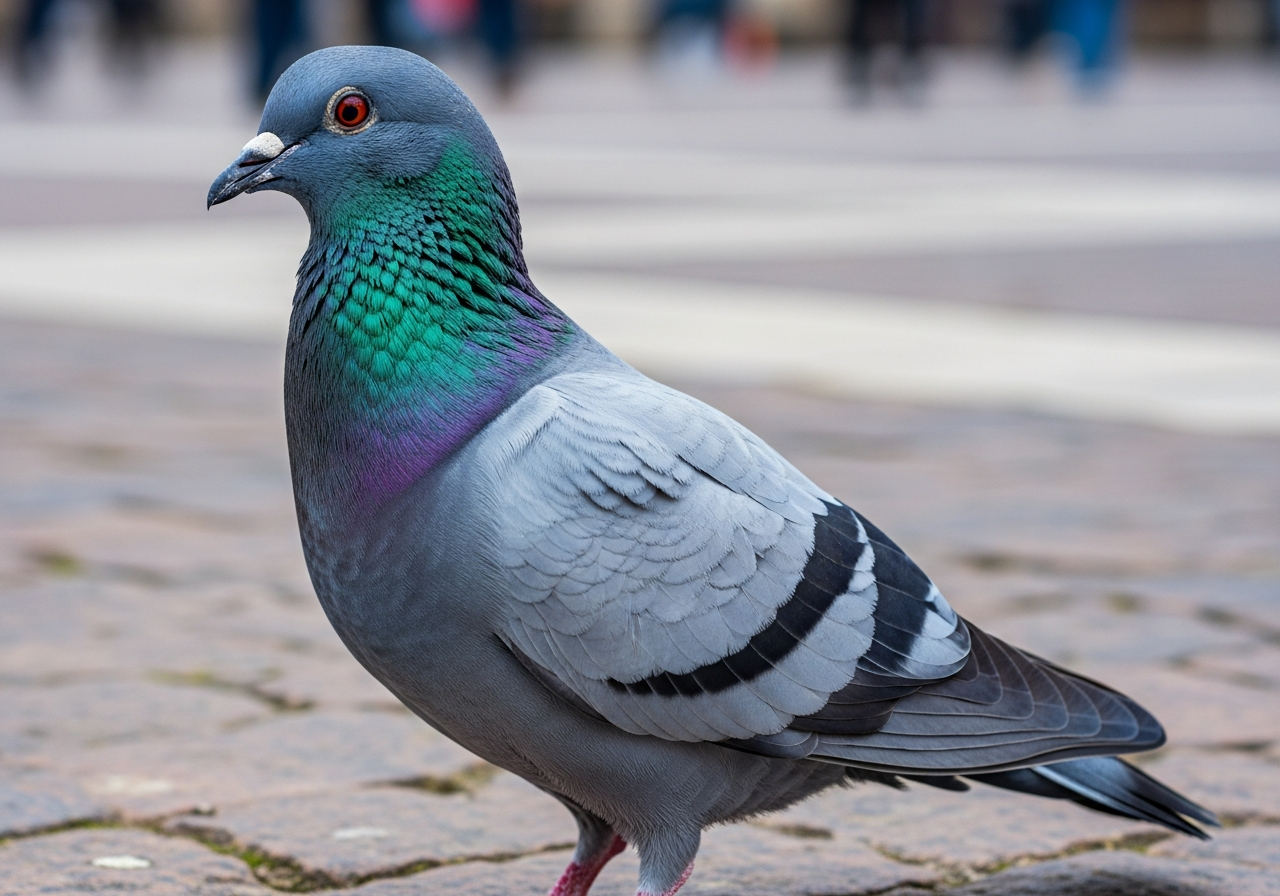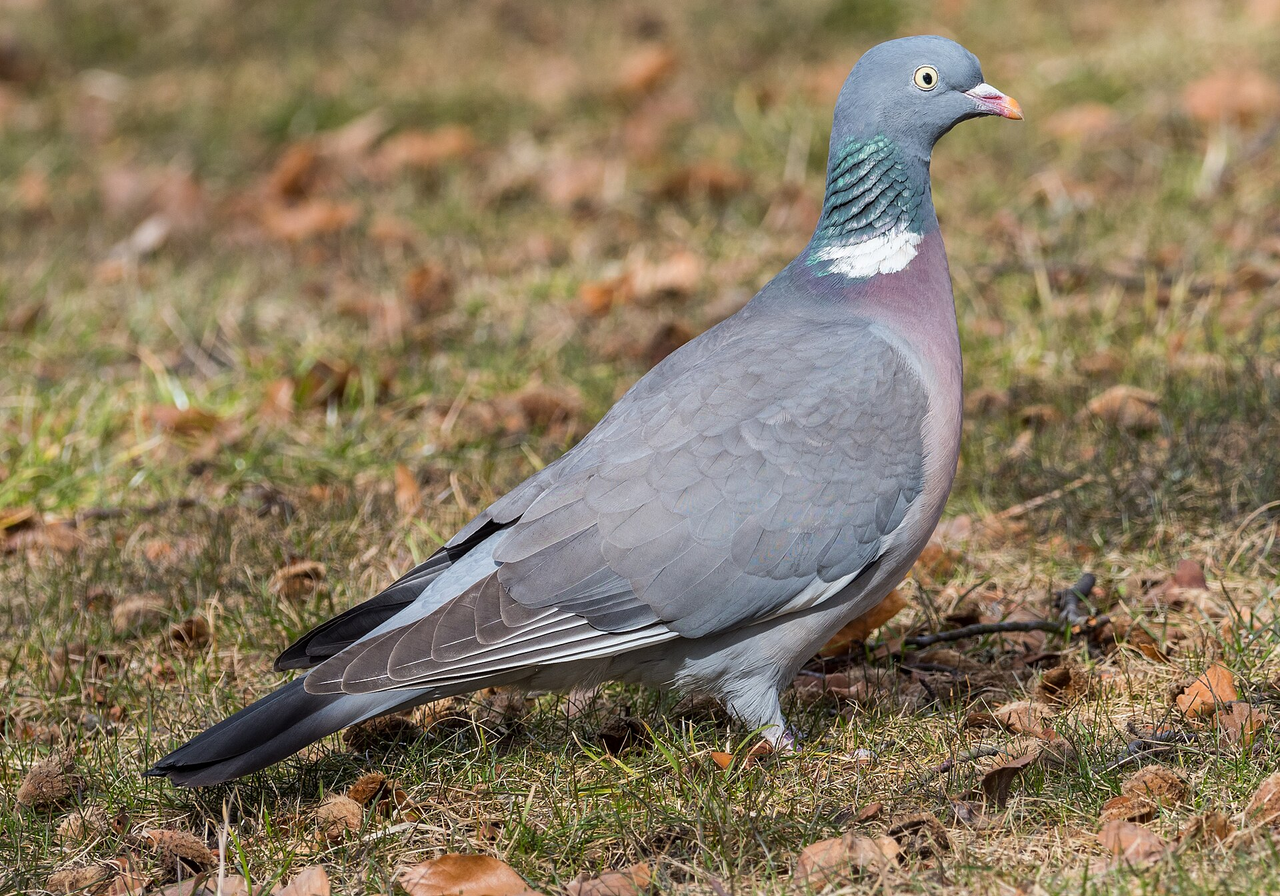
The common wood pigeon (Columba palumbus) is a bird of the family Columbidae, in the order Columbiformes.
Quick answer
The common wood pigeon (Columba palumbus) is a large grey pigeon of Europe and western Asia, recognised by the white patch on each side of its neck and the white bands across its wings in flight. It feeds on seeds, crops, buds and berries and is common on farmland and in gardens. BirdLife estimates 51 to 73 million mature birds, increasing, and lists it as Least Concern.
Top questions about the Common Wood Pigeon
Common Wood Pigeon facts at a glance
- Weight 500 g
- Lifespan 3 years
| Scientific name | Columba palumbus |
|---|---|
| Other name | Woodpigeon |
| Diet | Seeds, grain, leaves, buds, berries and acorns |
| Habitat | Farmland, woodland, parks and gardens |
| Weight | UK adults average about 510 g |
| Lifespan | Typically 3 years; oldest ringed bird 17 years 8 months |
| Conservation status | Least Concern (IUCN Red List, assessed 2018) |
| Kingdom | Animalia |
|---|---|
| Phylum | Chordata |
| Class | Aves |
| Order | Columbiformes |
| Family | Columbidae |
| Genus | Columba |
Where it lives
The common wood pigeon (Columba palumbus) is native to Europe, north-west Africa and western Asia. — recorded across Europe, Asia, Africa in this guide’s range summary.
For occurrence records, see GBIF species search and sources below.
What is a group of common wood pigeons called?
Group name (collective noun)
A group of Common Wood Pigeons is called a flock.
Baby name
A baby Common Wood Pigeon is called a squab.
Explore more animal collective nouns and baby animal names .
Identification
Wood pigeons are bulky blue-grey pigeons with a pinkish breast, a glossy green-and-purple neck sheen and a white neck patch. In flight a broad white bar across each wing is obvious. The call is a soft, rhythmic five-note coo.
Farmland feeders
Wood pigeons eat seeds and grain, leafy crops such as oilseed rape and cabbages, tree buds, ivy berries and acorns. Large flocks gather on fields in winter, and they are a significant agricultural pest in places.
Pigeon milk
Like all pigeons, both parents feed their chicks on 'crop milk', a nutritious secretion from the lining of the crop. The nest is a flimsy platform of twigs, and pairs can breed for much of the year.
Status
BirdLife International lists the common wood pigeon as Least Concern (2018), estimating 51 to 73 million mature birds and an increasing trend. BTO data give a typical life expectancy of 3 years.
Explore the Common Wood Pigeon
Close relatives
- Pigeon Same genus
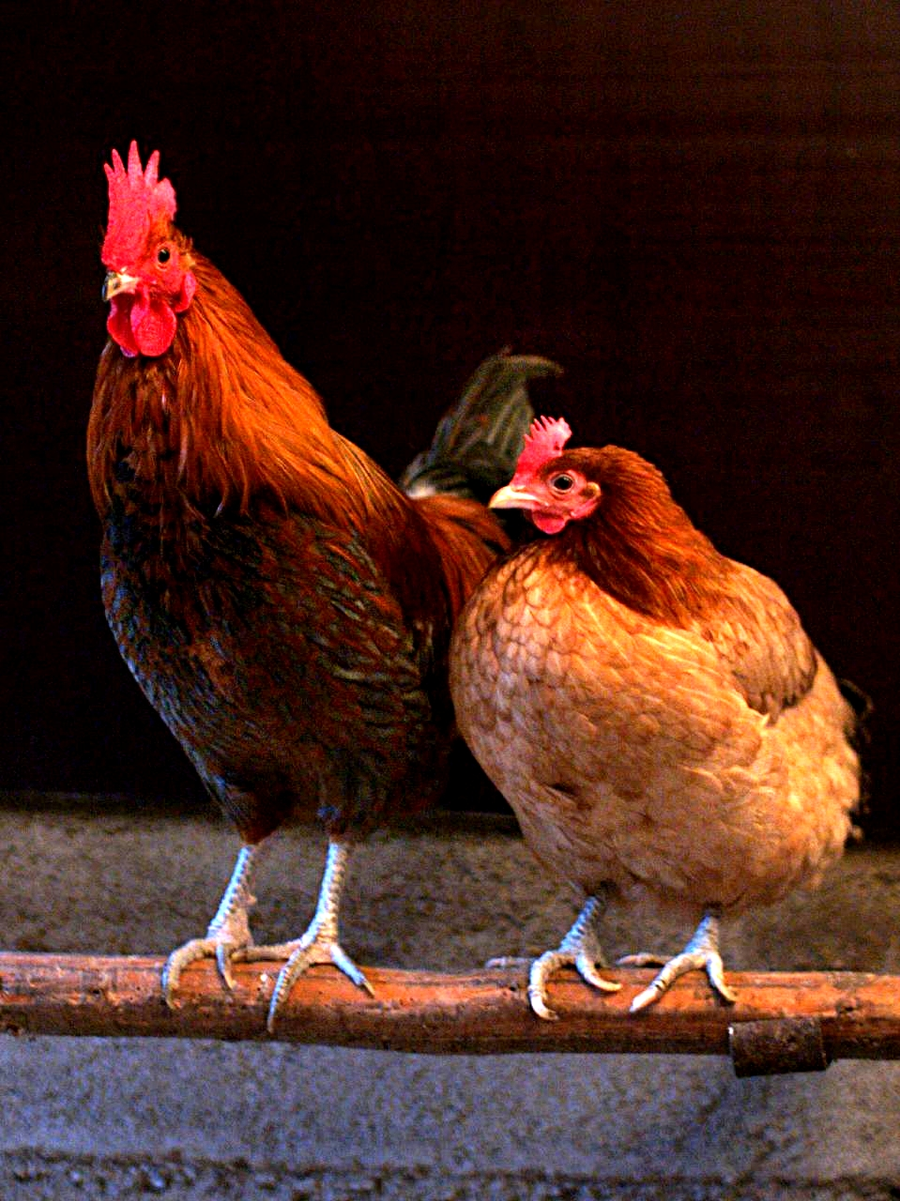
- Chicken Same class
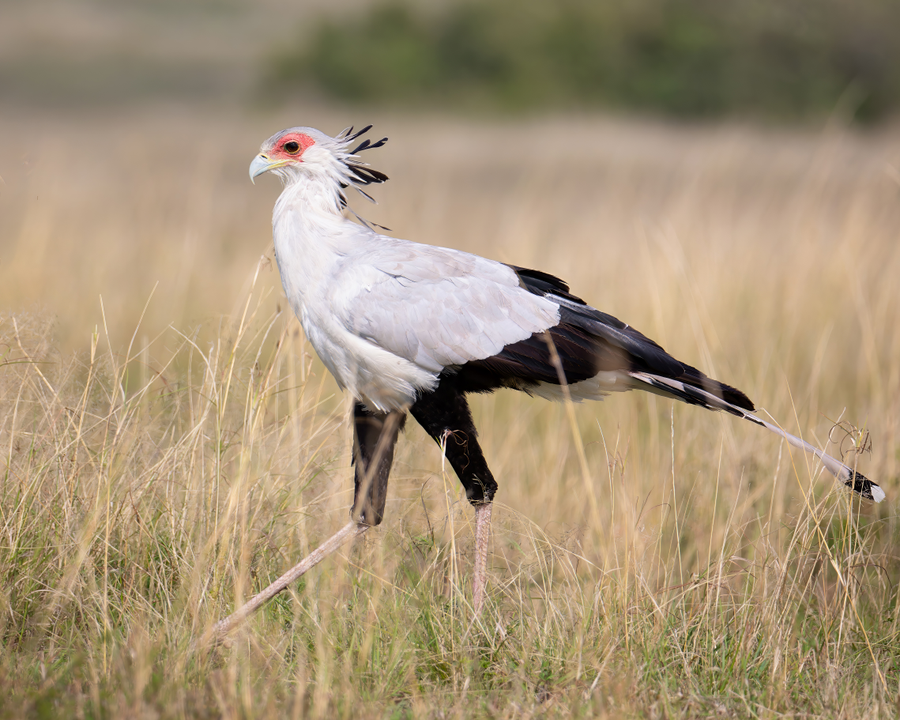
- Wandering Albatross Same class
- Southern Cassowary Same class
Range & geography
Did you know? Common Wood Pigeon facts
- Both parents feed their chicks on 'crop milk'.
- The white wing bars show clearly in flight.
Conservation status of the Common Wood Pigeon
The common wood pigeon (Columba palumbus) is listed as Least Concern on the IUCN Red List. Least Concern (LC) is the IUCN's lowest-risk category, assigned to widespread, abundant species that have been evaluated and found not to be threatened. It does not mean a species faces no pressures — only that it is not currently at risk of extinction.
Common Wood Pigeon (Columba palumbus) was most recently assessed for the IUCN Red List in 2018. Look up on the IUCN Red List .
Frequently asked questions about the Common Wood Pigeon
What is the difference between a wood pigeon and a feral pigeon?
Wood pigeons are bigger, with a white neck patch and white wing bars; feral pigeons descend from the rock dove and vary in colour, often with two black wing bars.
What do wood pigeons eat?
Seeds, grain, leafy crops, buds, berries and acorns.
Do pigeons make milk?
Yes. Both parents produce 'crop milk' to feed their chicks.
How long do wood pigeons live?
Typically about 3 years, though the oldest ringed bird lived 17 years and 8 months.
What is a group of common wood pigeons called?
A group of Common Wood Pigeons is called a flock.
What is a baby common wood pigeon called?
A baby Common Wood Pigeon is called a squab.
Sources & references
This guide is compiled and reviewed against established zoological and conservation references. Key sources for the Common Wood Pigeon:
-
IUCN Red List of Threatened Species
Conservation status (Least Concern) reflects the IUCN Red List category for Columba palumbus, most recently assessed in 2018.
-
iNaturalist — observations & photos
Search citizen-science observations and community IDs for Columba palumbus. Useful for range checks and recent sightings — not a substitute for formal Red List status.
-
GBIF — occurrence data
Global Biodiversity Information Facility species search for Columba palumbus. Explore published occurrence records used in range research.
-
eBird — bird observations
Cornell Lab eBird target search for Common Wood Pigeon. Check recent checklists and seasonal abundance where birders report this species.
- BirdLife International (2026). Species factsheet: Common Woodpigeon Columba palumbus. BirdLife DataZone. Checked 1 November 2026.
IUCN Red List category Least Concern (assessed 2018), population estimate and trend.
- BTO BirdFacts: Woodpigeon. British Trust for Ornithology.
Typical lifespan, oldest ringed bird and UK body weight.
- Tobias, J. A. et al. (2022). AVONET: morphological, ecological and geographical data for all birds. Ecology Letters 25: 581–597. doi:10.1111/ele.13898
Average body mass.
- Gill, F., Donsker, D. & Rasmussen, P. (Eds). IOC World Bird List v15.2.
English and scientific name, classification and range.
-
Global Animal Guide editorial standards
How we research, source, review, and update every guide for accuracy.