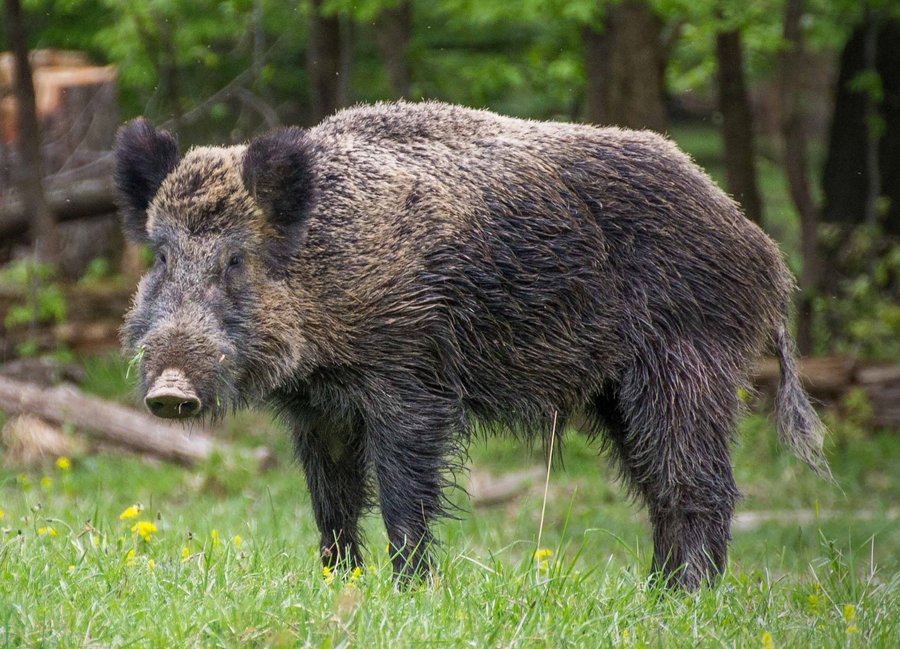
Wild Boar
Sus scrofa
Quick answer
The wild boar is the ancestor of domestic pigs, a sturdy omnivore with sharp tusks found across Europe, Asia, and North Africa, and introduced to the Americas and Oceania. Boars root up soil for food, weigh up to 200 kg, and live in matriarchal groups called sounders.
Wild Boar facts at a glance
| Scientific name | Sus scrofa |
|---|---|
| Diet | Omnivore — roots, acorns, insects, carrion, and small animals |
| Habitat | Forests, farmland, and scrub across Eurasia and introduced ranges |
| Lifespan | 10–14 years in the wild |
| Weight | 50–200 kg (110–440 lb); males larger |
| Top speed | Up to 40 km/h (25 mph) |
| Conservation status | Least Concern (IUCN) |
| Kingdom | Animalia |
|---|---|
| Phylum | Chordata |
| Class | Mammalia |
| Order | Artiodactyla |
| Family | Suidae |
| Genus | Sus |
Where it lives
Native across Europe, temperate Asia, and North Africa; introduced to the Americas, Australia, New Zealand, and many islands where feral populations thrive.
What is a group of wild boars called?
Group name (collective noun)
A group of Wild Boars is called a sounder.
Baby name
A baby Wild Boar is called a piglet.
Explore more animal collective nouns and baby animal names .
Rooting and diet
Wild boars dig with their snouts for roots, tubers, and invertebrates, aerating soil but sometimes damaging crops. Acorn mast in autumn builds fat reserves. They are opportunistic omnivores that also take small vertebrates and carrion.
Tusks and temperament
Continuously growing lower canines form prominent tusks in males, used in dominance fights and defence. Sows with piglets are protective. Boars are largely nocturnal in hunted areas and more diurnal where undisturbed.
Global spread
Native across much of Eurasia and North Africa, wild boars were introduced to the Americas, Australia, and New Zealand, where they become invasive pests damaging agriculture and outcompeting native species.
Conservation and management
Globally Least Concern, wild boars are locally managed through hunting and fencing because of crop damage and disease concerns such as African swine fever. In their native range they remain a keystone prey species for wolves and tigers.
Dig deeper into the Wild Boar
- How Fast Is A Wild Boar
Dig deeper into wild boar — how fast is a wild boar.
- How Long do Wild Boar Live?
Dig deeper into wild boar — how long do wild boar live.
- What do Wild Boar Eat
Dig deeper into wild boar — what do wild boar eat.
- Where do Wild Boar Live?
Dig deeper into wild boar — where do wild boar live.
- Wild Boar Facts 5
Dig deeper into wild boar — wild boar facts 5.
Explore the Wild Boar
Compare
Did you know? Wild Boar facts
- The wild boar is the ancestor of domestic pigs, a sturdy omnivore with sharp tusks found across Europe, Asia, and North Africa, and introduced to the Americas and Oceania.
- Domestic pigs descend from wild boars but are bred for size, temperament, and meat. Wild boars are leaner, bristlier, and have straighter tusks.
- They usually flee, but wounded boars or sows with piglets can charge. Keep distance in the wild and never approach piglets.
- Eurasia and North Africa. Humans introduced them elsewhere for hunting, and escapees established feral populations.
- Mostly plant material — roots, nuts, fruit, and crops — plus insects, worms, and carrion when available.
- Conservation: Least Concern (IUCN).
Diet & feeding
Wild Boar feeds primarily as a omnivore — roots, acorns, insects, carrion, and small animals. Globally Least Concern, wild boars are locally managed through hunting and fencing because of crop damage and disease concerns such as African swine fever. In their native range they remain a keystone prey species for wolves a
Adaptations
- Wild boars dig with their snouts for roots, tubers, and invertebrates, aerating soil but sometimes damaging crops. Acorn mast in autumn builds fat reserves. They are opportunistic omnivores that also take small vertebrates and carrion.
- Continuously growing lower canines form prominent tusks in males, used in dominance fights and defence. Sows with piglets are protective. Boars are largely nocturnal in hunted areas and more diurnal where undisturbed.
Behaviour & ecology
- Wild boars dig with their snouts for roots, tubers, and invertebrates, aerating soil but sometimes damaging crops. Acorn mast in autumn builds fat reserves. They are opportunistic omnivores that also take small vertebrates and carrion.
- Continuously growing lower canines form prominent tusks in males, used in dominance fights and defence. Sows with piglets are protective. Boars are largely nocturnal in hunted areas and more diurnal where undisturbed.
- Native across much of Eurasia and North Africa, wild boars were introduced to the Americas, Australia, and New Zealand, where they become invasive pests damaging agriculture and outcompeting native species.
Communication
- Wild Boar uses scent, posture, and vocal signals to mark territory and coordinate social behaviour.
- Communication intensity often peaks during breeding seasons and territorial disputes.
Habitat & range
Forests, farmland, and scrub across Eurasia and introduced ranges
Ecological role
Wild Boar plays a recognised ecological role in forests, farmland, and scrub across eurasia and introduced ranges.
Frequently asked questions about the Wild Boar
Wild boar vs pig?
Domestic pigs descend from wild boars but are bred for size, temperament, and meat. Wild boars are leaner, bristlier, and have straighter tusks.
Are wild boars dangerous?
They usually flee, but wounded boars or sows with piglets can charge. Keep distance in the wild and never approach piglets.
Where did wild boars come from?
Eurasia and North Africa. Humans introduced them elsewhere for hunting, and escapees established feral populations.
What do wild boars eat?
Mostly plant material — roots, nuts, fruit, and crops — plus insects, worms, and carrion when available.
Why are wild boars considered invasive?
In places like Texas and Australia, introduced boars reproduce quickly, root up land, and compete with native wildlife, prompting extensive control programmes.
What is a group of wild boars called?
A group of Wild Boars is called a sounder.
What is a baby wild boar called?
A baby Wild Boar is called a piglet.
Sources & references
This guide is compiled and reviewed against established zoological and conservation references. Key sources for the Wild Boar:
-
IUCN Red List of Threatened Species
Conservation status (Least Concern) reflects the IUCN Red List category for Sus scrofa.
- IUCN Red List — Sus scrofa.
Conservation status (Least Concern) and population trends.
- Animal Diversity Web — Sus scrofa. University of Michigan Museum of Zoology.
Life history, morphology, and range.
- Wikipedia — Wild Boar.
General taxonomy and overview (cross-check primary sources).
-
Global Animal Guide editorial standards
How we research, source, review, and update every guide for accuracy.