Channel Catfish
Ictalurus punctatus
Quick answer
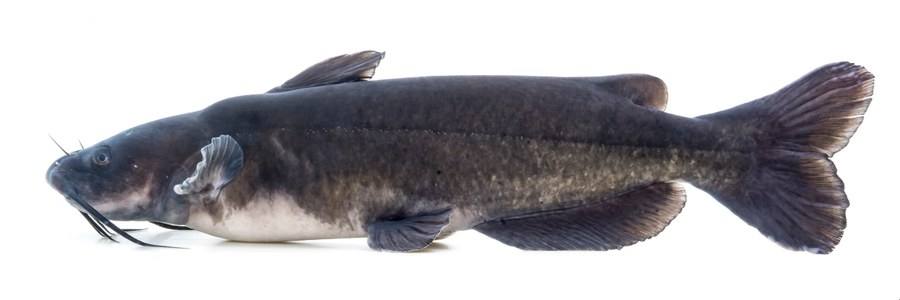
The channel catfish is one of the most popular sport and farmed fish in North America, recognised by barbels ('whiskers'), smooth scaleless skin, and a forked tail. Native to central and eastern rivers and lakes, it grows to 10–25 kg (22–55 lb), tastes mild, and uses taste buds across its body to find food.
Channel Catfish facts at a glance
| Scientific name | Ictalurus punctatus |
|---|---|
| Diet | Omnivore — insects, fish, plants, and bottom detritus |
| Habitat | Rivers, lakes, and ponds of North America; widely farmed |
| Lifespan | 10–15 years in the wild (longer in captivity) |
| Weight | 1–25 kg (2–55 lb); farmed fish harvested younger |
| Top speed | Moderate swimmer; ambush predator near cover |
| Conservation status | Least Concern (IUCN) |
| Kingdom | Animalia |
|---|---|
| Phylum | Chordata |
| Class | Actinopterygii |
| Order | Siluriformes |
| Family | Ictaluridae |
| Genus | Ictalurus |
Where it lives
Rivers and lakes of central and eastern North America from southern Canada through the Great Lakes and Mississippi basin to Mexico; widely farmed and stocked elsewhere.
What is a group of channel catfish called?
Group name (collective noun)
A group of Channel Catfish is called a school.
Baby name
A baby Channel Catfish is called a fry.
Explore more animal collective nouns and baby animal names .
Barbels and taste
Channel catfish have four pairs of barbels around the mouth plus taste buds covering the body — especially the whiskers — allowing them to locate food in murky water at night. They are opportunistic bottom feeders eating insects, crayfish, small fish, and plant matter.
Spines and defence
Sharp spines in the dorsal and pectoral fins can lock in place and inject mild venom, deterring predators and unwary anglers. Handling from below and using lip grips reduces sting risk. Spines also help catfish lock into crevices.
Aquaculture and sport fishing
Channel catfish are the top farmed fish species in the United States, raised in ponds across the South for food markets. Anglers target them with stink baits, chicken liver, and cut bait — they fight hard and tolerate low oxygen better than many game fish.
Range and introductions
Native from southern Canada through the Great Lakes and Mississippi basin to Mexico, channel catfish have been stocked widely for fishing and farming. They can outcompete native species where introduced outside their range, requiring careful management.
Dig deeper into the Channel Catfish
- Catfish Facts 4
Dig deeper into channel catfish — catfish facts 4.
- Catfish Facts 5
Dig deeper into channel catfish — catfish facts 5.
- How Long do Catfish Live?
Dig deeper into channel catfish — how long do catfish live.
- What do Catfish Eat
Dig deeper into channel catfish — what do catfish eat.
- Where do Catfish Live?
Dig deeper into channel catfish — where do catfish live.
Explore the Channel Catfish
Did you know? Channel Catfish facts
- The channel catfish is one of the most popular sport and farmed fish in North America, recognised by barbels ('whiskers'), smooth scaleless skin, and a forked tail.
- The barbels are harmless feelers. The danger comes from sharp fin spines that can puncture skin — not from the whiskers themselves.
- Almost anything on the bottom — insects, worms, crayfish, small fish, and plant material. They hunt mainly at night using taste and smell.
- Most caught fish are 1–5 kg, but large river fish can exceed 20 kg. The record is over 25 kg.
- Fin spines can puncture and cause pain and swelling from mild venom. Handle carefully or use pliers to remove hooks.
- Conservation: Least Concern (IUCN).
Diet & feeding
Channel Catfish feeds primarily as a omnivore — insects, fish, plants, and bottom detritus. Channel catfish have four pairs of barbels around the mouth plus taste buds covering the body — especially the whiskers — allowing them to locate food in murky water at night. They are opportunistic bottom feeders eating insects
Adaptations
- Channel catfish have four pairs of barbels around the mouth plus taste buds covering the body — especially the whiskers — allowing them to locate food in murky water at night. They are opportunistic bottom feeders eating insects, crayfish, small fish, and plant matter.
- Sharp spines in the dorsal and pectoral fins can lock in place and inject mild venom, deterring predators and unwary anglers. Handling from below and using lip grips reduces sting risk. Spines also help catfish lock into crevices.
Behaviour & ecology
- Channel catfish have four pairs of barbels around the mouth plus taste buds covering the body — especially the whiskers — allowing them to locate food in murky water at night. They are opportunistic bottom feeders eating insects, crayfish, small fish, and plant matter.
- Sharp spines in the dorsal and pectoral fins can lock in place and inject mild venom, deterring predators and unwary anglers. Handling from below and using lip grips reduces sting risk. Spines also help catfish lock into crevices.
- Channel catfish are the top farmed fish species in the United States, raised in ponds across the South for food markets. Anglers target them with stink baits, chicken liver, and cut bait — they fight hard and tolerate low oxygen better than many game fish.
Communication
- Lateral-line and visual cues coordinate schooling, courtship, or territorial behaviour.
- Some species produce low-frequency sounds or drumming for spawning or defence.
Habitat & range
Rivers, lakes, and ponds of North America; widely farmed
Ecological role
Channel Catfish occupies a defined trophic level in aquatic food webs, linking plankton or smaller fish to larger predators.
Frequently asked questions about the Channel Catfish
Are catfish whiskers dangerous?
The barbels are harmless feelers. The danger comes from sharp fin spines that can puncture skin — not from the whiskers themselves.
What do channel catfish eat?
Almost anything on the bottom — insects, worms, crayfish, small fish, and plant material. They hunt mainly at night using taste and smell.
How big do channel catfish get?
Most caught fish are 1–5 kg, but large river fish can exceed 20 kg. The record is over 25 kg.
Can catfish sting you?
Fin spines can puncture and cause pain and swelling from mild venom. Handle carefully or use pliers to remove hooks.
Where are channel catfish found?
Native to central and eastern North America; farmed and stocked in ponds across the United States and introduced in Europe and elsewhere.
What is a group of channel catfish called?
A group of Channel Catfish is called a school.
What is a baby channel catfish called?
A baby Channel Catfish is called a fry.
Sources & references
This guide is compiled and reviewed against established zoological and conservation references. Key sources for the Channel Catfish:
-
IUCN Red List of Threatened Species
Conservation status (Least Concern) reflects the IUCN Red List category for Ictalurus punctatus.
- IUCN Red List — Ictalurus punctatus.
Conservation status (Least Concern) and population trends.
- Animal Diversity Web — Ictalurus punctatus. University of Michigan Museum of Zoology.
Life history, morphology, and range.
-
Global Animal Guide editorial standards
How we research, source, review, and update every guide for accuracy.