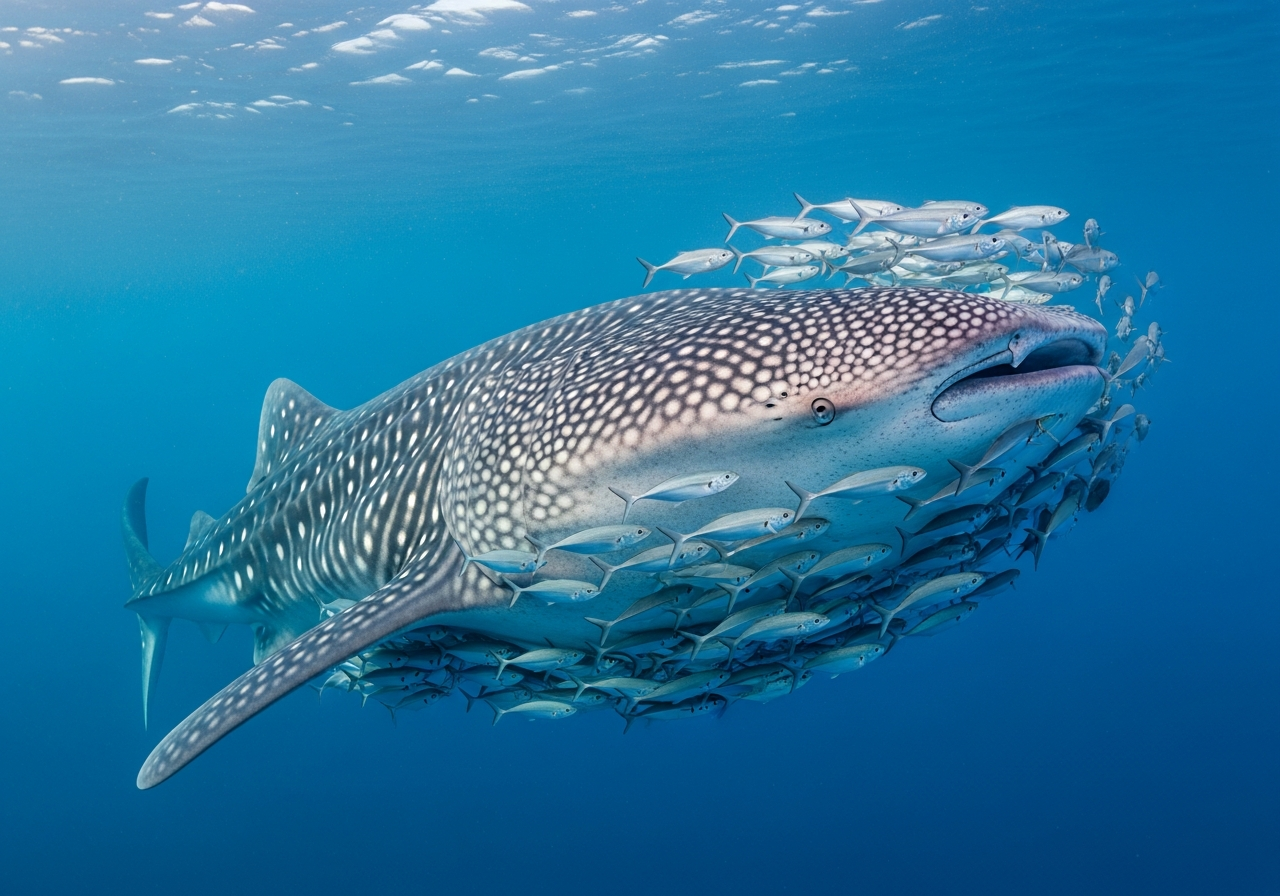
Quick answer
Lifespan estimates commonly fall around 70–100 years — a planning range, not a named aquarium birthday. The species is Endangered (2016) after an inferred ≥50% decline over three generations. Figures checked 13 August 2026.
How long do whale sharks live in the wild?
Treat 70–100 years as an estimate for fish that are not killed first. There is no honest global headcount to turn into an age pyramid. “Estimated 70–100 years” without that caveat was the template line.
What shortens whale shark lives?
Directed catch, bycatch, and vessel strikes at feeding sites. Roadkill copy does not belong on a shark. Ranking threats changes by ocean — an Indo-Pacific fishery is not an Atlantic subpopulation.
What helps whale sharks live longer?
Unfished aggregations and boats that slow down. Captive years can exceed a fished life; they do not replace warm-water range. Never bait wild sharks.
How do life stages change the risk?
Late maturity means each killed juvenile is years of lost reproduction. Coastal hotspots often show young males; that crowd is not proof of old adults offshore. Growth is slow. The listing assumes it stays slow.
Does filter-feeding add years?
It sets where they gather, which is where people hit them. Plankton is not anti-bycatch. They are not predatory on people; people still shorten the average.
Why does Endangered status still truncate averages?
Because a three-generation decline still removes the animals that would have reached 70–100. WARN’s donate page funds wildlife-protection partners — not whale-shark tourism.
Sources
Whale Shark FAQs
How long do whale sharks live?
Estimates commonly fall around 70–100 years — a planning range, not a named aquarium birthday sold as a census. Late maturity and slow growth make fisheries and vessel strikes expensive in years. The species is IUCN Endangered (2016). Figures checked 13 August 2026.
Why do so few reach old age?
Nets and propellers at aggregation sites, plus directed catch where products still pay. Juveniles dominate many counted hotspots, so the visible crowd is not a room of century-old fish. A 75-year inferred decline is three generations of lost adults — not a missing birthday.
Do aquarium whale sharks set the span?
No. A named tank animal’s birthday is not an Indo-Pacific census and not an Atlantic subpopulation. Captive years can inform growth; they do not replace unfished aggregations. Treat 70–100 years as a planning range. WARN does not run those tanks.
What actually helps them live longer?
Leave feeding sites unfished and unfed, and slow the boats that strike sharks at the surface. Late maturity makes each death expensive in years. World Animal Rescue Network’s donate page funds wildlife-protection partners — not whale-shark tourism.
Who this page is for. This page is a species lifespan range. Skip it if you need a prognosis for one named animal.