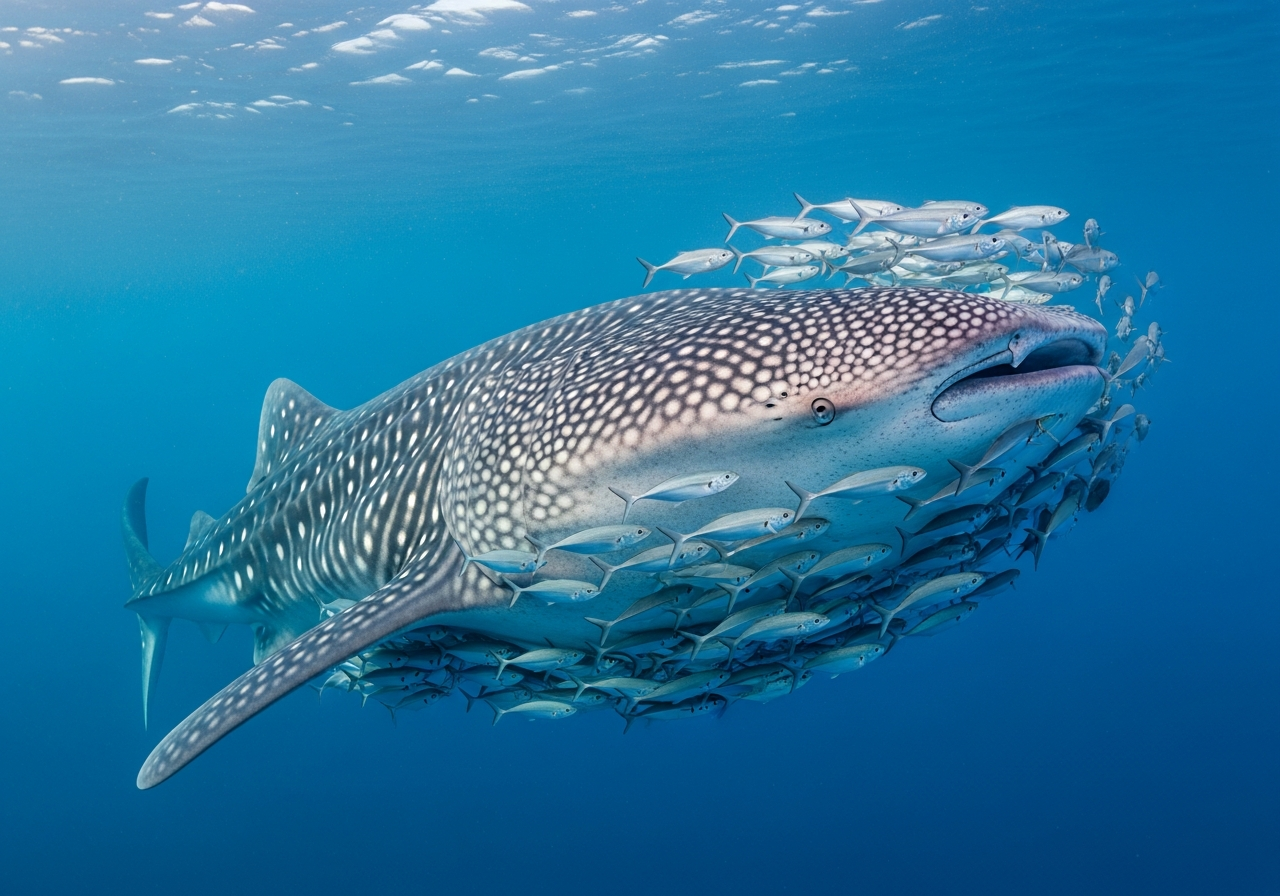
Quick answer
IUCN lists whale sharks (Rhincodon typus) as Endangered (2016), uplisted from Vulnerable. Assessors inferred a global decline of at least 50% over 75 years (three generations). About 75% of remaining animals are Indo-Pacific (~63% decline there); the Atlantic subpopulation is Vulnerable. Figures checked 13 August 2026.
Are whale sharks Endangered or still Vulnerable?
Endangered globally since 2016. The Atlantic subpopulation is assessed Vulnerable. “Listed in our guides as Endangered” without the uplisting and the Indo-Pacific share was the thin version of this page. They are fish, not whales.
What is driving the decline?
Directed fisheries and bycatch where sharks aggregate, plus vessel strikes at feeding sites. Products still have value after some commercial fisheries closed. Ranking those threats changes by ocean — Ningaloo is not the Atlantic.
Is a busy aggregation an all-clear?
No. Many counted sharks are juvenile males at coastal hotspots. There is no honest global headcount. Slow growth and late maturity mean a 75-year decline is not reversed by one tourist season.
What actually helps?
Leave aggregations unfished and unfed; slow boats. WARN’s donate page funds wildlife-protection partners — not whale-shark tourism.
Does a plankton diet make them safe?
No. Filter-feeding on plankton, krill, fish eggs and small fish does not stop nets or propellers. They are not predatory on people; people are still lethal to them.
Does swimming with them count as protection?
Only if operators keep distance and never feed. A snorkel queue is not a population survey and not a WARN field programme. Never grab, ride, or chum a whale shark.
Sources
Whale Shark FAQs
Are whale sharks endangered?
Yes. IUCN lists the whale shark (Rhincodon typus) as Endangered (2016), uplisted from Vulnerable. Assessors inferred a global decline of at least 50% over 75 years (three generations). The Indo-Pacific holds about 75% of remaining animals and declined about 63%; the Atlantic subpopulation is Vulnerable (≥30% decline). Figures checked 13 August 2026.
How many whale sharks are left?
There is no honest global headcount to quote. Aggregation sites can host hundreds or low thousands of mostly juvenile males; that is not a census of adults at sea. Treat the Endangered listing as a decline story, not a weekly tally. A snorkel photo is not a population trend.
Are whale sharks the same as whales?
No. They are the largest living fish — a filter-feeding shark, not a baleen whale and not predatory on people. Mixing them with blue whales produces the false story that a krill specialist’s recovery protects a spotted fish. They are not pets.
What actually helps whale sharks?
Cut targeted catch and bycatch, slow vessel strikes at aggregation sites, and keep tourism unfed and unchased. A snorkel photo is not a recovery. World Animal Rescue Network’s donate page funds wildlife-protection partners. WARN does not run whale-shark tourism.
Who this page is for. This page explains IUCN-style status. Skip it if you need an emergency wildlife-rescue number.