Walrus
Odobenus rosmarus
Quick answer
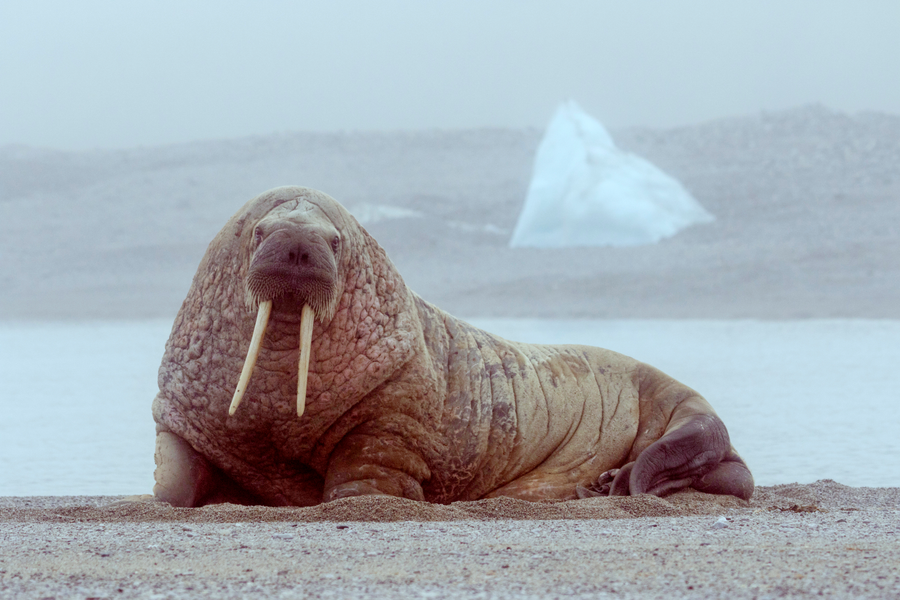
Walruses are massive pinnipeds of the Arctic, with males weighing up to 1,700 kg (3,750 lb) and sporting elongated canine tusks used for hauling out on ice, fighting, and sensing the seafloor. They feed mainly on clams and molluscs on shallow seabeds and gather in huge haul-outs on ice or land.
Also available in Español (Walrus)
Walrus facts at a glance
| Scientific name | Odobenus rosmarus |
|---|---|
| Diet | Carnivore — clams, molluscs, and occasional seals or seabirds |
| Habitat | Arctic seas, pack ice, and coastal haul-outs |
| Lifespan | 30–40 years in the wild |
| Weight | Males 900–1,700 kg; females 400–1,250 kg |
| Top speed | Up to 35 km/h (22 mph) in water |
| Conservation status | Vulnerable (IUCN) |
| Kingdom | Animalia |
|---|---|
| Phylum | Chordata |
| Class | Mammalia |
| Order | Carnivora |
| Family | Odobenidae |
| Genus | Odobenus |
Where it lives
Arctic seas and pack ice of the North Atlantic and North Pacific, including Canada, Greenland, Norway, and Russia's Chukchi and Bering seas.
What is a group of walruses called?
Group name (collective noun)
A group of Walruses is called a herd.
Baby name
A baby Walrus is called a calf.
Explore more animal collective nouns and baby animal names .
Tusks and feeding
Walrus tusks are elongated upper canines that can exceed one metre in large males. They are used to pull the body onto ice, establish dominance, and help the walrus 'feel' the seabed while foraging. A walrus may consume thousands of clams in a day, using powerful lips to suck meat from shells.
Pacific vs Atlantic populations
Two recognised subspecies — Atlantic and Pacific — differ in size, tusk shape, and population trends. Pacific walruses number in the low hundreds of thousands; Atlantic walruses are far fewer and more fragmented across Canada, Greenland, and Arctic Europe.
Climate and conservation
Listed Vulnerable, walruses face mounting pressure from sea-ice loss, shipping disturbance, and hunting in some regions. Reduced ice forces longer swims to feeding grounds and crowded land haul-outs where stampedes can kill calves.
Dig deeper into the Walrus
- Are Walrus Endangered
Dig deeper into walrus — are walrus endangered.
- How Long do Walrus Live?
Dig deeper into walrus — how long do walrus live.
- Walrus Facts 5
Dig deeper into walrus — walrus facts 5.
- What do Walrus Eat
Dig deeper into walrus — what do walrus eat.
- Where do Walrus Live?
Dig deeper into walrus — where do walrus live.
Explore the Walrus
Compare
Collections
Did you know? Walrus facts
- Walruses are massive pinnipeds of the Arctic, with males weighing up to 1,700 kg (3,750 lb) and sporting elongated canine tusks used for hauling out on ice, fighting, and sensing the seafloor.
- Tusks typically measure 50–100 cm in large males, with record specimens slightly longer. Females also have tusks, but they are smaller.
- Mainly bivalve molluscs such as clams, which they locate on the seafloor using their sensitive whiskers and tusks. They also eat worms, snails, and occasionally seals or seabirds.
- The IUCN lists walruses as Vulnerable. Pacific populations are large but declining in some areas; Atlantic walruses face greater pressure from climate change and limited habitat.
- Walruses are generally wary but powerful and can be aggressive if cornered or if a haul-out is disturbed. Arctic travellers keep a safe distance from groups on ice or shore.
- Conservation: Vulnerable (IUCN).
Diet & feeding
Walrus feeds primarily as a carnivore — clams, molluscs, and occasional seals or seabirds. Walrus tusks are elongated upper canines that can exceed one metre in large males. They are used to pull the body onto ice, establish dominance, and help the walrus 'feel' the seabed while foraging. A walrus may consume thousands
Adaptations
- Walrus tusks are elongated upper canines that can exceed one metre in large males. They are used to pull the body onto ice, establish dominance, and help the walrus 'feel' the seabed while foraging. A walrus may consume thousands of clams in a day, using powerful lips to suck meat from shells.
- Walruses rest in dense groups on sea ice or rocky beaches, vocalising with bell-like calls and whistles. Pacific walruses depend heavily on floating ice over shallow feeding grounds; when ice retreats beyond reach of feeding areas, animals haul out on land in enormous, sometimes dangerous crowds.
Behaviour & ecology
- Walrus tusks are elongated upper canines that can exceed one metre in large males. They are used to pull the body onto ice, establish dominance, and help the walrus 'feel' the seabed while foraging. A walrus may consume thousands of clams in a day, using powerful lips to suck meat from shells.
- Walruses rest in dense groups on sea ice or rocky beaches, vocalising with bell-like calls and whistles. Pacific walruses depend heavily on floating ice over shallow feeding grounds; when ice retreats beyond reach of feeding areas, animals haul out on land in enormous, sometimes dangerous crowds.
- Two recognised subspecies — Atlantic and Pacific — differ in size, tusk shape, and population trends. Pacific walruses number in the low hundreds of thousands; Atlantic walruses are far fewer and more fragmented across Canada, Greenland, and Arctic Europe.
Communication
- Walrus uses scent, posture, and vocal signals to mark territory and coordinate social behaviour.
- Communication intensity often peaks during breeding seasons and territorial disputes.
Habitat & range
Arctic seas, pack ice, and coastal haul-outs
Ecological role
Walrus acts as a predator that helps regulate prey populations and maintain balance in arctic seas, pack ice, and coastal haul-outs.
Frequently asked questions about the Walrus
How long are walrus tusks?
Tusks typically measure 50–100 cm in large males, with record specimens slightly longer. Females also have tusks, but they are smaller.
What do walruses eat?
Mainly bivalve molluscs such as clams, which they locate on the seafloor using their sensitive whiskers and tusks. They also eat worms, snails, and occasionally seals or seabirds.
Are walruses endangered?
The IUCN lists walruses as Vulnerable. Pacific populations are large but declining in some areas; Atlantic walruses face greater pressure from climate change and limited habitat.
Do walruses attack humans?
Walruses are generally wary but powerful and can be aggressive if cornered or if a haul-out is disturbed. Arctic travellers keep a safe distance from groups on ice or shore.
Why do walruses need sea ice?
Ice provides resting platforms near shallow feeding grounds. Without it, walruses must swim farther and may crowd onto land, increasing energy costs and stampede risk.
What is a group of walruses called?
A group of Walruses is called a herd.
What is a baby walrus called?
A baby Walrus is called a calf.
Sources & references
This guide is compiled and reviewed against established zoological and conservation references. Key sources for the Walrus:
-
IUCN Red List of Threatened Species
Conservation status (Vulnerable) reflects the IUCN Red List category for Odobenus rosmarus.
- IUCN Red List — Odobenus rosmarus.
Conservation status (Vulnerable) and population trends.
- Animal Diversity Web — Odobenus rosmarus. University of Michigan Museum of Zoology.
Life history, morphology, and range.
-
Global Animal Guide editorial standards
How we research, source, review, and update every guide for accuracy.

Social haul-outs
Walruses rest in dense groups on sea ice or rocky beaches, vocalising with bell-like calls and whistles. Pacific walruses depend heavily on floating ice over shallow feeding grounds; when ice retreats beyond reach of feeding areas, animals haul out on land in enormous, sometimes dangerous crowds.