Quick answer
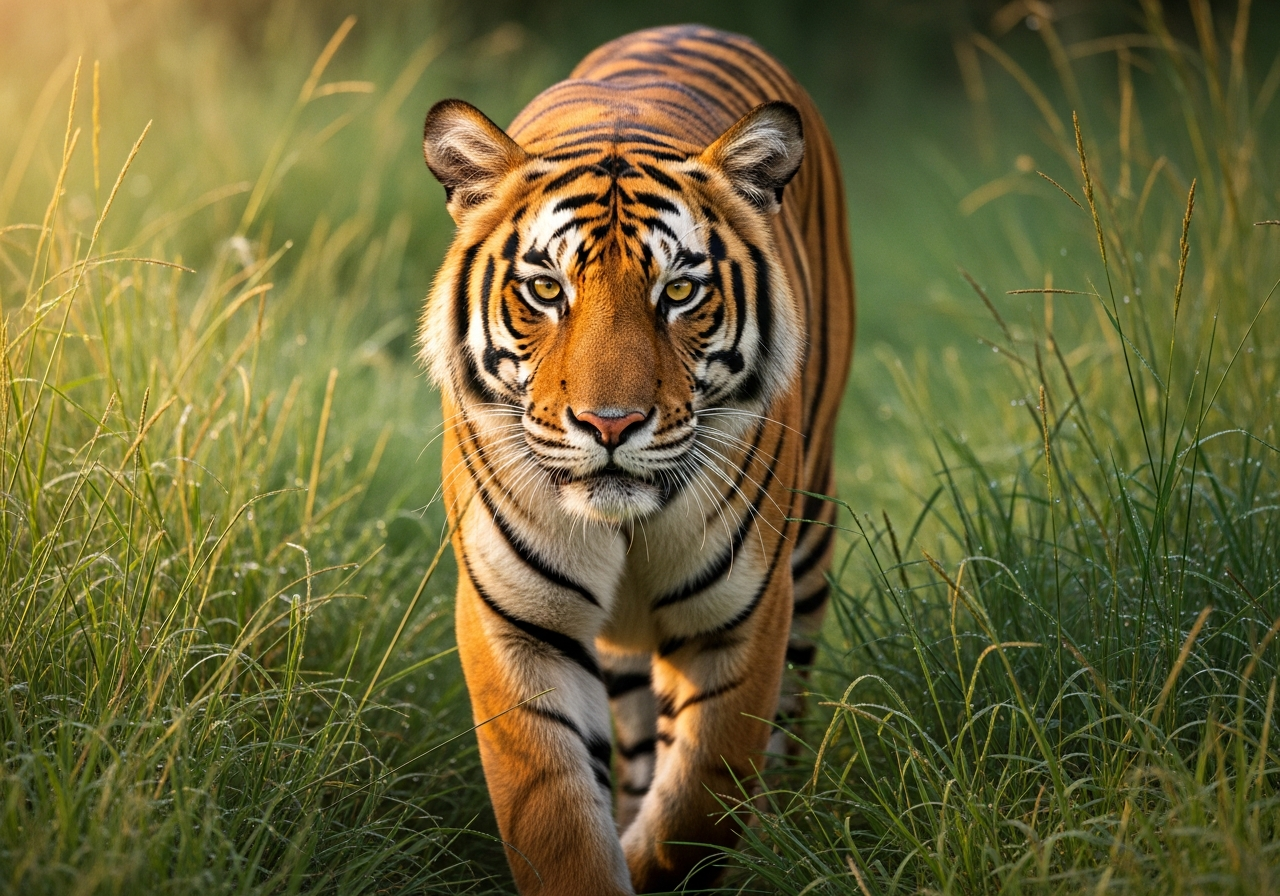
Tiger stripes are camouflage. Vertical dark stripes on an orange coat break up the body outline in tall grass, forest shade, and dappled light — helping a stalker get close before the final rush. Each tiger’s stripe pattern is unique, like a fingerprint.
At a glance
| Main function | Disruptive camouflage |
|---|---|
| Pattern | Unique to each individual |
| Skin | Pigment pattern present in the skin too |
| White tigers | Rare colour morph — not a separate wild subspecies |
How stripes hide a huge predator
Prey animals are often dichromatic or less sensitive to orange–green contrast the way humans are. In dim forest light, the broken pattern matters more than looking “bright orange” to us. Stripes also help in grassland edges where vertical stems create similar visual noise.
Why every tiger looks different
Stripe width, spacing, and face markings vary. Researchers and reserve managers use stripe patterns in camera-trap IDs to recognise individuals without capturing them.
Myths about tiger stripes
White tigers are not a healthy wild subspecies — they are a rare colour morph often linked to inbreeding in captivity. Stripes are not for “decoration”; they are functional crypsis shaped by natural selection.
Vision, light, and disruptive patterns
Many ungulate prey species detect motion and contrast differently than humans. In forest shade, vertical dark bars break the shoulder and flank outline so the tiger’s bulk is harder to parse as a single animal. Tall grass adds a similar vertical template. Evolution favoured patterns that delayed detection by a few critical seconds.
Stripe genetics produce individuality useful to scientists. Matching left and right flanks across camera traps lets researchers estimate density without darting every animal. Tourism guides sometimes recognise famous residents by face stripes alone.
White tigers in captivity are a colour morph associated with recessive alleles and often inbreeding; they are not a separate wild race waiting to be “saved” by breeders. Wild conservation focuses on orange tigers in functioning ecosystems, where stripes still do their camouflage job.
Do unique stripes mean every tiger is safe to identify — and to save?
Stripe patterns let camera-trap studies identify individuals. That is how India and IUCN build counts. It does not make private “rare stripe” breeding ethical. White tigers in entertainment are inbred oddities, not a conservation programme.
WARN’s tiger appeal funds wild-cat partners. Read WARN’s white-tiger captive-breeding note before sharing cub photos.
Sources
FAQs
Why do tigers have stripes?
Primarily for camouflage — disruptive patterning that hides them while stalking in vegetation and dappled light.
Are tiger stripes unique?
Yes. Individual stripe patterns are distinct and used in camera-trap identification.
Do tigers have stripes on their skin?
The pigment pattern is present in the skin as well as the fur.
Why are tigers orange if they need camouflage?
Orange can still blend in forest light for many prey visual systems; the broken stripe pattern is the key camouflage feature.
Who this page is for. Read the tiger profile if you want the full biology; this page answers one question.