Quick answer
Tigers can kill a person, but attacks are rare relative to encounter rates in protected areas. This is not polar-bear predatory-as-default. The Sundarbans is a known conflict landscape, not a global average. Do not feed. IUCN: Endangered. Figures checked 13 August 2026.
How dangerous are tigers, really?
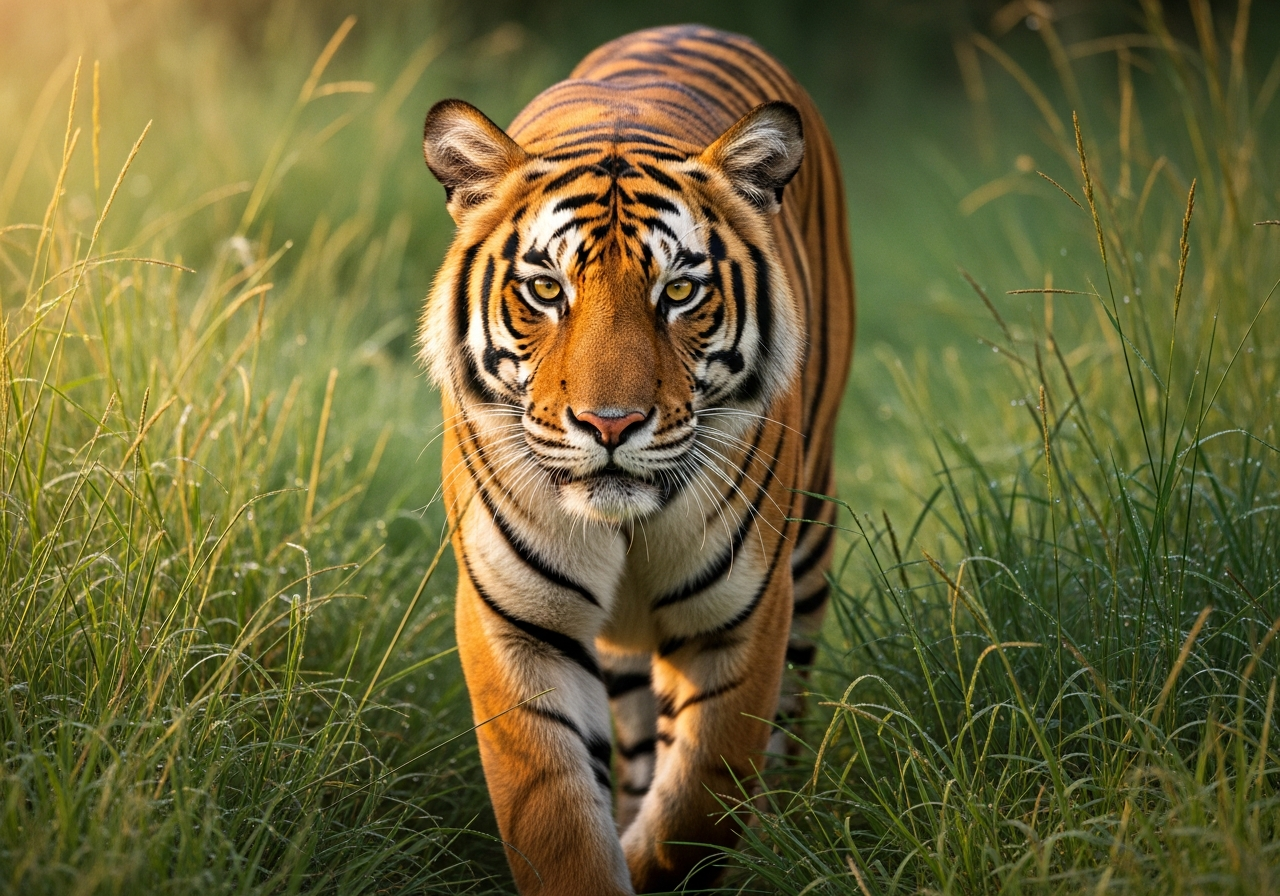
Most wild tigers avoid people and hunt deer and wild boar. Documented attacks exist and can be fatal; they are uncommon relative to jeep and hide encounters in reserves. Treat capability as real and contact as uncommon — not a horror default and not a house-cat. “Listed in our guides as Endangered” was the thin status line, not a temperament.
When do encounters turn dangerous?
Surprise on foot, injured animals, mothers with cubs, and cats already killing livestock. Approaching for photos is a frequent human factor. Food rewards create the next incident. Fisherfolk, honey collectors and herders in the Sundarbans work where tigers swim between islands — a conflict landscape, not the Ranthambore average.
What can they actually do?
Large males can approach 300 kg, with long canines and the strength to drag heavy ungulates. Short sprints and strong swimming are real. Stripes break up outline in cover. Endangered is an extinction label, not a personality. Even a starving cat retains lethal capability.
What actually keeps people safe?
Licensed guides, distance, locked food, and park rules on foot access. Never feed wildlife. Face the animal if seen; do not run as a first plan. This is forest and mangrove country, not a leash-your-poodle suburb. Report habituated or injured animals to authorities.
Are people typical prey?
No. Tigers ambush deer, wild boar and other ungulates. A large meal can run to tens of kilograms of meat. Humans are not the default item. Opportunity, injury or learned conflict in a few landscapes can override avoidance — that is not polar-bear predatory-as-default.
Where is this risk even real?
Remaining Asian forest, grassland and mangrove — from the Russian Far East to India and the Sundarbans. Overlap is highest at village, grazing and fishing edges. WARN’s tiger appeal describes proposed partner-led work — it does not run tiger camps. “Fewer than 5,000” is campaign rounding versus IUCN 2022’s 3,726–5,578 excluding cubs..
Sources
Tiger FAQs
Are tigers dangerous?
They can kill a person, but attacks are rare relative to encounter rates in protected areas. This is not polar-bear predatory-as-default. The Sundarbans is a known conflict landscape, not a global average. Do not run toward one. Do not feed. IUCN: Endangered. Figures checked 13 August 2026.
What should you do if you meet a tiger?
Give it space. Get into a vehicle if you can. Do not run as a first plan. Never offer food. Follow licensed park rules; this page is not a field manual for a solo hike in mangrove or sal forest. Fisherfolk and honey collectors in the Sundarbans face a different geometry than a jeep tourist.
Are they more dangerous than lions?
Different continents, different overlap. Tigers are solitary Asian ambush hunters; lions are social African cats with a small remnant in India. Mixing them produces a false race. Historically more recorded tiger deaths sit where dense human use meets remaining forest — not because every tiger hunts people as a default.
What actually helps besides staying back?
Prey, cover, and coexistence so villages are not forced into revenge. World Animal Rescue Network’s tiger appeal describes proposed partner-led work — it does not run tiger camps. “Fewer than 5,000” is campaign rounding; IUCN 2022 estimated 3,726–5,578 excluding cubs..
Who this page is for. This page is realistic risk, not medical advice after a bite or attack.