Quick answer
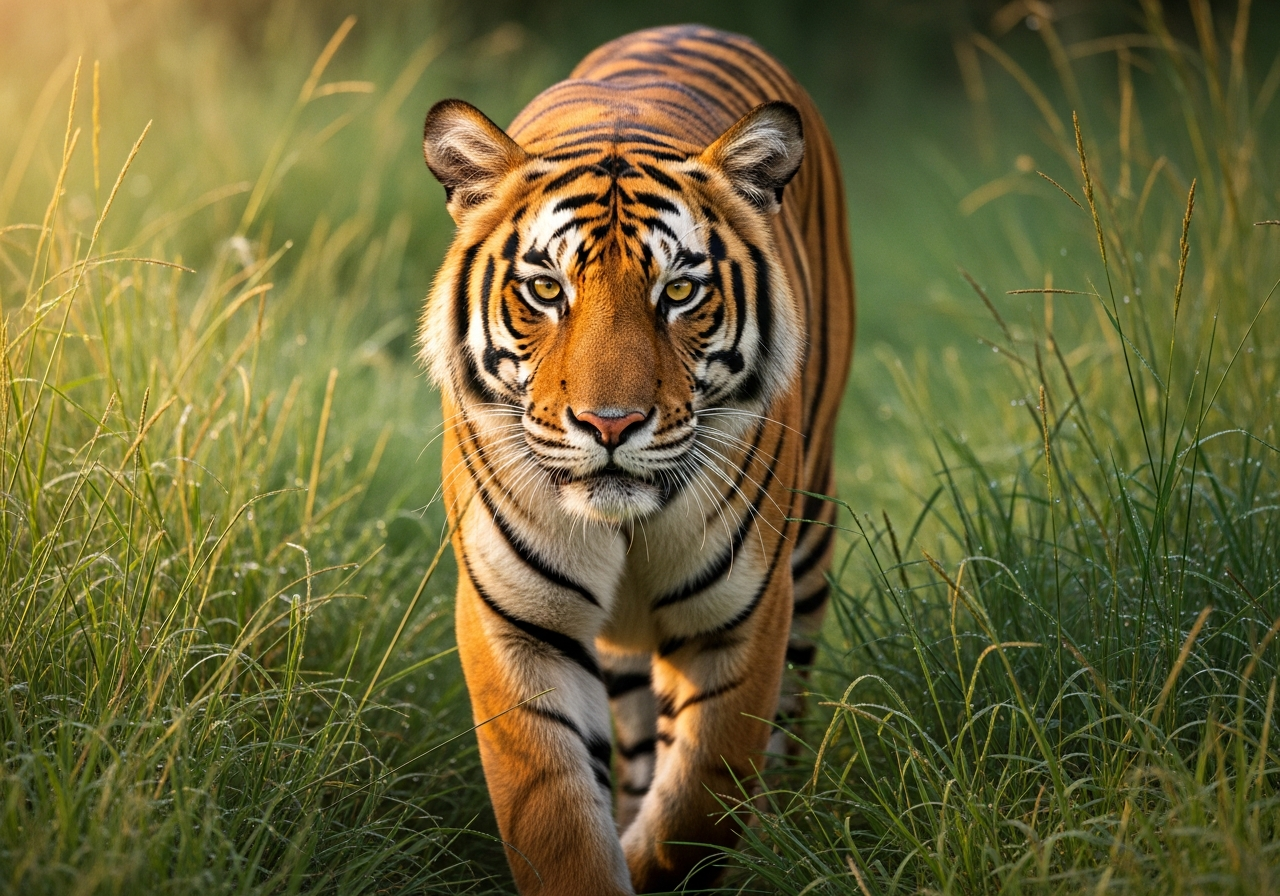
Tigers typically reach about 49–65 km/h (30–40 mph) in short bursts. They are ambush predators: stalk close, then explode forward. They are not built for long high-speed chases like cheetahs.
At a glance
| Burst speed | About 49–65 km/h (30–40 mph) |
|---|---|
| Style | Ambush and short rush |
| Endurance | Low at top speed |
| Vs lion | Similar burst band; different social hunting |
Ambush athleticism
A tiger’s power is in acceleration and the killing bite, often to the throat or nape of large deer and wild pigs. Stalking through cover reduces the need for a long sprint.
If the first rush fails, tigers often abandon the chase rather than run themselves into heat stress.
Swimming, snow, and forest
Tigers swim well and use waterways in mangrove and riverine habitats (e.g. Sundarbans). Siberian tigers move through snow where stealth and strength matter more than open-plain speed.
Compared with other cats
Cheetahs win pure speed. Lions match approximate burst ranges but hunt socially on open ground more often. Leopards emphasise climbing and versatility with smaller prey.
Built for power, not open-plain racing
Tigers are the largest living cats. Their mass favours grappling and a killing bite over cheetah-like aerial stride frequency. In dense vegetation, a short rush from cover is more valuable than a long sprint across grassland. Stripe camouflage supports that stalking approach.
Subspecies differ in average size — Amur tigers are often heavier than Sumatran tigers — but the hunting template is similar: solitary stalk, explosive close. Soft forest floors, mangrove mud, and snow each change footing; published speed figures should be read as approximate burst capability, not a race ranking.
Like lions, tigers overheat if pushed too far. After a failed ambush they often melt back into cover rather than pursue for kilometres. That energy economics explains why prey density and stalking cover are better predictors of tiger success than raw top speed.
Is a tiger faster than a lion?
Burst estimates overlap and both are short. Tigers win hunts with stealth and a short rush, not a timed sprint. Viral km/h tables without “distance and duration” are entertainment.
Wild speed only exists where forests still hold deer. Donate via WARN’s tiger appeal if you want that habitat funded rather than another speed myth.
Sources
FAQs
How fast can a tiger run?
Roughly 49–65 km/h (30–40 mph) in short bursts, depending on the individual and terrain.
Is a tiger faster than a lion?
They are similar; measurement methods vary. Neither approaches cheetah speed.
Can a human outrun a tiger?
No over a short distance. Do not approach wild tigers.
Do tigers chase prey far?
Usually not — they rely on stalking and a short explosive rush.
Who this page is for. Read the tiger profile if you want the full biology; this page answers one question.