Image sourcing: see credits & licences
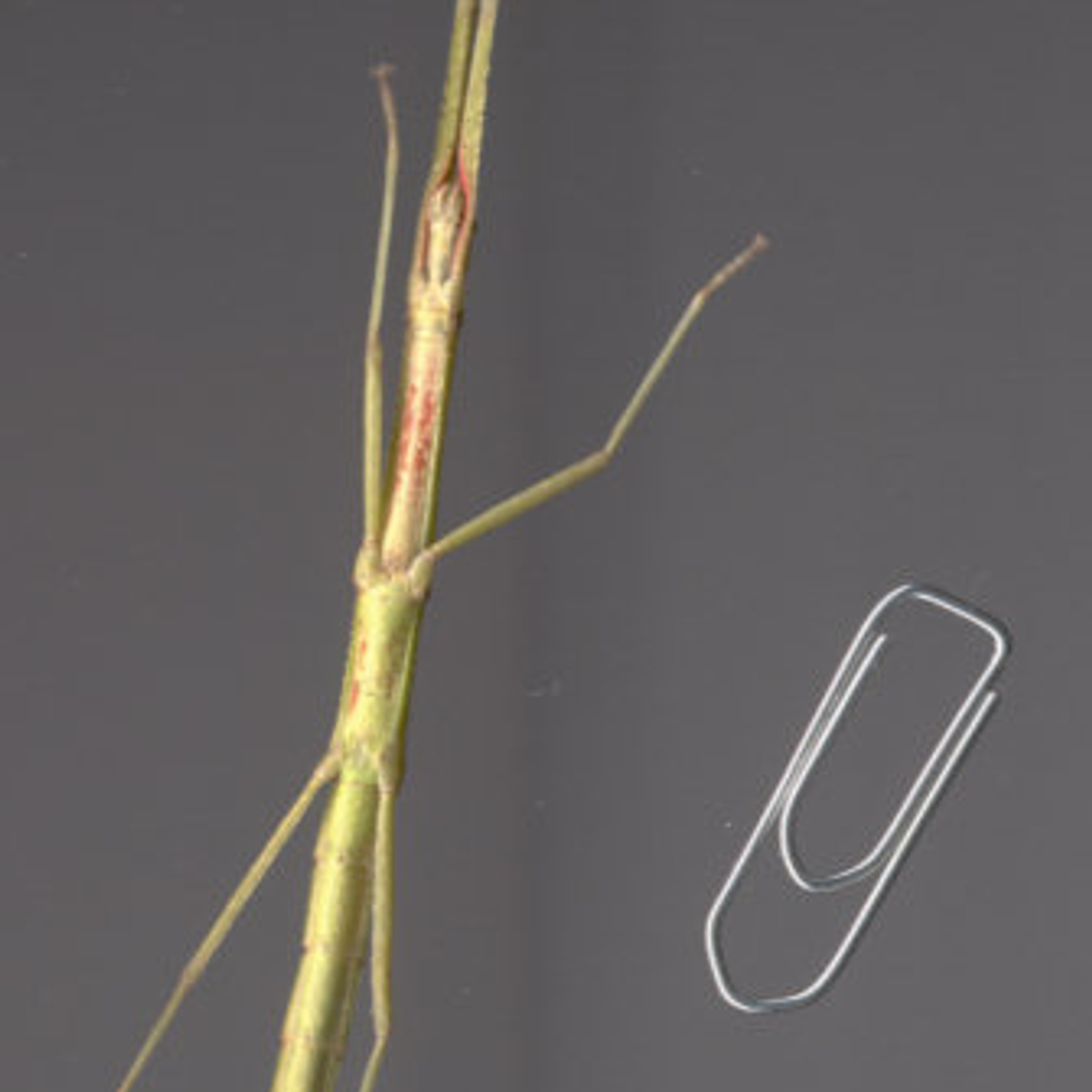
The Indian stick insect (Carausius morosus) is an insect of the family Lonchodidae, in the order Phasmatodea.
Quick answer
The Indian stick insect (Carausius morosus) is a master of twig camouflage native to southern India and famous worldwide as a classroom and pet insect. Wingless females reproduce largely by parthenogenesis, eat shrub leaves such as bramble, live about a year, and are listed Least Concern.
Top questions about the Indian Stick Insect
Indian Stick Insect facts at a glance
- Weight 3 g
- Length 10 cm
- Top speed 1 km/h
- Lifespan 1 years
| Scientific name | Carausius morosus |
|---|---|
| Diet | Herbivore |
| Habitat | Shrubs and laboratory cultures |
| Lifespan | Around 1 years in the wild (varies by population and captivity). |
| Weight | About 0.003 kg typical adult mass (sex and region vary). |
| Top speed | Up to roughly 1 km/h when moving at speed. |
| Conservation status | Least Concern (IUCN) |
| Kingdom | Animalia |
|---|---|
| Phylum | Arthropoda |
| Class | Insecta |
| Order | Phasmatodea |
| Family | Lonchodidae |
| Genus | Carausius |
Where it lives
The indian stick insect (Carausius morosus) is native to Southern India; widely cultured worldwide as an educational insect. — recorded across Asia in this guide’s range summary.
For occurrence records, see GBIF species search and sources below.
How big is a indian stick insect?
An adult indian stick insect measures 10 cm long — about 6% of the height of an average adult person (1.73 m) — and weighs around 3 g, a small fraction of an average adult’s body weight (70 kg).
Length vs an average adult’s height (to scale)
What is a group of indian stick insects called?
Group name (collective noun)
A group of Indian Stick Insects is called a cluster.
Baby name
A baby Indian Stick Insect is called a nymph.
Explore more animal collective nouns and baby animal names .
Twig mimicry perfected
Elongated body, twig-coloured cuticle, and slow rocking motions enhance camouflage. When threatened they may freeze or feign death. Captive cultures are almost entirely female.
Leaf-eating herbivore
Diet is leaves of various shrubs and lab food plants such as bramble, ivy, or privet in culture. They chew quietly at night. Across its range it is tied to shrubs and laboratory cultures, and field accounts emphasise this species’ distinctive ecology rather than generic habitat labels.
Southern India — global classrooms
Wild origin in southern India; now cultured on every continent for education because of easy parthenogenetic breeding. Across its range it is tied to shrubs and laboratory cultures, and field accounts emphasise this species’ distinctive ecology rather than generic habitat labels.
Common in captivity
Wild status is Least Concern. Escapees rarely establish harmful invasions in cool climates; in warm regions responsible disposal of eggs matters.
Explore the Indian Stick Insect
Close relatives
- Monarch Butterfly Same class
- Leafcutter Ant Same class
- Bed Bug Same class
- Army Ant Same class
Range & geography
Conservation status of the Indian Stick Insect
The indian stick insect (Carausius morosus) is listed as Least Concern on the IUCN Red List. Least Concern (LC) is the IUCN's lowest-risk category, assigned to widespread, abundant species that have been evaluated and found not to be threatened. It does not mean a species faces no pressures — only that it is not currently at risk of extinction.
The indian stick insect (Carausius morosus) is assessed on the IUCN Red List. Look up on the IUCN Red List .
Frequently asked questions about the Indian Stick Insect
Do Indian stick insects need males to breed?
Females can produce fertile eggs by parthenogenesis, so colonies thrive without males.
How do stick insects avoid predators?
Camouflage as twigs, freezing behaviour, and sometimes autotomy of limbs.
What should pet stick insects eat?
Fresh leaves of suitable plants such as bramble or privet — species-specific lists vary.
How long do Indian stick insects live?
Roughly up to a year under good conditions. Native range summary: Southern India; widely cultured worldwide as an educational insect.
Where are Indian stick insects native?
Southern India; cultures are now global. Native range summary: Southern India; widely cultured worldwide as an educational insect.
What is a group of indian stick insects called?
A group of Indian Stick Insects is called a cluster.
What is a baby indian stick insect called?
A baby Indian Stick Insect is called a nymph.
Sources & references
This guide is compiled and reviewed against established zoological and conservation references. Key sources for the Indian Stick Insect:
-
IUCN Red List of Threatened Species
Conservation status (Least Concern) reflects the IUCN Red List category for Carausius morosus.
-
iNaturalist — observations & photos
Search citizen-science observations and community IDs for Carausius morosus. Useful for range checks and recent sightings — not a substitute for formal Red List status.
-
GBIF — occurrence data
Global Biodiversity Information Facility species search for Carausius morosus. Explore published occurrence records used in range research.
-
Global Animal Guide editorial standards
How we research, source, review, and update every guide for accuracy.