Shortfin Mako Shark
Isurus oxyrinchus
Image sourcing: see credits & licences
Quick answer
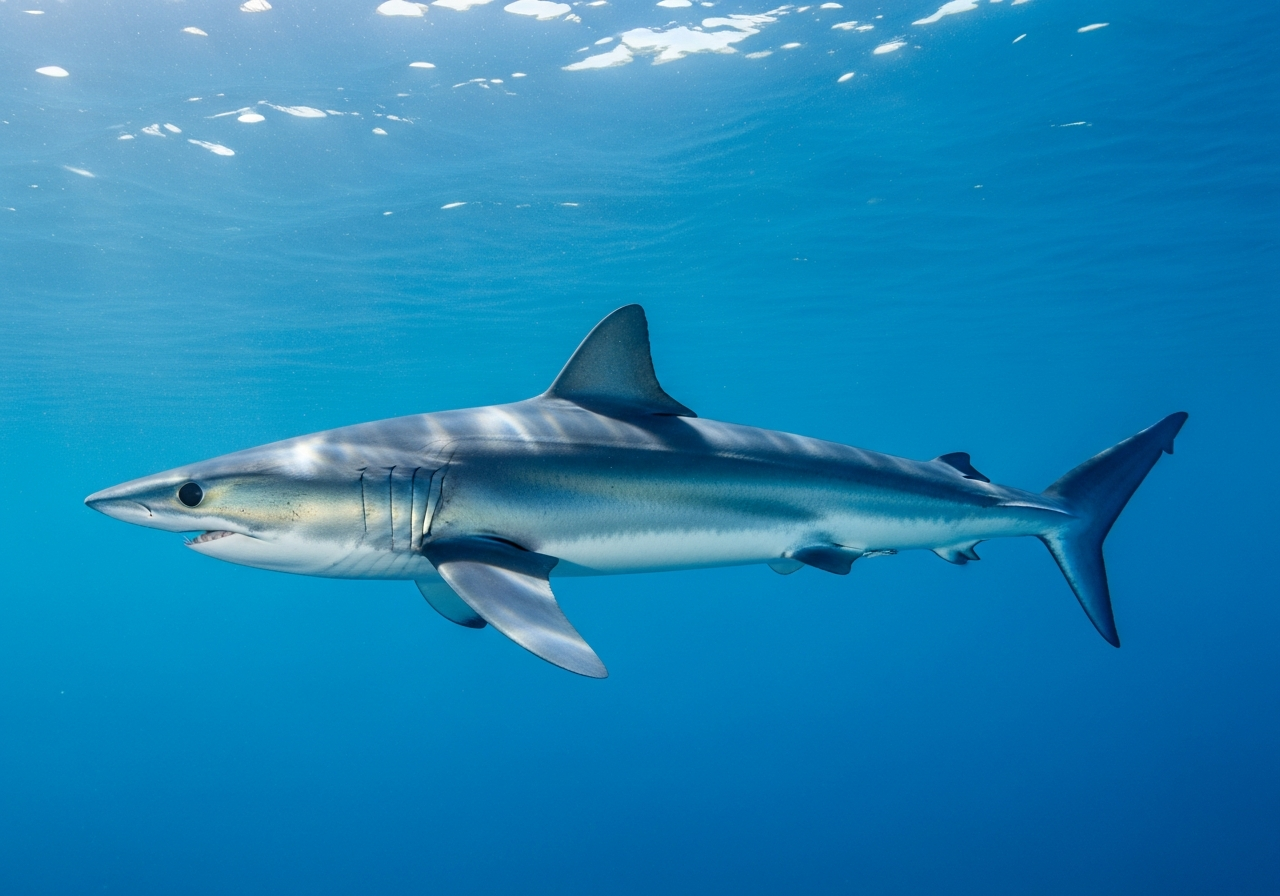
The shortfin mako is the fastest shark in the world, reaching short bursts of about 74 km/h (46 mph). A warm-bodied, open-ocean predator found in temperate and tropical seas worldwide, it has a sleek, torpedo-shaped body built for speed. Shortfin makos are now listed as Endangered.
Shortfin Mako Shark facts at a glance
| Scientific name | Isurus oxyrinchus |
|---|---|
| Diet | Carnivore |
| Habitat | Open temperate and tropical oceans |
| Lifespan | Around 30 years |
| Length | Up to 4 m (13 ft) |
| Top speed | Up to 74 km/h (46 mph) |
| Conservation status | Endangered (IUCN) |
| Kingdom | Animalia |
|---|---|
| Phylum | Chordata |
| Class | Chondrichthyes |
| Order | Lamniformes |
| Family | Lamnidae |
| Genus | Isurus |
Where it lives
Open temperate and tropical waters of every major ocean worldwide.
What is a group of shortfin mako sharks called?
Group name (collective noun)
A group of Shortfin Mako Sharks is called a shiver. It is also known as a school.
Baby name
A baby Shortfin Mako Shark is called a pup.
Explore more animal collective nouns and baby animal names .
Built for speed
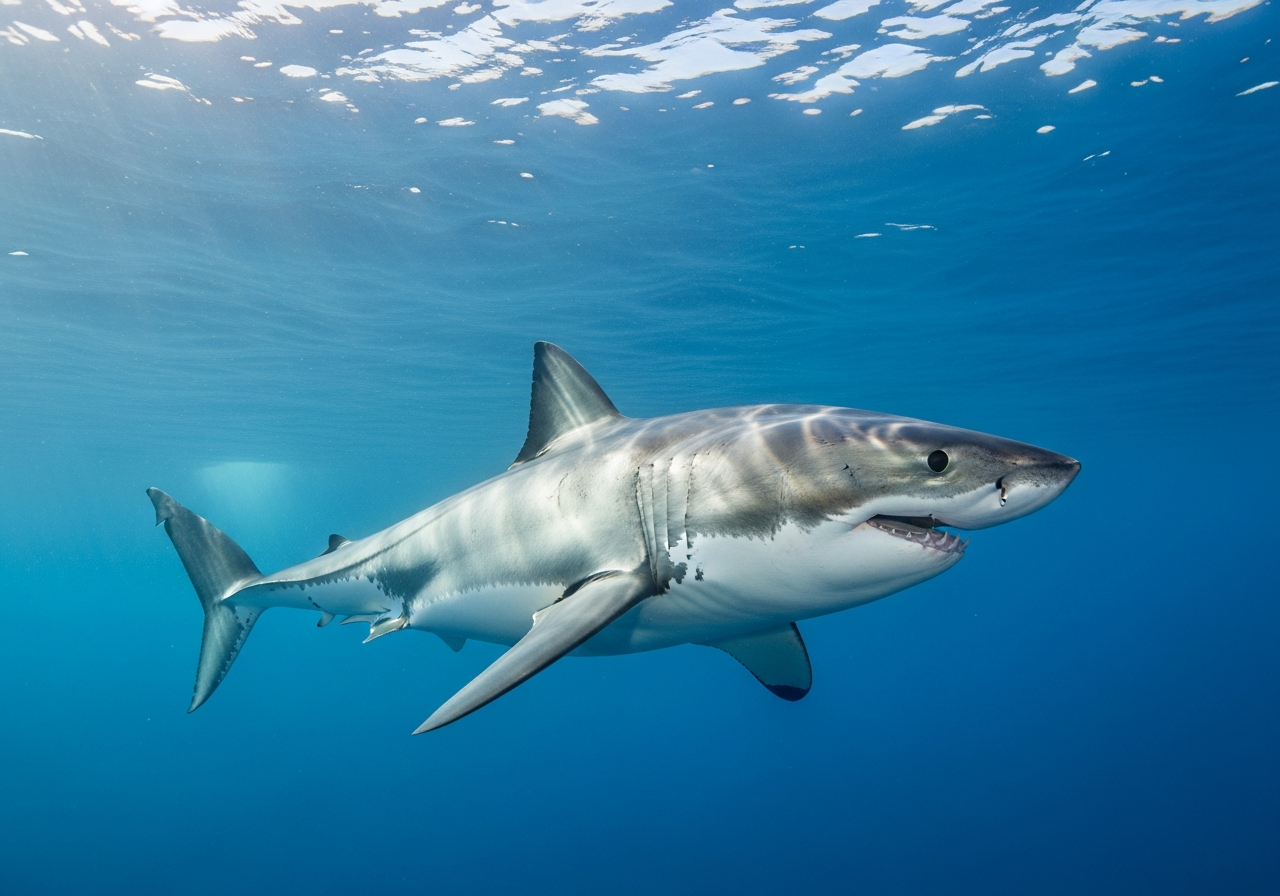
The shortfin mako has a slender, torpedo-shaped body, a pointed snout, and a crescent-shaped tail that together make it the fastest shark in the sea. Like the great white, it is partially warm-blooded, keeping its muscles warmer than the surrounding water so it can swim in powerful, sustained bursts.
Diet and hunting
Makos are open-ocean hunters that chase down fast prey such as tuna, mackerel, and swordfish, and will also take squid and smaller sharks. Their speed lets them ambush schooling fish from below, and they are known to leap clear of the water when hunting or when hooked.
Life cycle
Shortfin makos grow slowly and mature late, and females give birth to live young after a long pregnancy. This slow reproduction means populations recover very slowly once their numbers fall — a key reason the species is now at risk.
Conservation
The shortfin mako is listed as Endangered on the IUCN Red List. It is heavily affected by overfishing, both as a target for its meat and fins and as accidental bycatch in fisheries aimed at tuna and swordfish. International catch limits and stronger protections are now being introduced to help the species recover.
Dig deeper into the Shortfin Mako Shark
- Are Shortfin Mako Shark Endangered
Dig deeper into shortfin mako shark — are shortfin mako shark endangered.
- How Long do Shortfin Mako Shark Live?
Dig deeper into shortfin mako shark — how long do shortfin mako shark live.
- Shortfin Mako Shark Guide 5
Dig deeper into shortfin mako shark — shortfin mako shark guide 5.
- What do Shortfin Mako Shark Eat
Dig deeper into shortfin mako shark — what do shortfin mako shark eat.
- Where do Shortfin Mako Shark Live?
Dig deeper into shortfin mako shark — where do shortfin mako shark live.
Explore the Shortfin Mako Shark
Compare
Related Fishs
Collections
Range & geography
Did you know? Shortfin Mako Shark facts
- The shortfin mako is the fastest shark in the world, reaching short bursts of about 74 km/h (46 mph).
- Shortfin makos are the fastest sharks on Earth, reaching short bursts of around 74 km/h (46 mph). Their speed helps them catch fast prey such as tuna and swordfish.
- Yes. The shortfin mako is classified as Endangered on the IUCN Red List, mainly because of overfishing for its meat and fins and accidental capture in other fisheries.
- Shortfin makos can grow up to about 4 m (13 ft) long and weigh over 500 kg (1,100 lb), though most are smaller.
- Bites on people are very rare. Makos live mostly in the open ocean away from swimmers, and humans are not part of their natural diet.
- Conservation: Endangered (IUCN).
Diet & feeding
Shortfin Mako Shark feeds primarily as a carnivore. The shortfin mako has a slender, torpedo-shaped body, a pointed snout, and a crescent-shaped tail that together make it the fastest shark in the sea. Like the great white, it is partially warm-blooded, keeping its muscles warmer than the surrounding water so it can sw
Adaptations
- The shortfin mako has a slender, torpedo-shaped body, a pointed snout, and a crescent-shaped tail that together make it the fastest shark in the sea. Like the great white, it is partially warm-blooded, keeping its muscles warmer than the surrounding water so it can swim in powerful, sustained bursts.
- Makos are open-ocean hunters that chase down fast prey such as tuna, mackerel, and swordfish, and will also take squid and smaller sharks. Their speed lets them ambush schooling fish from below, and they are known to leap clear of the water when hunting or when hooked.
Behaviour & ecology
- The shortfin mako has a slender, torpedo-shaped body, a pointed snout, and a crescent-shaped tail that together make it the fastest shark in the sea. Like the great white, it is partially warm-blooded, keeping its muscles warmer than the surrounding water so it can swim in powerful, sustained bursts.
- Makos are open-ocean hunters that chase down fast prey such as tuna, mackerel, and swordfish, and will also take squid and smaller sharks. Their speed lets them ambush schooling fish from below, and they are known to leap clear of the water when hunting or when hooked.
- Shortfin makos grow slowly and mature late, and females give birth to live young after a long pregnancy. This slow reproduction means populations recover very slowly once their numbers fall — a key reason the species is now at risk.
Communication
- Lateral-line and visual cues coordinate schooling, courtship, or territorial behaviour.
- Some species produce low-frequency sounds or drumming for spawning or defence.
Habitat & range
Open temperate and tropical oceans
Ecological role
Shortfin Mako Shark acts as a predator that helps regulate prey populations and maintain balance in open temperate and tropical oceans.
Conservation status of the Shortfin Mako Shark
Endangered (EN) means a species faces a very high risk of extinction in the wild. Populations are usually declining sharply due to habitat loss, hunting, disease, or climate pressure. It sits one level below Critically Endangered on the IUCN Red List.
The shortfin mako shark (Isurus oxyrinchus) is assessed on the IUCN Red List. Look up on the IUCN Red List .
Frequently asked questions about the Shortfin Mako Shark
How fast can a shortfin mako shark swim?
Shortfin makos are the fastest sharks on Earth, reaching short bursts of around 74 km/h (46 mph). Their speed helps them catch fast prey such as tuna and swordfish.
Are shortfin mako sharks endangered?
Yes. The shortfin mako is classified as Endangered on the IUCN Red List, mainly because of overfishing for its meat and fins and accidental capture in other fisheries.
How big do shortfin mako sharks get?
Shortfin makos can grow up to about 4 m (13 ft) long and weigh over 500 kg (1,100 lb), though most are smaller.
Do shortfin mako sharks attack humans?
Bites on people are very rare. Makos live mostly in the open ocean away from swimmers, and humans are not part of their natural diet.
What do shortfin mako sharks eat?
They feed mainly on fast-swimming fish such as tuna, mackerel, and swordfish, along with squid and smaller sharks.
How long do shortfin mako sharks live?
Shortfin makos can live around 30 years. They grow slowly and reproduce late, which makes their populations slow to recover.
What is a group of shortfin mako sharks called?
A group of Shortfin Mako Sharks is called a shiver. It is also known as a school.
What is a baby shortfin mako shark called?
A baby Shortfin Mako Shark is called a pup.
Sources & references
This guide is compiled and reviewed against established zoological and conservation references. Key sources for the Shortfin Mako Shark:
-
IUCN Red List of Threatened Species
Conservation status (Endangered) reflects the IUCN Red List category for Isurus oxyrinchus.
- IUCN Red List — Isurus oxyrinchus.
Conservation status (Endangered) and population trends.
- Animal Diversity Web — Isurus oxyrinchus. University of Michigan Museum of Zoology.
Life history, morphology, and range.
- Wikipedia — Shortfin Mako Shark.
General taxonomy and overview (cross-check primary sources).
-
Global Animal Guide editorial standards
How we research, source, review, and update every guide for accuracy.