Sea Lion
Zalophus californianus
Quick answer
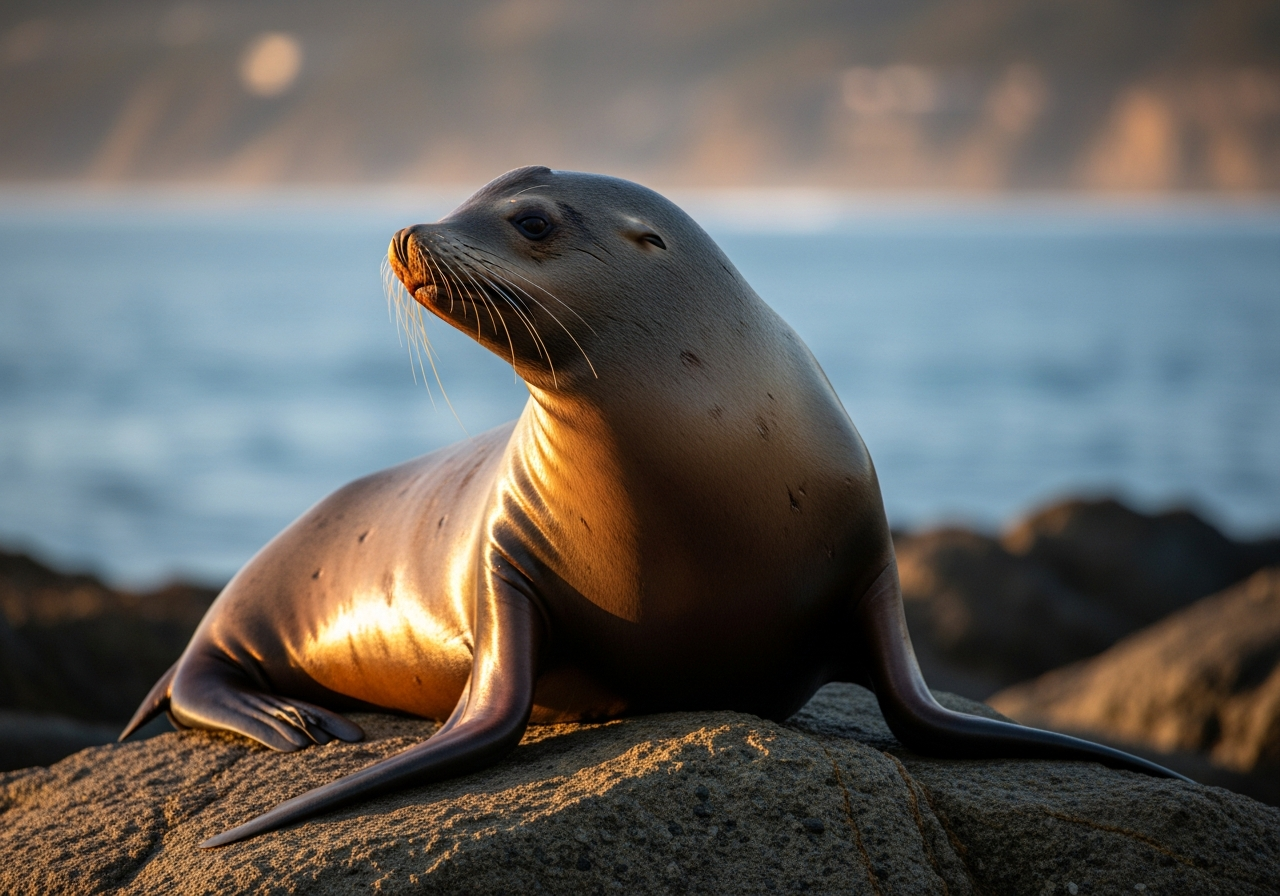
Sea lions are intelligent marine mammals with external ear flaps and large flippers that let them walk on land. The California sea lion is a fast, social swimmer that barks loudly and lives in coastal colonies. Males can weigh up to about 390 kg (860 lb) and live 20 to 30 years.
Sea Lion facts at a glance
| Scientific name | Zalophus californianus |
|---|---|
| Diet | Carnivore (fish and squid) |
| Habitat | Coastal waters, beaches, and rocky shores |
| Lifespan | 20–30 years |
| Weight | 100–390 kg (220–860 lb); males far larger |
| Top speed | Up to 40 km/h (25 mph) in water |
| Conservation status | Least Concern (IUCN) |
| Kingdom | Animalia |
|---|---|
| Phylum | Chordata |
| Class | Mammalia |
| Order | Carnivora |
| Family | Otariidae |
| Genus | Zalophus |
Where it lives
The Pacific coast of North America from British Columbia to central Mexico, including the Gulf of California.
What is a group of sea lions called?
Group name (collective noun)
A group of Sea Lions is called a colony. It is also known as a raft or a rookery.
Baby name
A baby Sea Lion is called a pup.
Explore more animal collective nouns and baby animal names .
Sea lions versus seals
Sea lions are eared seals: they have small external ear flaps and large, strong front flippers that they can rotate forward to walk and even gallop on land. True seals lack visible ears and move on land by wriggling. Sea lions are also noisier, more social, and swim mainly with their front flippers, while seals power themselves with their hind flippers.
Fast, clever swimmers
California sea lions are built for speed and agility, reaching about 40 km/h (25 mph) in short bursts and twisting effortlessly to chase fish and squid. They are among the most intelligent marine mammals, which is why they are commonly trained for public aquarium shows and have been taught to perform tasks for the United States Navy.
Loud, crowded colonies
Sea lions are highly social and gather in noisy colonies that can number in the thousands. During the breeding season, large males defend stretches of beach and a group of females with near-constant barking. Their distinctive honking calls are the classic sound of working harbors and piers along the Pacific coast.
Habitat and range
The California sea lion lives along the Pacific coast of North America, from British Columbia south to central Mexico, including the Gulf of California. It hauls out to rest and breed on beaches, rocky islands, jetties, and marina docks, never straying far from rich coastal feeding grounds.
Conservation
The California sea lion is listed as Least Concern, and its population has grown strongly since hunting was banned. Ongoing threats include entanglement in fishing gear, harmful algal blooms that poison their prey, and conflict with fisheries. Warm-water events can also reduce fish stocks and lead to mass strandings of pups.
Dig deeper into the Sea Lion
- How Fast Is A Sea Lion
Dig deeper into sea lion — how fast is a sea lion.
- How Long do Sea Lion Live?
Dig deeper into sea lion — how long do sea lion live.
- Sea Lion Facts 5
Dig deeper into sea lion — sea lion facts 5.
- What do Sea Lion Eat
Dig deeper into sea lion — what do sea lion eat.
- Where do Sea Lion Live?
Dig deeper into sea lion — where do sea lion live.
Explore the Sea Lion
Did you know? Sea Lion facts
- Sea lions are intelligent marine mammals with external ear flaps and large flippers that let them walk on land.
- Sea lions have visible ear flaps and large front flippers they use to walk on land, and they are loud and social. True seals have no external ears, move by wriggling, and are generally quieter.
- Sea lions are carnivores that feed mainly on fish such as anchovies, sardines, and hake, along with squid. They can dive deep and hunt in coordinated groups.
- California sea lions can reach about 40 km/h (25 mph) in short bursts, using their powerful front flippers, which makes them agile hunters of fast-moving fish.
- Very. Sea lions learn quickly, have good memories, and can be trained to perform complex tasks, which is why they feature in aquarium shows and have been used by the U.S. Navy.
- Conservation: Least Concern (IUCN).
Diet & feeding
Sea Lion feeds primarily as a carnivore (fish and squid). The California sea lion lives along the Pacific coast of North America, from British Columbia south to central Mexico, including the Gulf of California. It hauls out to rest and breed on beaches, rocky islands, jetties, and marina docks, never straying far from
Adaptations
- Sea lions are eared seals: they have small external ear flaps and large, strong front flippers that they can rotate forward to walk and even gallop on land. True seals lack visible ears and move on land by wriggling. Sea lions are also noisier, more social, and swim mainly with their front flippers, while seals power themselves with their hind flippers.
- California sea lions are built for speed and agility, reaching about 40 km/h (25 mph) in short bursts and twisting effortlessly to chase fish and squid. They are among the most intelligent marine mammals, which is why they are commonly trained for public aquarium shows and have been taught to perform tasks for the United States Navy.
Behaviour & ecology
- Sea lions are eared seals: they have small external ear flaps and large, strong front flippers that they can rotate forward to walk and even gallop on land. True seals lack visible ears and move on land by wriggling. Sea lions are also noisier, more social, and swim mainly with their front flippers, while seals power themselves with their hind flippers.
- California sea lions are built for speed and agility, reaching about 40 km/h (25 mph) in short bursts and twisting effortlessly to chase fish and squid. They are among the most intelligent marine mammals, which is why they are commonly trained for public aquarium shows and have been taught to perform tasks for the United States Navy.
- Sea lions are highly social and gather in noisy colonies that can number in the thousands. During the breeding season, large males defend stretches of beach and a group of females with near-constant barking. Their distinctive honking calls are the classic sound of working harbors and piers along the Pacific coast.
Communication
- Sea Lion uses scent, posture, and vocal signals to mark territory and coordinate social behaviour.
- Communication intensity often peaks during breeding seasons and territorial disputes.
Habitat & range
Coastal waters, beaches, and rocky shores
Ecological role
Sea Lion acts as a predator that helps regulate prey populations and maintain balance in coastal waters, beaches, and rocky shores.
Frequently asked questions about the Sea Lion
What is the difference between a seal and a sea lion?
Sea lions have visible ear flaps and large front flippers they use to walk on land, and they are loud and social. True seals have no external ears, move by wriggling, and are generally quieter.
What do sea lions eat?
Sea lions are carnivores that feed mainly on fish such as anchovies, sardines, and hake, along with squid. They can dive deep and hunt in coordinated groups.
How fast can a sea lion swim?
California sea lions can reach about 40 km/h (25 mph) in short bursts, using their powerful front flippers, which makes them agile hunters of fast-moving fish.
Are sea lions intelligent?
Very. Sea lions learn quickly, have good memories, and can be trained to perform complex tasks, which is why they feature in aquarium shows and have been used by the U.S. Navy.
How long do sea lions live?
California sea lions typically live 20 to 30 years in the wild, with females often outliving the larger, harder-fighting males.
What is a group of sea lions called?
A group of Sea Lions is called a colony. It is also known as a raft or a rookery.
What is a baby sea lion called?
A baby Sea Lion is called a pup.
Sources & references
This guide is compiled and reviewed against established zoological and conservation references. Key sources for the Sea Lion:
-
IUCN Red List of Threatened Species
Conservation status (Least Concern) reflects the IUCN Red List category for Zalophus californianus.
- IUCN Red List — Zalophus californianus.
Conservation status (Least Concern) and population trends.
- Animal Diversity Web — Zalophus californianus. University of Michigan Museum of Zoology.
Life history, morphology, and range.
- Wikipedia — Sea Lion.
General taxonomy and overview (cross-check primary sources).
-
Global Animal Guide editorial standards
How we research, source, review, and update every guide for accuracy.