Sea Bunny
Jorunna parva
Quick answer
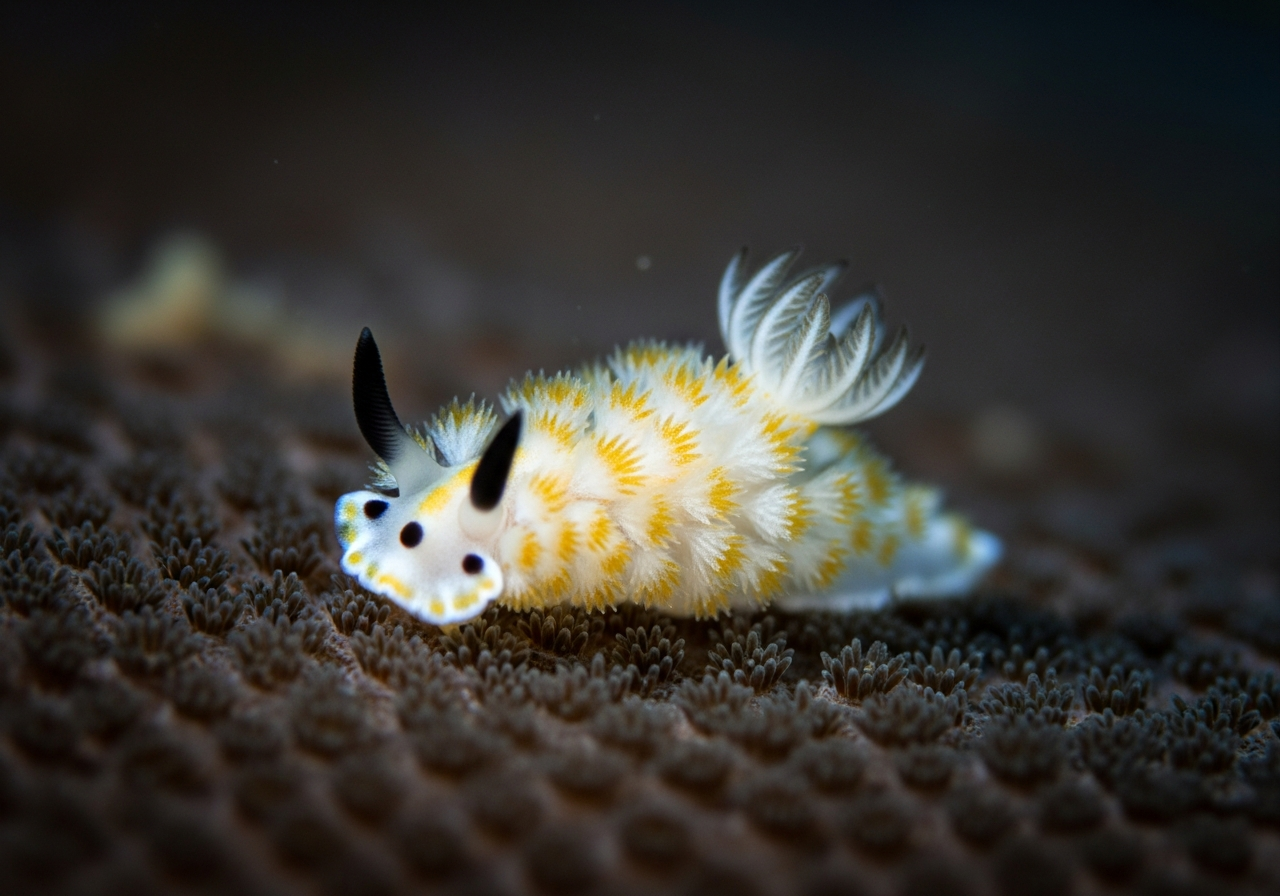
Sea Bunnys (Jorunna parva) are invertebrates found across Asia. The tiny nudibranch that went viral for looking like a miniature rabbit. Adults typically weigh roughly 0.001 kg (0 lb), reach speeds of up to 0.2 km/h (0 mph), and live Around 1 year (typical of nudibranchs). They feed on carnivore (sponges) and are listed as Least Concern on the IUCN Red List. Shallow reefs and rocky seabeds in the western Pacific and Indian Oceans, including Japan and the Philippines.
Sea Bunny facts at a glance
| Scientific name | Jorunna parva |
|---|---|
| Diet | Carnivore (sponges) |
| Habitat | Shallow reefs and rocky seabeds |
| Lifespan | Around 1 year (typical of nudibranchs) |
| Length | Usually 1–2.5 cm (under 1 in) |
| Range | Western Pacific and Indian Oceans |
| Conservation status | Least Concern |
| Kingdom | Animalia |
|---|---|
| Phylum | Mollusca |
| Class | Gastropoda |
| Order | Nudibranchia |
| Family | Discodorididae |
| Genus | Jorunna |
What is a baby sea bunny called?
Baby name
A baby Sea Bunny is called a veliger.
Explore more animal collective nouns and baby animal names .
Range and habitat
Sea Bunnies inhabit Shallow reefs and rocky seabeds in the western Pacific and Indian Oceans, including Japan and the Philippines. Their preferred habitat includes shallow reefs and rocky seabeds, where they find food, shelter, and breeding sites. Population density varies with prey availability, water access, and human disturbance. Protected areas and intact corridors remain essential for long-term persistence across Asia.
Physical characteristics and behaviour
Adult sea bunnies typically measure about 0.025 m in length and weigh roughly 0.001 kg (0 lb). They can sprint at up to 0.2 km/h (0 mph) when hunting or escaping predators. Sea Bunnys are known for the tiny nudibranch that went viral for looking like a miniature rabbit — social structure, daily activity, and seasonal movements all reflect pressures in their native environment.
Diet and ecological role
Sea Bunnies feed primarily on carnivore (sponges). Foraging strategy depends on season, local prey or plant abundance, and competition with other species. As invertebrates, they play a measurable role in their ecosystem — controlling prey numbers, dispersing seeds, or shaping habitat through feeding and movement patterns that other wildlife depends on.
Conservation and human interaction
The IUCN lists sea bunnies as Least Concern. Habitat loss, hunting, climate change, and conflict with people are among the main threats worldwide. Responsible ecotourism, anti-poaching patrols, and community-based conservation help in parts of their range. Never approach or feed wild sea bunnies — observe from a safe distance and support reputable conservation organisations.
Dig deeper into the Sea Bunny
- Sea Bunny Facts 3
Dig deeper into sea bunny — sea bunny facts 3.
- Sea Bunny Facts 4
Dig deeper into sea bunny — sea bunny facts 4.
- Sea Bunny Facts 5
Dig deeper into sea bunny — sea bunny facts 5.
- What do Sea Bunny Eat
Dig deeper into sea bunny — what do sea bunny eat.
- Where do Sea Bunny Live?
Dig deeper into sea bunny — where do sea bunny live.
Explore the Sea Bunny
Related Invertebrates
Range & geography
Did you know? Sea Bunny facts
- The 'sea bunny' is Jorunna parva, a small dorid nudibranch (sea slug) found in the Indo-Pacific, typically 1–2.5 cm long.
- No. What looks like soft fur is caryophyllidia — firm, spiked sensory projections. They look soft in photographs but are not hair-like in texture.
- Sea bunnies are tiny — most individuals are between 1 and 2.5 cm long. They are easily overlooked on the reef despite their striking appearance.
- Practically, no. Nudibranchs have highly specialised diets and require specific sponge species that are extremely difficult to replicate in captivity. Most nudibranchs survive only briefly in aquariums even under expert care.
- Sea bunnies are found in the western Pacific and Indian Oceans, including waters around Japan, the Philippines, and other Indo-Pacific regions. They live on shallow reefs, rocky seabeds, and coral rubble where sponges grow.
- Conservation: Least Concern.
Diet & feeding
Sea Bunny feeds primarily as a carnivore (sponges). The sea bunny's fuzzy texture comes from caryophyllidia — clusters of minute, spiked sensory projections scattered across its back. These are not soft hair but firm sensory tissue that helps the animal detect environmental cues. The two 'bunny ears' are rhinophores, c
Adaptations
- The sea bunny's fuzzy texture comes from caryophyllidia — clusters of minute, spiked sensory projections scattered across its back. These are not soft hair but firm sensory tissue that helps the animal detect environmental cues. The two 'bunny ears' are rhinophores, chemosensory organs that detect dissolved chemicals in the water to help the animal find food and potential mates. Both features are common in nudibranchs, but in Jorunna parva they are particularly large and white, giving the animal its distinctive bunny-like silhouette.
- Nudibranchs (pronounced noo-dee-branks) are a group of soft-bodied, shell-less marine molluscs found throughout the world's oceans, from shallow reefs to the deep sea. The name means 'naked gills' and refers to their exposed gill structures. There are over 3,000 known species in a remarkable range of colours and shapes. Many are brightly coloured to warn predators that they are toxic or distasteful, a strategy called aposematism.
Behaviour & ecology
- The sea bunny's fuzzy texture comes from caryophyllidia — clusters of minute, spiked sensory projections scattered across its back. These are not soft hair but firm sensory tissue that helps the animal detect environmental cues. The two 'bunny ears' are rhinophores, chemosensory organs that detect dissolved chemicals in the water to help the animal find food and potential mates. Both features are common in nudibranchs, but in Jorunna parva they are particularly large and white, giving the animal its distinctive bunny-like silhouette.
- Nudibranchs (pronounced noo-dee-branks) are a group of soft-bodied, shell-less marine molluscs found throughout the world's oceans, from shallow reefs to the deep sea. The name means 'naked gills' and refers to their exposed gill structures. There are over 3,000 known species in a remarkable range of colours and shapes. Many are brightly coloured to warn predators that they are toxic or distasteful, a strategy called aposematism.
- The sea bunny grazes on sponges, which it scrapes from rocky and reef surfaces. Like many dorid nudibranchs, it can absorb and repurpose chemical defences from the sponges it eats, concentrating noxious compounds in its own skin. This makes it unpalatable to many predators, and its colouring may signal this toxicity to fish and other hunters in the area.
Communication
- Sea Bunny uses scent, posture, and vocal signals to mark territory and coordinate social behaviour.
- Communication intensity often peaks during breeding seasons and territorial disputes.
Habitat & range
Shallow reefs and rocky seabeds
Ecological role
Sea Bunny acts as a predator that helps regulate prey populations and maintain balance in shallow reefs and rocky seabeds.
Frequently asked questions about the Sea Bunny
Where do sea bunnies live?
Sea Bunnies are native to Asia. Shallow reefs and rocky seabeds in the western Pacific and Indian Oceans, including Japan and the Philippines.
What do sea bunnies eat?
They feed on carnivore (sponges), adjusting seasonally based on what is available in Shallow reefs and rocky seabeds.
How long do sea bunnies live?
Around 1 year (typical of nudibranchs). Captive individuals sometimes live longer with veterinary care and steady nutrition.
How big is a sea bunny?
Adults weigh roughly 0.001 kg (0 lb) and reach roughly 0.025 metres long; males are often larger than females.
Are sea bunnies endangered?
Sea Bunnies are listed as Least Concern on the IUCN Red List. Threats include habitat loss, hunting, and human-wildlife conflict.
How fast can a sea bunny run?
Sea Bunnies can reach about 0.2 km/h (0 mph) in short bursts.
What is a baby sea bunny called?
A baby Sea Bunny is called a veliger.
Sources & references
This guide is compiled and reviewed against established zoological and conservation references. Key sources for the Sea Bunny:
-
IUCN Red List of Threatened Species
Conservation status (Least Concern) reflects the IUCN Red List category for Jorunna parva.
- IUCN Red List — Jorunna parva.
Conservation status (Least Concern) and population trends.
- Animal Diversity Web — Jorunna parva. University of Michigan Museum of Zoology.
Life history, morphology, and range.
- Wikipedia — Sea Bunny.
General taxonomy and overview (cross-check primary sources).
-
Global Animal Guide editorial standards
How we research, source, review, and update every guide for accuracy.