Image sourcing: see credits & licences
Quick answer
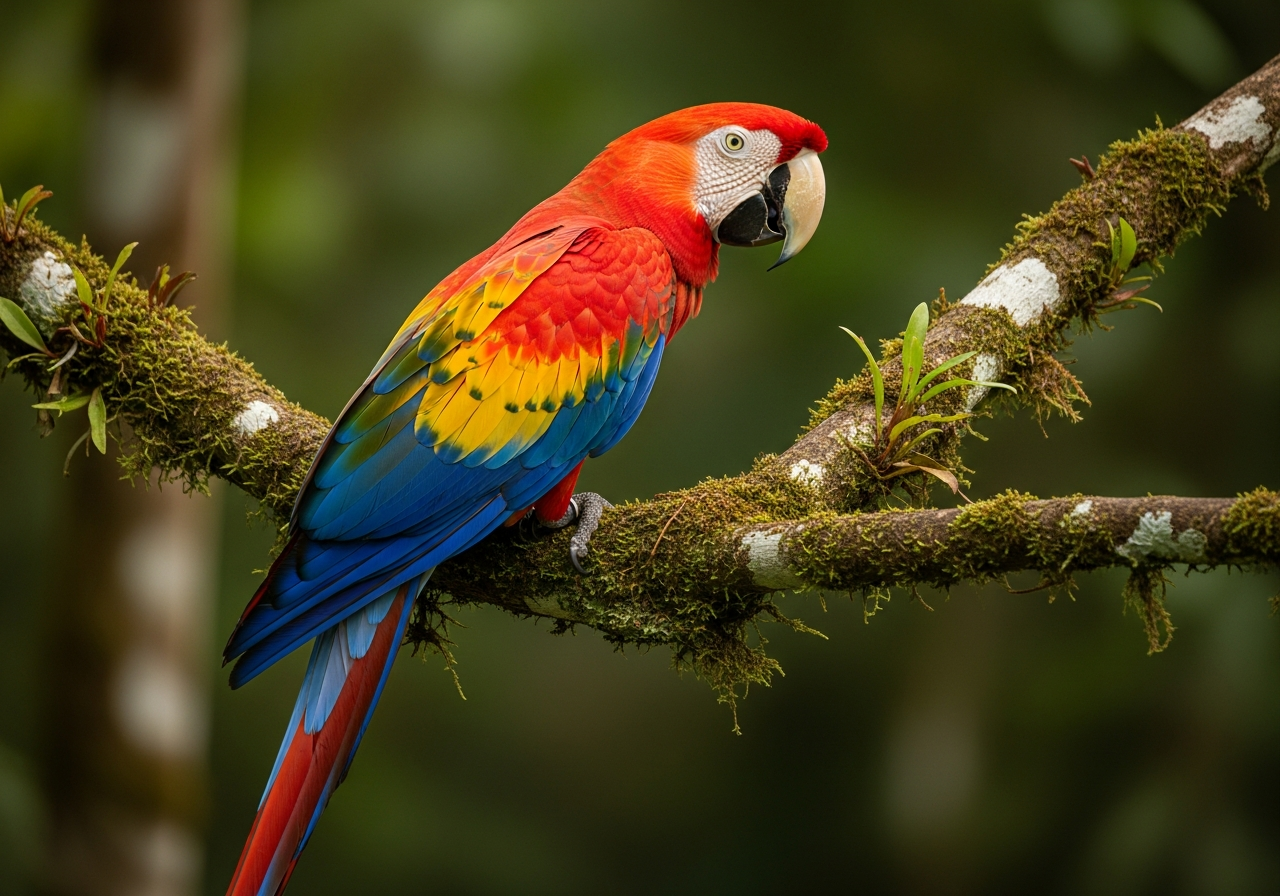
The scarlet macaw is a large, brightly colored parrot native to the rainforests of Central and South America, famous for its red, yellow, and blue plumage. Highly intelligent and social, it can mimic sounds, use its strong beak to crack hard nuts, and form lifelong pair bonds. Scarlet macaws are long-lived, often reaching 40 to 50 years and sometimes longer in captivity.
Top questions about the Scarlet Macaw
Scarlet Macaw facts at a glance
- Weight 1 kg
- Length 85 cm
- Top speed 56 km/h
- Lifespan 45 years
| Scientific name | Ara macao |
|---|---|
| Diet | Omnivore (fruit, nuts, seeds, flowers) |
| Habitat | Tropical rainforest and woodland |
| Lifespan | 40–50 years, longer in captivity |
| Length | 81–96 cm (32–38 in) including tail |
| Top speed | Up to 56 km/h (35 mph) |
| Conservation status | Least Concern (IUCN) |
| Kingdom | Animalia |
|---|---|
| Phylum | Chordata |
| Class | Aves |
| Order | Psittaciformes |
| Family | Psittacidae |
| Genus | Ara |
Where it lives
The scarlet macaw (Ara macao) is native to Humid lowland rainforests from southern Mexico and Central America across the Amazon Basin of South America. — recorded across North America, South America in this guide’s range summary.
For occurrence records, see GBIF species search and sources below.
How big is a scarlet macaw?
An adult scarlet macaw measures 85 cm long — about 49% of the height of an average adult person (1.73 m) — and weighs around 1.0 kg, about 1% of an average adult’s body weight (70 kg).
Length vs an average adult’s height (to scale)
What is a group of scarlet macaws called?
Group name (collective noun)
A group of Scarlet Macaws is called a pandemonium. It is also known as a flock.
Baby name
A baby Scarlet Macaw is called a chick.
Explore more animal collective nouns and baby animal names .
Intelligence and behavior
Scarlet macaws are among the most intelligent birds, able to solve problems, use their feet like hands, and mimic words and sounds. They are highly social, gathering in noisy flocks and communicating with loud squawks that carry far through the forest. Pairs are devoted to each other, often flying wing to wing and preening their partner.
Diet and the clay licks
These macaws eat fruit, nuts, seeds, and flowers, and their immensely powerful beaks can crack nuts that few other animals can open. In parts of the Amazon they gather at exposed riverbank clay, known as clay licks, where they eat mineral-rich soil that is thought to help neutralize toxins in their diet and supply important nutrients.
Habitat and range
Scarlet macaws live in humid lowland rainforests and nearby woodlands from southern Mexico through Central America and across much of the Amazon Basin in South America. They nest in cavities high in large trees and need expanses of mature forest to find enough food and suitable nesting sites.
Pets and conservation
Their beauty and intelligence have made scarlet macaws popular in the pet trade, but they are demanding, long-lived, and loud, and wild populations have suffered from trapping and deforestation. They are protected by international trade rules, and reintroduction projects are helping restore them to areas where they had disappeared.
Dig deeper into the Scarlet Macaw
- How Fast Is A Scarlet Macaw?
Scarlet Macaw top speed is up to about 56 km/h (35 mph). Sprint vs endurance and what limits pace.
- How Long Do Scarlet Macaws Live?
Scarlet Macaw lifespan is typically 40–50 years, longer in captivity. What shortens or extends life, life stages, and status (Least Concern).
- What Do Scarlet Macaws Eat?
What scarlet macaws eat: Omnivore (fruit, nuts, seeds, flowers), foraging style, and seasonal shifts in Tropical rainforest and woodland.
- Where Do Scarlet Macaws Live?
Where scarlet macaws live: Tropical rainforest and woodland, native range cues, and human overlap. Status Least Concern.
Explore the Scarlet Macaw
Did you know? Scarlet Macaw facts
- The scarlet macaw is a large, brightly colored parrot native to the rainforests of Central and South America, famous for its red, yellow, and blue plumage.
- Scarlet macaws are very long-lived. In the wild they often reach 40 to 50 years, and well-cared-for birds in captivity can live 60 years or more.
- They are omnivores that eat fruit, nuts, seeds, and flowers. Their powerful beaks crack hard nuts, and they often visit clay licks to eat mineral-rich soil that may help with digestion.
- Yes, to a degree. Scarlet macaws are intelligent and can learn to mimic words and household sounds, though they are generally less talkative than some other parrots like the African grey.
- They can bond strongly with people but are challenging pets. They live for decades, are very loud, need large enclosures and lots of stimulation, and can give a powerful bite, so they suit only experienced keepers.
- Conservation: Least Concern (IUCN).
Diet & feeding
Scarlet Macaw feeds primarily as a omnivore (fruit, nuts, seeds, flowers). These macaws eat fruit, nuts, seeds, and flowers, and their immensely powerful beaks can crack nuts that few other animals can open. In parts of the Amazon they gather at exposed riverbank clay, known as clay licks, where they eat mineral-rich s
Adaptations
- Scarlet macaws are among the most intelligent birds, able to solve problems, use their feet like hands, and mimic words and sounds. They are highly social, gathering in noisy flocks and communicating with loud squawks that carry far through the forest. Pairs are devoted to each other, often flying wing to wing and preening their partner.
- These macaws eat fruit, nuts, seeds, and flowers, and their immensely powerful beaks can crack nuts that few other animals can open. In parts of the Amazon they gather at exposed riverbank clay, known as clay licks, where they eat mineral-rich soil that is thought to help neutralize toxins in their diet and supply important nutrients.
Behaviour & ecology
- Scarlet macaws are among the most intelligent birds, able to solve problems, use their feet like hands, and mimic words and sounds. They are highly social, gathering in noisy flocks and communicating with loud squawks that carry far through the forest. Pairs are devoted to each other, often flying wing to wing and preening their partner.
- These macaws eat fruit, nuts, seeds, and flowers, and their immensely powerful beaks can crack nuts that few other animals can open. In parts of the Amazon they gather at exposed riverbank clay, known as clay licks, where they eat mineral-rich soil that is thought to help neutralize toxins in their diet and supply important nutrients.
- Scarlet macaws live in humid lowland rainforests and nearby woodlands from southern Mexico through Central America and across much of the Amazon Basin in South America. They nest in cavities high in large trees and need expanses of mature forest to find enough food and suitable nesting sites.
Communication
- Scarlet Macaw uses calls and visual displays to communicate territory, alarm, and breeding status.
- Vocal repertoires vary by species and are often learned or refined during development.
Habitat & range
Tropical rainforest and woodland
Ecological role
Scarlet Macaw contributes to seed dispersal, insect control, or nutrient cycling depending on diet and foraging habits.
Conservation status of the Scarlet Macaw
The scarlet macaw (Ara macao) is listed as Least Concern on the IUCN Red List. Least Concern (LC) is the IUCN's lowest-risk category, assigned to widespread, abundant species that have been evaluated and found not to be threatened. It does not mean a species faces no pressures — only that it is not currently at risk of extinction.
The scarlet macaw (Ara macao) is assessed on the IUCN Red List. Look up on the IUCN Red List .
Frequently asked questions about the Scarlet Macaw
How long do scarlet macaws live?
Scarlet macaws are very long-lived. In the wild they often reach 40 to 50 years, and well-cared-for birds in captivity can live 60 years or more.
What do scarlet macaws eat?
They are omnivores that eat fruit, nuts, seeds, and flowers. Their powerful beaks crack hard nuts, and they often visit clay licks to eat mineral-rich soil that may help with digestion.
Can scarlet macaws talk?
Yes, to a degree. Scarlet macaws are intelligent and can learn to mimic words and household sounds, though they are generally less talkative than some other parrots like the African grey.
Do scarlet macaws make good pets?
They can bond strongly with people but are challenging pets. They live for decades, are very loud, need large enclosures and lots of stimulation, and can give a powerful bite, so they suit only experienced keepers.
Are scarlet macaws endangered?
The species is listed as Least Concern overall, but some local populations have been lost to trapping for the pet trade and deforestation. Trade is regulated and reintroduction programs are helping recovery.
Why are scarlet macaws so colorful?
Their bold red, yellow, and blue feathers help them recognize one another and communicate within the flock. In the dappled rainforest the colors can also be surprisingly hard to pick out among leaves and fruit.
What is a group of scarlet macaws called?
A group of Scarlet Macaws is called a pandemonium. It is also known as a flock.
What is a baby scarlet macaw called?
A baby Scarlet Macaw is called a chick.
Sources & references
This guide is compiled and reviewed against established zoological and conservation references. Key sources for the Scarlet Macaw:
-
IUCN Red List of Threatened Species
Conservation status (Least Concern) reflects the IUCN Red List category for Ara macao.
-
iNaturalist — observations & photos
Search citizen-science observations and community IDs for Ara macao. Useful for range checks and recent sightings — not a substitute for formal Red List status.
-
GBIF — occurrence data
Global Biodiversity Information Facility species search for Ara macao. Explore published occurrence records used in range research.
-
eBird — bird observations
Cornell Lab eBird target search for Scarlet Macaw. Check recent checklists and seasonal abundance where birders report this species.
- IUCN Red List — Ara macao.
Conservation status (Least Concern) and population trends.
- Animal Diversity Web — Ara macao. University of Michigan Museum of Zoology.
Life history, morphology, and range.
- Wikipedia — Scarlet Macaw.
General taxonomy and overview (cross-check primary sources).
-
Global Animal Guide editorial standards
How we research, source, review, and update every guide for accuracy.