Image sourcing: see credits & licences
Quick answer
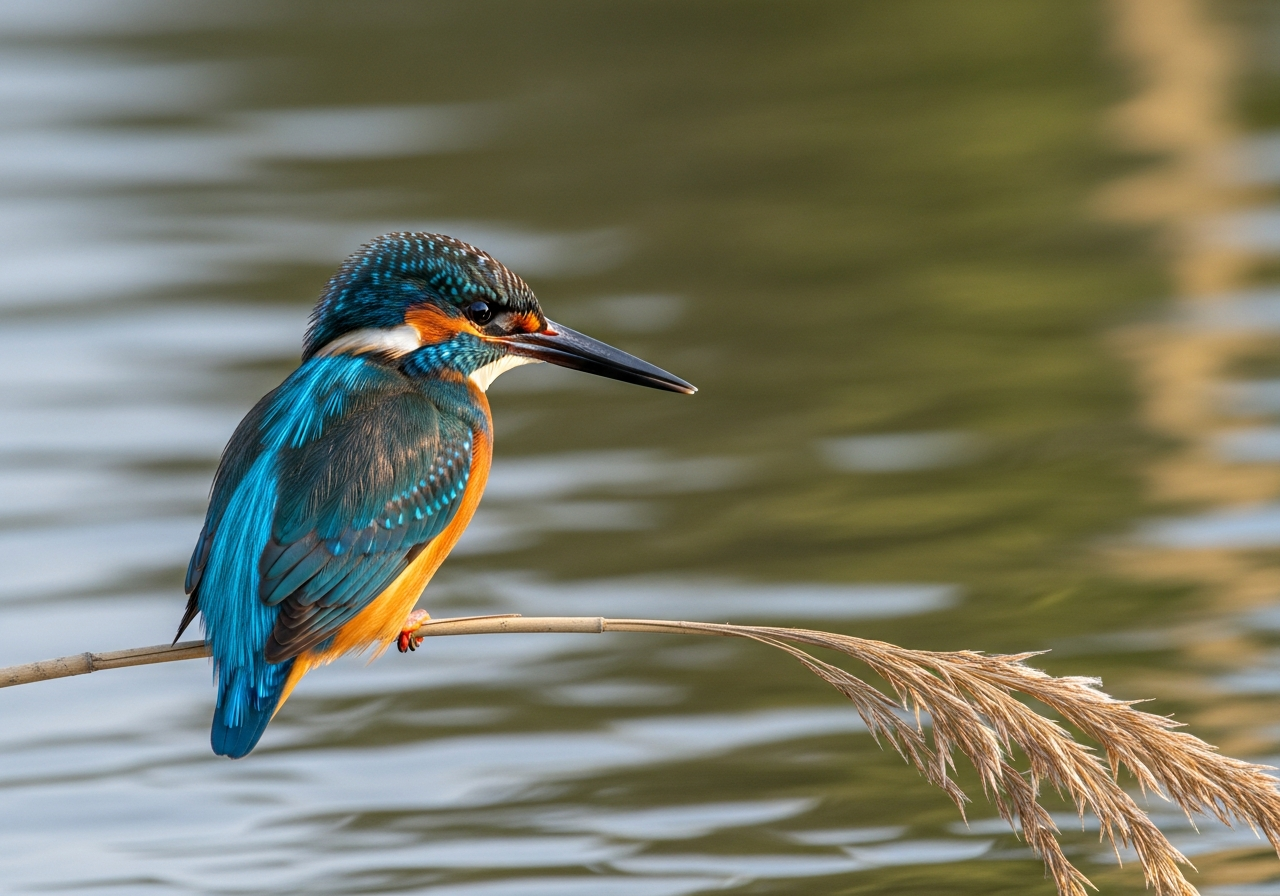
The common kingfisher is a small, vividly colored bird with electric-blue upperparts and orange underparts, found along rivers and streams across Europe, Asia, and North Africa. It hunts by perching above water and diving headfirst to catch small fish. Fast and territorial, common kingfishers usually live only a few years in the wild.
Top questions about the Common Kingfisher
Common Kingfisher facts at a glance
- Weight 40 g
- Length 16 cm
- Top speed 40 km/h
- Lifespan 4 years
| Scientific name | Alcedo atthis |
|---|---|
| Diet | Carnivore (small fish, aquatic insects) |
| Habitat | Rivers, streams, lakes, canals |
| Lifespan | 2–4 years in the wild |
| Weight | 34–46 g (1.2–1.6 oz) |
| Top speed | Around 40 km/h (25 mph) |
| Conservation status | Least Concern (IUCN) |
| Kingdom | Animalia |
|---|---|
| Phylum | Chordata |
| Class | Aves |
| Order | Coraciiformes |
| Family | Alcedinidae |
Where it lives
The common kingfisher (Alcedo atthis) is native to Rivers, streams, and lakes across Europe, Asia, and North Africa. — recorded across Europe, Asia, Africa in this guide’s range summary.
For occurrence records, see GBIF species search and sources below.
How big is a common kingfisher?
An adult common kingfisher measures 16 cm long — about 9% of the height of an average adult person (1.73 m) — and weighs around 40 g, a small fraction of an average adult’s body weight (70 kg).
Length vs an average adult’s height (to scale)
What is a group of common kingfishers called?
Group name (collective noun)
A group of Common Kingfishers is called a concentration. It is also known as a crown or a rattle.
Baby name
A baby Common Kingfisher is called a chick.
Explore more animal collective nouns and baby animal names .
Behavior and hunting
The common kingfisher perches on a low branch over clear, slow-moving water and watches for prey before plunging in headfirst to seize a fish. It can adjust for the way light bends at the water's surface, striking with remarkable accuracy. Back on its perch, it beats the fish against the branch before swallowing it head-first.
Diet and feeding
Small fish make up most of the kingfisher's diet, supplemented by aquatic insects, tadpoles, and freshwater shrimp. A kingfisher must eat roughly its own body weight in food each day to fuel its active lifestyle. Clear water is essential because the bird hunts entirely by sight.
Habitat and range
Common kingfishers live along rivers, streams, canals, and lakes with clean water and overhanging perches, across much of Europe, Asia, and North Africa. They nest in tunnels dug into earth banks beside the water, where both parents raise the young. Birds in colder regions move to ice-free waters or coasts in winter.
Conservation
The common kingfisher is listed as Least Concern, with a very wide range and a large population. Local numbers can drop sharply after harsh winters that freeze their hunting grounds, and they are sensitive to water pollution and the loss of natural riverbanks. Clean rivers and intact banks are important for healthy populations.
Dig deeper into the Common Kingfisher
- How Fast Is A Common Kingfisher?
Common Kingfisher top speed is about Around 40 km/h (25 mph). Sprint vs endurance and what limits pace.
- How Long Do Common Kingfishers Live?
Common Kingfisher lifespan is typically 2–4 years in the wild. What shortens or extends life, life stages, and status (Least Concern).
- What Do Common Kingfishers Eat?
What common kingfishers eat: Carnivore (small fish, aquatic insects), foraging style, and seasonal shifts in Rivers, streams, lakes, canals.
- Where Do Common Kingfishers Live?
Where common kingfishers live: Rivers, streams, lakes, canals, native range cues, and human overlap. Status Least Concern.
Explore the Common Kingfisher
Compare
Related Birds
Range & geography
Did you know? Common Kingfisher facts
- The common kingfisher is a small, vividly colored bird with electric-blue upperparts and orange underparts, found along rivers and streams across Europe, Asia, and North Africa.
- A common kingfisher watches from a perch above the water, then dives headfirst to grab a fish with its dagger-like bill. It can correct for how light bends at the surface, allowing precise strikes.
- They eat mainly small fish, along with aquatic insects, tadpoles, and freshwater shrimp. Because they are so active, they need to eat close to their own body weight in food each day.
- Common kingfishers live along clean rivers, streams, lakes, and canals across Europe, Asia, and North Africa, nesting in tunnels dug into earth banks beside the water.
- Their blue feathers are produced by the structure of the feathers scattering light rather than by pigment, which creates the shimmering, jewel-like effect. The colors play a role in communication and recognition.
- Conservation: Least Concern (IUCN).
Diet & feeding
Common Kingfisher feeds primarily as a carnivore (small fish, aquatic insects). The common kingfisher perches on a low branch over clear, slow-moving water and watches for prey before plunging in headfirst to seize a fish. It can adjust for the way light bends at the water's surface, striking with remarkable accuracy.
Adaptations
- The common kingfisher perches on a low branch over clear, slow-moving water and watches for prey before plunging in headfirst to seize a fish. It can adjust for the way light bends at the water's surface, striking with remarkable accuracy. Back on its perch, it beats the fish against the branch before swallowing it head-first.
- Small fish make up most of the kingfisher's diet, supplemented by aquatic insects, tadpoles, and freshwater shrimp. A kingfisher must eat roughly its own body weight in food each day to fuel its active lifestyle. Clear water is essential because the bird hunts entirely by sight.
Behaviour & ecology
- The common kingfisher perches on a low branch over clear, slow-moving water and watches for prey before plunging in headfirst to seize a fish. It can adjust for the way light bends at the water's surface, striking with remarkable accuracy. Back on its perch, it beats the fish against the branch before swallowing it head-first.
- Small fish make up most of the kingfisher's diet, supplemented by aquatic insects, tadpoles, and freshwater shrimp. A kingfisher must eat roughly its own body weight in food each day to fuel its active lifestyle. Clear water is essential because the bird hunts entirely by sight.
- Common kingfishers live along rivers, streams, canals, and lakes with clean water and overhanging perches, across much of Europe, Asia, and North Africa. They nest in tunnels dug into earth banks beside the water, where both parents raise the young. Birds in colder regions move to ice-free waters or coasts in winter.
Communication
- Common Kingfisher uses calls and visual displays to communicate territory, alarm, and breeding status.
- Vocal repertoires vary by species and are often learned or refined during development.
Habitat & range
Rivers, streams, lakes, canals
Ecological role
Common Kingfisher acts as a predator that helps regulate prey populations and maintain balance in rivers, streams, lakes, canals.
Conservation status of the Common Kingfisher
The common kingfisher (Alcedo atthis) is listed as Least Concern on the IUCN Red List. Least Concern (LC) is the IUCN's lowest-risk category, assigned to widespread, abundant species that have been evaluated and found not to be threatened. It does not mean a species faces no pressures — only that it is not currently at risk of extinction.
The common kingfisher (Alcedo atthis) is assessed on the IUCN Red List. Look up on the IUCN Red List .
Frequently asked questions about the Common Kingfisher
How do kingfishers catch fish?
A common kingfisher watches from a perch above the water, then dives headfirst to grab a fish with its dagger-like bill. It can correct for how light bends at the surface, allowing precise strikes.
What do kingfishers eat?
They eat mainly small fish, along with aquatic insects, tadpoles, and freshwater shrimp. Because they are so active, they need to eat close to their own body weight in food each day.
Where do common kingfishers live?
Common kingfishers live along clean rivers, streams, lakes, and canals across Europe, Asia, and North Africa, nesting in tunnels dug into earth banks beside the water.
Why are kingfishers so brightly colored?
Their blue feathers are produced by the structure of the feathers scattering light rather than by pigment, which creates the shimmering, jewel-like effect. The colors play a role in communication and recognition.
How long do kingfishers live?
Most common kingfishers live only two to four years in the wild. Harsh winters and the dangers faced by young birds keep average lifespans short, though a few survive longer.
Are common kingfishers endangered?
No. The common kingfisher is listed as Least Concern, but local populations can decline after freezing winters or where rivers are polluted or their banks are destroyed.
What is a group of common kingfishers called?
A group of Common Kingfishers is called a concentration. It is also known as a crown or a rattle.
What is a baby common kingfisher called?
A baby Common Kingfisher is called a chick.
Sources & references
This guide is compiled and reviewed against established zoological and conservation references. Key sources for the Common Kingfisher:
-
IUCN Red List of Threatened Species
Conservation status (Least Concern) reflects the IUCN Red List category for Alcedo atthis.
-
iNaturalist — observations & photos
Search citizen-science observations and community IDs for Alcedo atthis. Useful for range checks and recent sightings — not a substitute for formal Red List status.
-
GBIF — occurrence data
Global Biodiversity Information Facility species search for Alcedo atthis. Explore published occurrence records used in range research.
-
eBird — bird observations
Cornell Lab eBird target search for Common Kingfisher. Check recent checklists and seasonal abundance where birders report this species.
- IUCN Red List — Alcedo atthis.
Conservation status (Least Concern) and population trends.
- Animal Diversity Web — Alcedo atthis. University of Michigan Museum of Zoology.
Life history, morphology, and range.
- Wikipedia — Common Kingfisher.
General taxonomy and overview (cross-check primary sources).
-
Global Animal Guide editorial standards
How we research, source, review, and update every guide for accuracy.