Image sourcing: see credits & licences
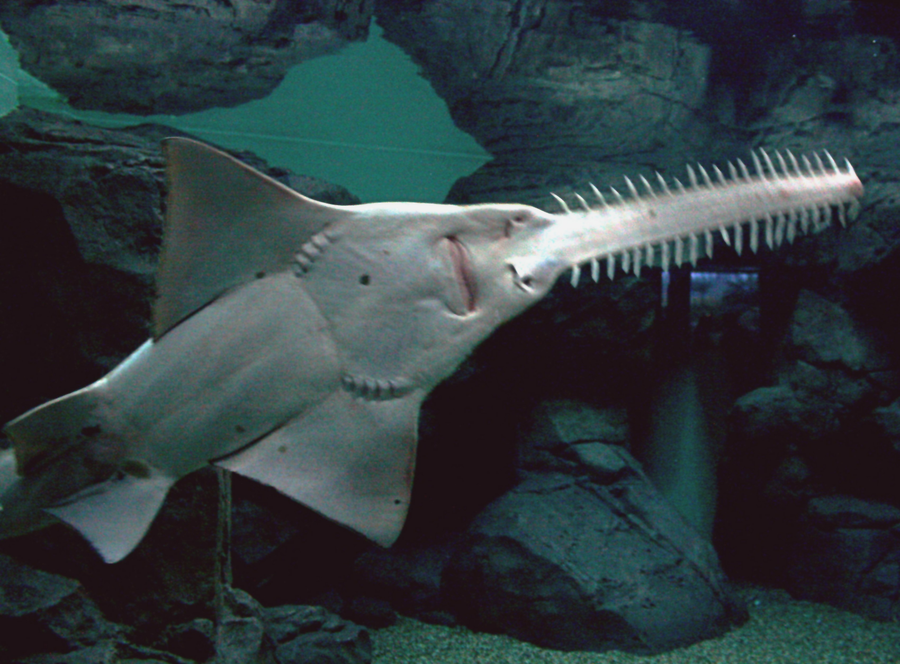
The largetooth sawfish (Pristis pristis) is a cartilaginous fish of the family Pristidae, in the order Rhinopristiformes.
Quick answer
The largetooth sawfish (Pristis pristis) is a giant ray with a toothed rostral saw used to slash fish and probe mud in tropical estuaries and rivers. Adults can exceed 5 m and 350 kg. Remnant strongholds include northern Australia and parts of Central America; IUCN lists the species Critically Endangered after gillnet bycatch and habitat loss.
Top questions about the Largetooth Sawfish
Largetooth Sawfish facts at a glance
- Weight 350 kg
- Length 5 m
- Top speed 20 km/h
- Lifespan 30 years
| Scientific name | Pristis pristis |
|---|---|
| Diet | Carnivore |
| Habitat | Estuaries, rivers, and coastal shallows |
| Lifespan | Around 30 years in the wild (varies by population and captivity). |
| Weight | About 350 kg typical adult mass (sex and region vary). |
| Top speed | Up to roughly 20 km/h when moving at speed. |
| Conservation status | Critically Endangered (IUCN) |
| Kingdom | Animalia |
|---|---|
| Phylum | Chordata |
| Class | Chondrichthyes |
| Order | Rhinopristiformes |
| Family | Pristidae |
| Genus | Pristis |
Where it lives
The largetooth sawfish (Pristis pristis) is native to Remnant tropical coasts and rivers; strongholds in northern Australia and parts of Central America. — recorded across North America, South America, Africa, Asia, Oceania in this guide’s range summary.
For occurrence records, see GBIF species search and sources below.
How big is a largetooth sawfish?
An adult largetooth sawfish measures 5 m long — about 2.9× the height of an average adult person (1.73 m) — and weighs around 350 kg, about 5.0× an average adult’s body weight (70 kg).
Length vs an average adult’s height (to scale)
What is a group of largetooth sawfish called?
Group name (collective noun)
A group of Largetooth Sawfish is called a fever.
Baby name
A baby Largetooth Sawfish is called a pup.
Explore more animal collective nouns and baby animal names .
Rostrum as saw and sensor
The flattened toothed snout (rostrum) detects prey with electroreceptors and can stun fish with side sweeps. Sawfish are rays, not sharks — gill slits sit on the underside.
Fish and bottom prey
Diet includes schooling fish slashed in open water and benthic invertebrates disturbed from sediment. Juveniles use rivers and mangroves as nurseries.
Tropical coasts and rivers
Historically widespread in tropical estuaries and rivers; today remnant populations persist in northern Australia and parts of Central America, with severe declines elsewhere.
Critically Endangered bycatch victim
Rostrums tangle easily in gillnets, and fins and saws entered wildlife trade. Habitat dams block river migrations. Strict protection and net bans in key range states aim to halt extinction.
Explore the Largetooth Sawfish
Close relatives
- Common Guitarfish Same order
- Great White Shark Same class
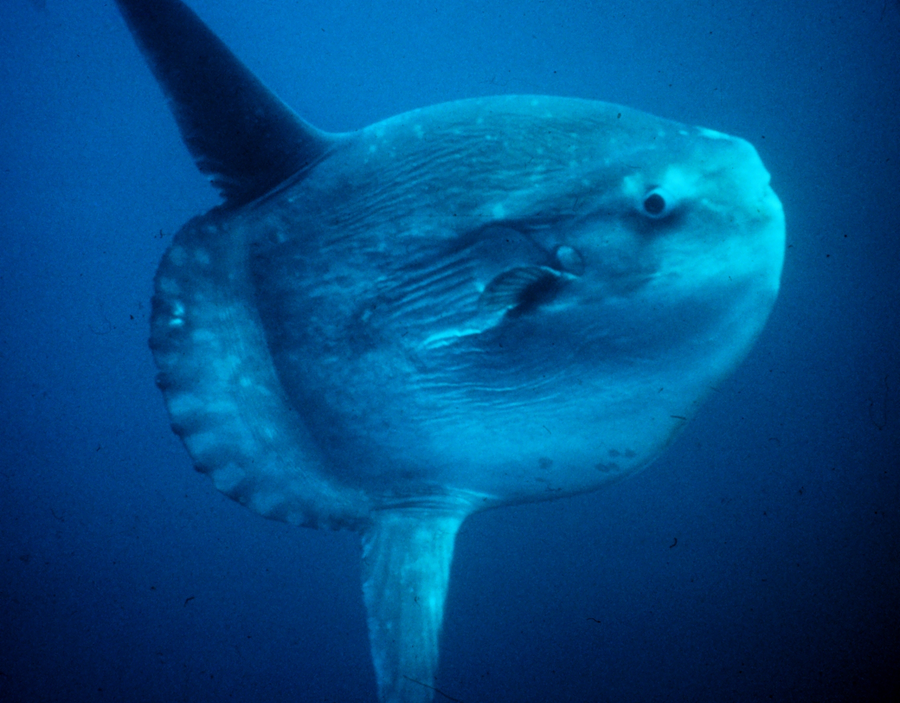
- Ocean Sunfish Same class
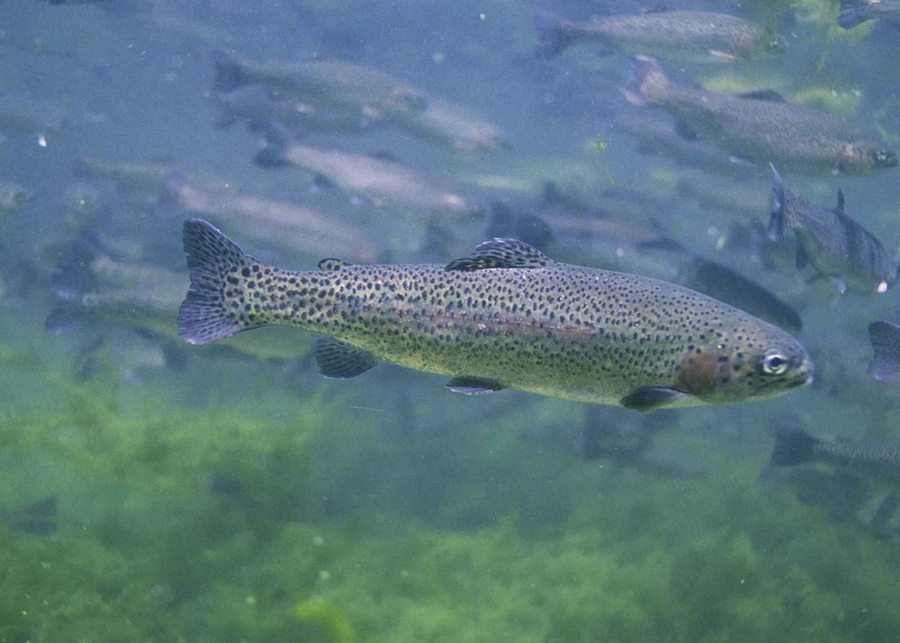
- Rainbow Trout Same class
Collections
Conservation status of the Largetooth Sawfish
The largetooth sawfish (Pristis pristis) is listed as Critically Endangered on the IUCN Red List. Critically Endangered (CR) is the highest-risk category the IUCN Red List assigns to a wild species before Extinct in the Wild. It means a species faces an extremely high probability of extinction — usually because its population has collapsed, its range has shrunk drastically, or very few mature individuals remain. Species at this level typically depend on active conservation to survive.
Main threats to the largetooth sawfish
- Entanglement in gillnets and trawls
- Targeted take for fins and rostra
- Coastal habitat loss and river barriers
- Slow reproduction limiting recovery
Largetooth Sawfish (Pristis pristis) was most recently assessed for the IUCN Red List in 2019. Look up on the IUCN Red List .
Frequently asked questions about the Largetooth Sawfish
Is a sawfish a shark?
No — sawfish are rays (batoids); their gill slits are underneath, unlike sharks.
What is the saw used for?
Sensing prey and slashing or probing for fish and invertebrates — not primarily defending against sharks.
Why are sawfish Critically Endangered?
Entanglement in nets, habitat loss in estuaries and rivers, and historical trade in saws and fins collapsed populations globally.
Where do largetooth sawfish still live?
Strongholds include northern Australia and some Central American waters; they are gone or rare across much of their former range.
Can sawfish live in freshwater?
Yes — largetooth sawfish enter rivers and can spend long periods in fresh water.
What is a group of largetooth sawfish called?
A group of Largetooth Sawfish is called a fever.
What is a baby largetooth sawfish called?
A baby Largetooth Sawfish is called a pup.
Sources & references
This guide is compiled and reviewed against established zoological and conservation references. Key sources for the Largetooth Sawfish:
-
IUCN Red List of Threatened Species
Conservation status (Critically Endangered) reflects the IUCN Red List category for Pristis pristis, most recently assessed in 2019.
-
iNaturalist — observations & photos
Search citizen-science observations and community IDs for Pristis pristis. Useful for range checks and recent sightings — not a substitute for formal Red List status.
-
GBIF — occurrence data
Global Biodiversity Information Facility species search for Pristis pristis. Explore published occurrence records used in range research.
-
Global Animal Guide editorial standards
How we research, source, review, and update every guide for accuracy.