Quick answer
Five living species on two continents. White and black rhinos live in African savanna and woodland. Greater one-horned rhinos live in India and Nepal. Javan rhinos survive only in Ujung Kulon; Sumatran rhinos in Sumatra and Kalimantan fragments. IUCN does not list “the rhinoceros” as Near Threatened. Figures checked 13 August 2026.
Which continent, which species?
Africa: white rhinos (Ceratotherium simum) on open grassland and woodland; black rhinos (Diceros bicornis) in savanna, scrub and dry woodland of eastern and southern Africa. Asia: greater one-horned rhinos in riverine floodplain; Javan rhinos only in Ujung Kulon National Park; Sumatran rhinos in remaining Sumatran and Bornean forest. Calling all of that Ceratotherium simum was a template error.
Grazers versus browsers — same park, different habitat
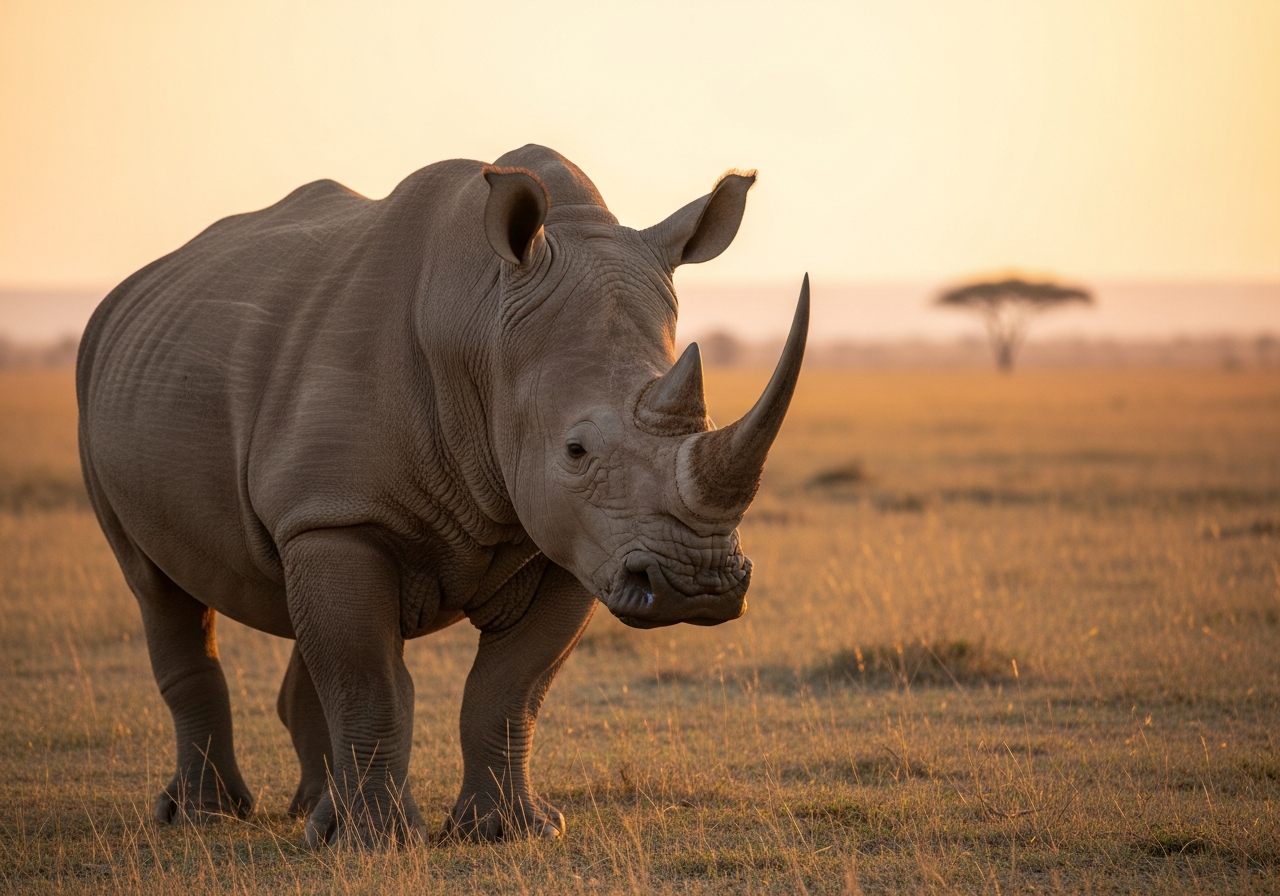
White rhinos crop short grass with a square lip. Black rhinos hook browse. Both need wallows, water, and cover from heat. Asian forest rhinos need closed canopy the African grazers do not. Edge habitat is where poachers and fences meet animals, not a suburban opportunity.
How do people shrink the map?
Horn poaching emptied most historic range. Drought, policy shifts, and missing surveys then moved the 2024 African total. IUCN reported 22,540 rhinos in Africa at end-2024 — 15,752 white (down 11.2% in 2024) and 6,788 black (up 5.2%). Javan numbers fell from a reported 76 to a current minimum of about 50 after poaching in Ujung Kulon.
Why is status not one Near Threatened label?
White rhinos: Near Threatened. Black, Javan, Sumatran: Critically Endangered. Greater one-horned: Vulnerable (~4,075 in India and Nepal as of March 2025). Northern white rhinos are functionally extinct — two females remain. A single NT headline hides those facts.
Who lives where, in one list?
White and black — Africa. Greater one-horned — India and Nepal. Javan — Ujung Kulon only. Sumatran — 34–47 animals in Indonesia. WARN’s rhino appeal describes proposed partner-led anti-poaching and rescue. WARN does not run rhino camps.
How do they use that range day to day?
Poor eyesight, acute smell and hearing. Charges can reach about 50 km/h. Mud wallows cool skin and cut insects. Those behaviours do not make a rhino a suburb commuter. Stay back; never feed wild rhinos.
Sources
Rhinoceros FAQs
Where do rhinoceroses live?
Five living species on two continents. White and black rhinos live in African savanna, woodland and scrub. Greater one-horned rhinos live in India and Nepal floodplain grassland. Javan rhinos survive only in Ujung Kulon, Java. Sumatran rhinos cling to fragments on Sumatra and Kalimantan. There is no single “rhinoceros range” and no single Near Threatened label for all five.
Are all rhinos Near Threatened?
No. That label belongs to white rhinos (Ceratotherium simum). Black, Javan and Sumatran rhinos are Critically Endangered. Greater one-horned rhinos are Vulnerable. IUCN/TRAFFIC figures to end-2024: about 15,752 white and 6,788 black rhinos in Africa. Javan rhinos are now estimated at about 50; Sumatran 34–47. Figures checked 13 August 2026.
Do white and black rhinos live in the same habitat?
Both are African, but they partition food: white rhinos graze short grass with a square lip; black rhinos browse shrubs with a hooked lip. Overlap in a park is not identical ecology. Asian species are not interchangeable with either African species.
What actually protects rhino range?
Anti-poaching that stays funded, biological management, and keeping the last Javan and Sumatran fragments intact. Horn demand is the historic driver. World Animal Rescue Network’s rhino appeal describes proposed partner-led protection. WARN does not run rhino camps.
Who this page is for. This page is native range and habitat, not a sighting hotline.