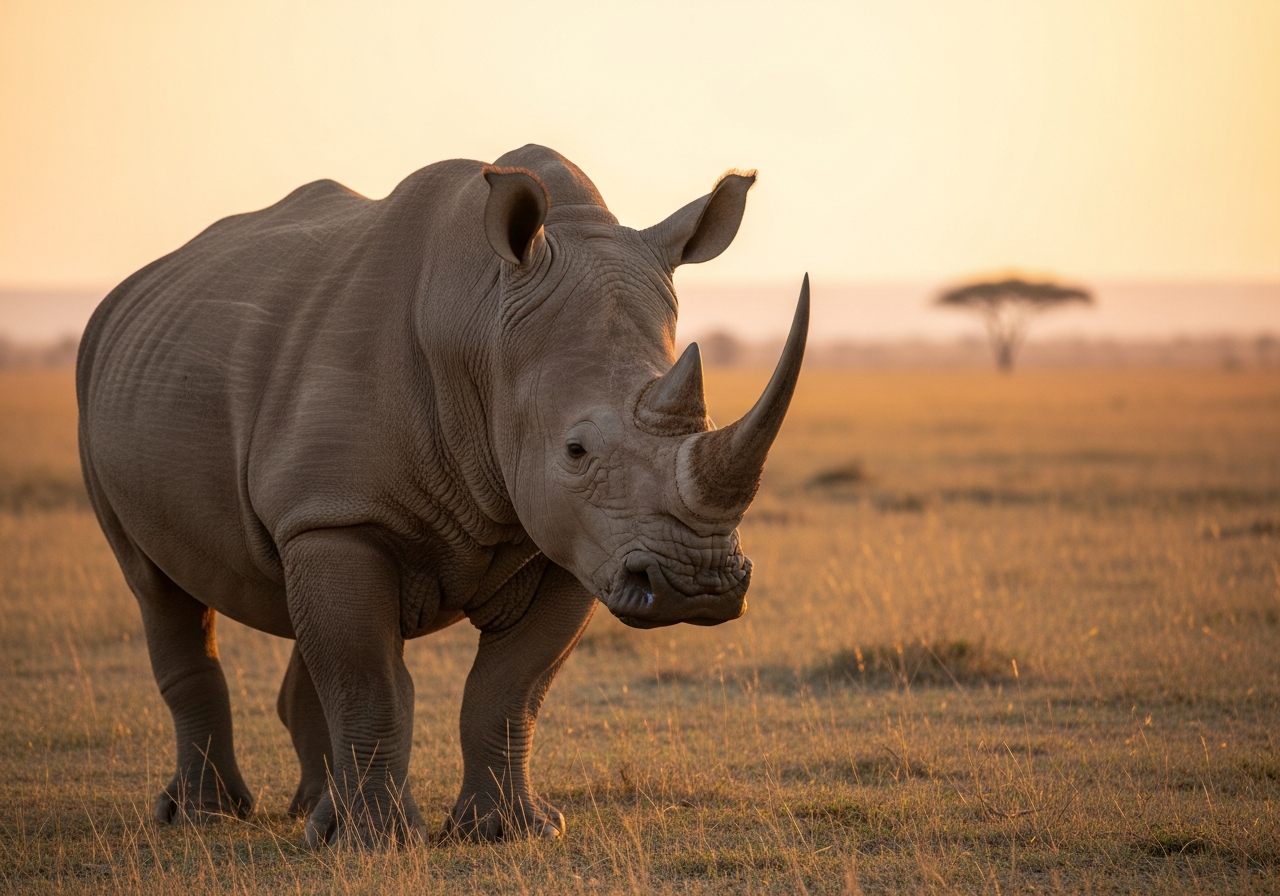
Quick answer
Wild rhinos often live about 35–50 years; 40–45 is a fair midpoint for African whites and blacks that are not poached. Horn hunting, not a generic “predation” line, truncates most averages. Five species, five IUCN labels — not one Near Threatened Ceratotherium simum. Figures checked 13 August 2026.
How long do rhinos live in the wild?
Protected African whites and blacks often reach the 40s. Treat 40–45 as a planning range, not a census. Body size differs by species — white rhinos are the heaviest — so a single 1,800–2,500 kg figure was a white-rhino leftover. Javan and Sumatran animals are so few that a “typical age at death” is already a remainder after poaching.
What shortens rhino lives?
Horn poaching first. Drought and management gaps then add deaths — African rhinos fell 6.7% in 2024 to 22,540, even as the poaching rate dropped. White rhinos declined 11.2%; black rhinos rose 5.2% to 6,788. Roadkill exists; it is not the driver. Never feed wild rhinos.
What helps rhinos live longer?
Rangers who stay funded, translocations that found new populations, and dehorning where managers choose it. Captive veterinary care extends some lives; it does not replace wild range for Javan rhinos confined to one park. Horn is keratin, not a longevity supplement.
How do life stages change the risk?
Calves die more often than prime adults. Older animals show dental wear and slower movement. Slow reproduction means each poached female is a multi-year hole. Northern white rhinos illustrate the end of that curve: two females, no breeding males.
Do senses change how they die?
Poor eyesight and a 50 km/h charge make surprise encounters dangerous for people — and make quiet poaching at night effective. Smell and hearing are the real navigation tools. Stay back; a wallow is not a photo booth.
Why does status truncate the average?
White rhinos are Near Threatened; black, Javan (~50) and Sumatran (34–47) are Critically Endangered; greater one-horned rhinos are Vulnerable (~4,075). WARN’s rhino appeal describes proposed partner-led anti-poaching. WARN does not run rhino camps.
Sources
Rhinoceros FAQs
How long do rhinoceroses live?
Wild rhinos often live about 35–50 years depending on species; 40–45 is a fair planning midpoint for African whites and blacks. Captive animals can exceed that with veterinary care. Poaching, not “predation,” is what truncates most wild averages. Do not treat Ceratotherium simum as the Latin name for every rhino.
Do all five species live the same length of time?
Not as a published single number you can tattoo on a mug. African whites and blacks in protected parks can reach the 40s. Tiny Javan and Sumatran populations are so heavily poached and fragmented that “typical lifespan” is already a conservation remainder. Northern white rhinos are functionally extinct — two females remain.
What shortens rhino lives?
Horn poaching first. Drought, habitat loss, and fences then add pressure — IUCN’s 2025 update showed African whites down 11.2% in 2024 even as poaching rates fell from their peak. Calves die more often than prime adults. Roadkill is not the main story.
What actually helps rhinos live longer?
Anti-poaching that stays funded, dehorning where rangers choose it, and keeping the last Asian fragments intact. World Animal Rescue Network’s rhino appeal describes proposed partner-led protection. WARN does not run rhino camps.
Who this page is for. This page is a species lifespan range. Skip it if you need a prognosis for one named animal.