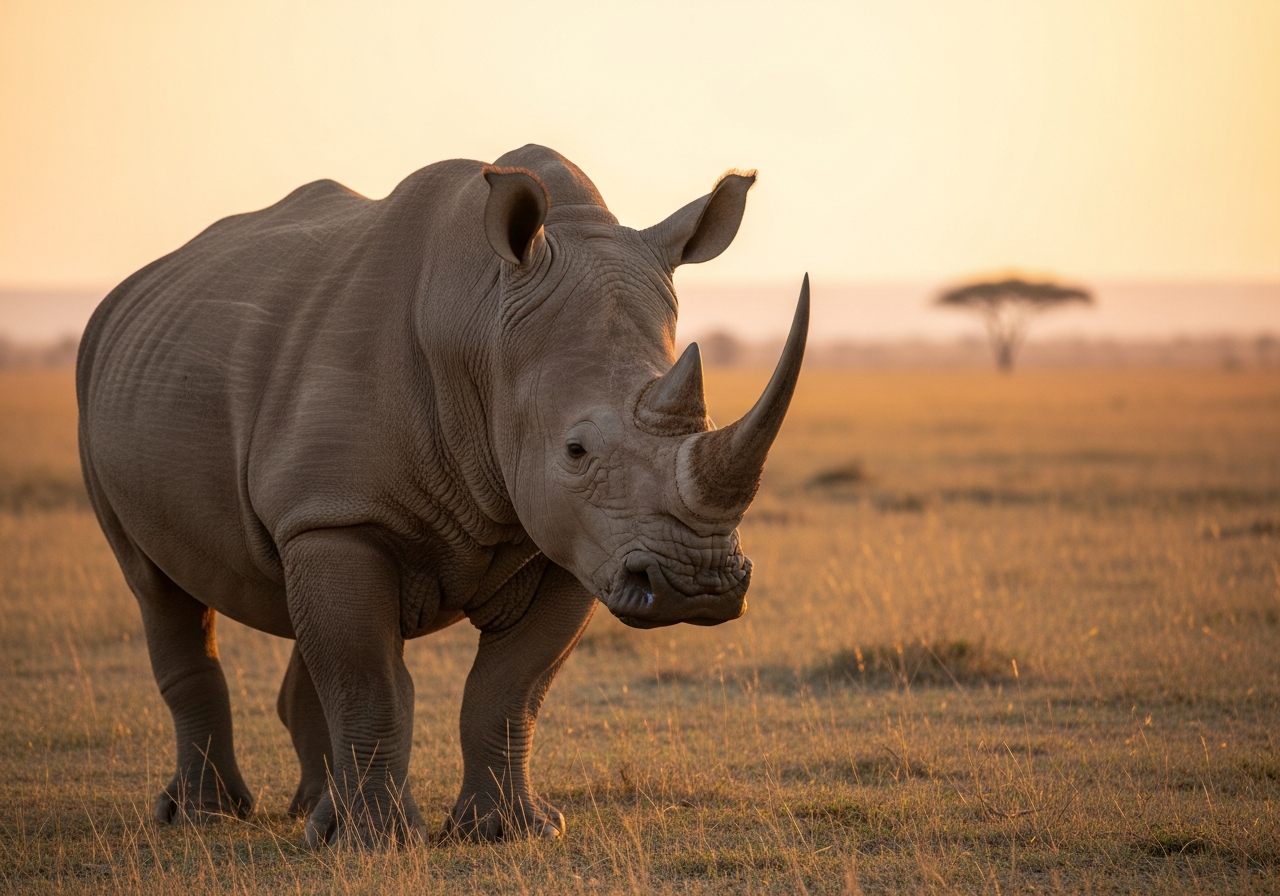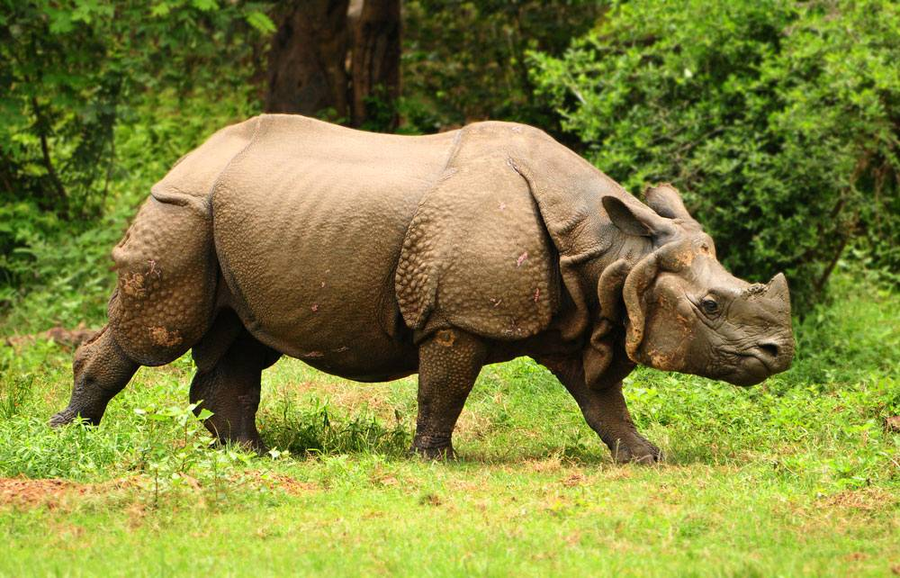
The Indian rhinoceros (Rhinoceros unicornis) is a mammal of the rhinoceros family, Rhinocerotidae, in the order Perissodactyla.
Quick answer
The Indian rhinoceros (Rhinoceros unicornis), or greater one-horned rhino, is an armour-plated giant of Nepal and northeast India with a single black horn. Weighing 1,800–2,700 kg (2–3 tons), it has recovered from fewer than 200 animals a century ago to around 4,000 today, though it remains listed as Vulnerable.
Top questions about the Indian Rhinoceros
Also available in Español (Rinoceronte indio)
Indian Rhinoceros facts at a glance
- Weight 2200 kg
- Length 3.7 m
- Top speed 55 km/h
- Lifespan 40 years
| Scientific name | Rhinoceros unicornis |
|---|---|
| Diet | Grasses, leaves, branches, fruit, and aquatic plants |
| Habitat | Tall alluvial grasslands and riverine forest of the Terai and Brahmaputra floodplains |
| Lifespan | 35–45 years in the wild |
| Weight | 1,800–2,700 kg (4,000–6,000 lb); males heavier than females |
| Top speed | Up to 55 km/h (34 mph) in a charge |
| Conservation status | Vulnerable (IUCN) |
| Kingdom | Animalia |
|---|---|
| Phylum | Chordata |
| Class | Mammalia |
| Order | Perissodactyla |
| Family | Rhinocerotidae |
| Genus | Rhinoceros |
Where it lives
The indian rhinoceros (Rhinoceros unicornis) is native to Floodplain grasslands of Nepal and northeast India, especially Kaziranga in Assam and Chitwan in Nepal. — recorded across Asia in this guide’s range summary.
For occurrence records, see GBIF species search and sources below.
How big is a indian rhinoceros?
An adult indian rhinoceros measures 3.7 m long — about 2.1× the height of an average adult person (1.73 m) — and weighs around 2200 kg, about 31× an average adult’s body weight (70 kg).
Length vs an average adult’s height (to scale)
Armour and a single horn
The Indian rhino's grey skin hangs in deep folds studded with rivet-like bumps, giving it the look of riveted plate armour. Both sexes carry a single horn of pure keratin — the same material as fingernails — that can reach about 60 cm. Only the African white rhino outweighs it among living rhinos.
Behaviour
Indian rhinos are largely solitary, meeting at shared dung heaps that serve as community notice boards. They are semi-aquatic: they wallow for hours in rivers and pools to cool off and protect their skin, feed mostly at dawn and dusk, and despite their bulk can charge at 55 km/h.
Diet
Tall grasses are the staple, folded into the mouth with a flexible, almost prehensile upper lip; the rhino also browses leaves and fruit and wades belly-deep to graze aquatic plants. One adult can consume a large share of its body weight in vegetation over a few days of feeding.
Habitat and range
The species once ranged across the northern Indian subcontinent from Pakistan to Myanmar; today it survives only in protected pockets of Nepal and India. Kaziranga National Park in Assam holds roughly two-thirds of the world population, with important herds in Chitwan (Nepal), Pobitora, Orang, and Manas.
Reproduction
Females give birth to a single calf after a gestation of about fifteen to sixteen months — one of the longest of any land mammal. The calf, born hornless and weighing around 40–60 kg, stays with its mother for two to four years until she calves again.
Conservation
Fewer than 200 Indian rhinos survived in the early twentieth century; strict protection, anti-poaching patrols, and translocations have raised the total to around 4,000, one of conservation's great recoveries. The species is nonetheless still Vulnerable: poaching for horn, floodplain habitat loss, and increasingly severe monsoon floods remain serious threats.
Explore the Indian Rhinoceros
Close relatives
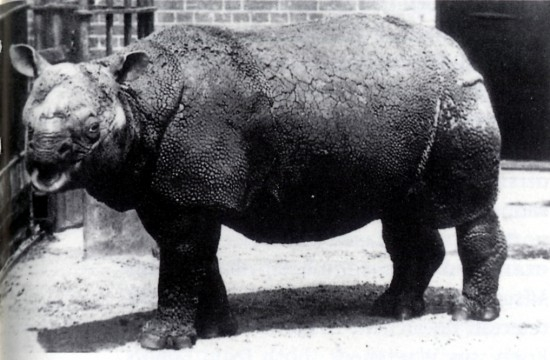
- Javan Rhino Same genus
- Rhinoceros Same family
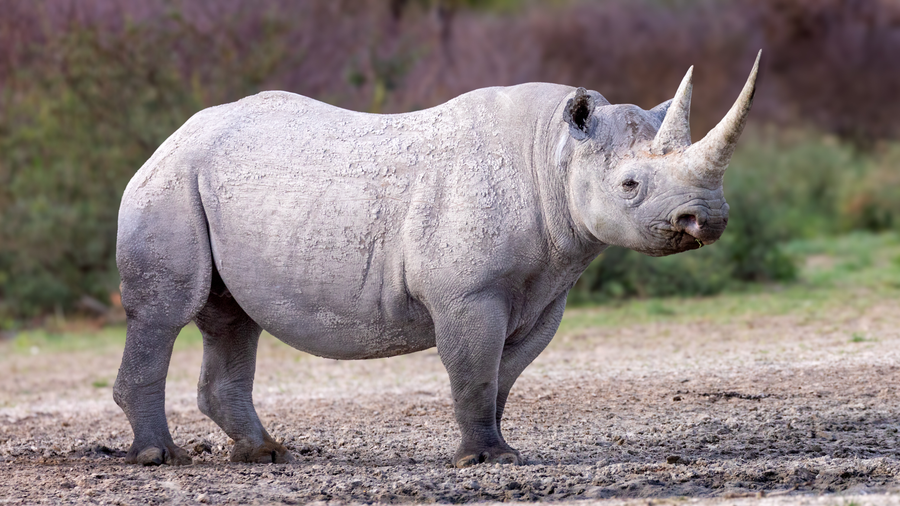
- Black Rhinoceros Same family
- White Rhinoceros Same family
Collections
Range & geography
Conservation status of the Indian Rhinoceros
The indian rhinoceros (Rhinoceros unicornis) is listed as Vulnerable on the IUCN Red List. Vulnerable (VU) means a species faces a high risk of extinction in the medium-term future. It is the lowest-risk of the three 'threatened' IUCN categories — one step below Endangered, which is itself below Critically Endangered — and is often an early warning that a population is in trouble.
The indian rhinoceros (Rhinoceros unicornis) is assessed on the IUCN Red List. Look up on the IUCN Red List .
Frequently asked questions about the Indian Rhinoceros
How many Indian rhinos are left?
Around 4,000, the great majority in India's Kaziranga National Park and Nepal's Chitwan. That is a recovery from under 200 a century ago, achieved through armed protection and reintroductions.
Why are Indian rhinos poached?
For their horn, which is made of keratin — like hair and nails — but commands high prices in illegal wildlife markets for use in traditional medicine, despite having no proven medicinal effect.
Where do Indian rhinos live?
Only in Nepal and northeast India today: Kaziranga, Pobitora, Orang, and Manas in Assam, plus small populations in West Bengal and Uttar Pradesh, and Chitwan and Bardia in Nepal.
How many horns does an Indian rhino have?
One — which is why it is also called the greater one-horned rhinoceros. African rhinos and the Sumatran rhino have two.
Is the Indian rhino dangerous?
It can be. Mothers with calves and surprised adults may charge at up to 55 km/h, and rhinos injure people every year in and around parks. They are best observed at a distance.
Sources & references
This guide is compiled and reviewed against established zoological and conservation references. Key sources for the Indian Rhinoceros:
-
IUCN Red List of Threatened Species
Conservation status (Vulnerable) reflects the IUCN Red List category for Rhinoceros unicornis.
-
iNaturalist — observations & photos
Search citizen-science observations and community IDs for Rhinoceros unicornis. Useful for range checks and recent sightings — not a substitute for formal Red List status.
-
GBIF — occurrence data
Global Biodiversity Information Facility species search for Rhinoceros unicornis. Explore published occurrence records used in range research.
-
Global Animal Guide editorial standards
How we research, source, review, and update every guide for accuracy.