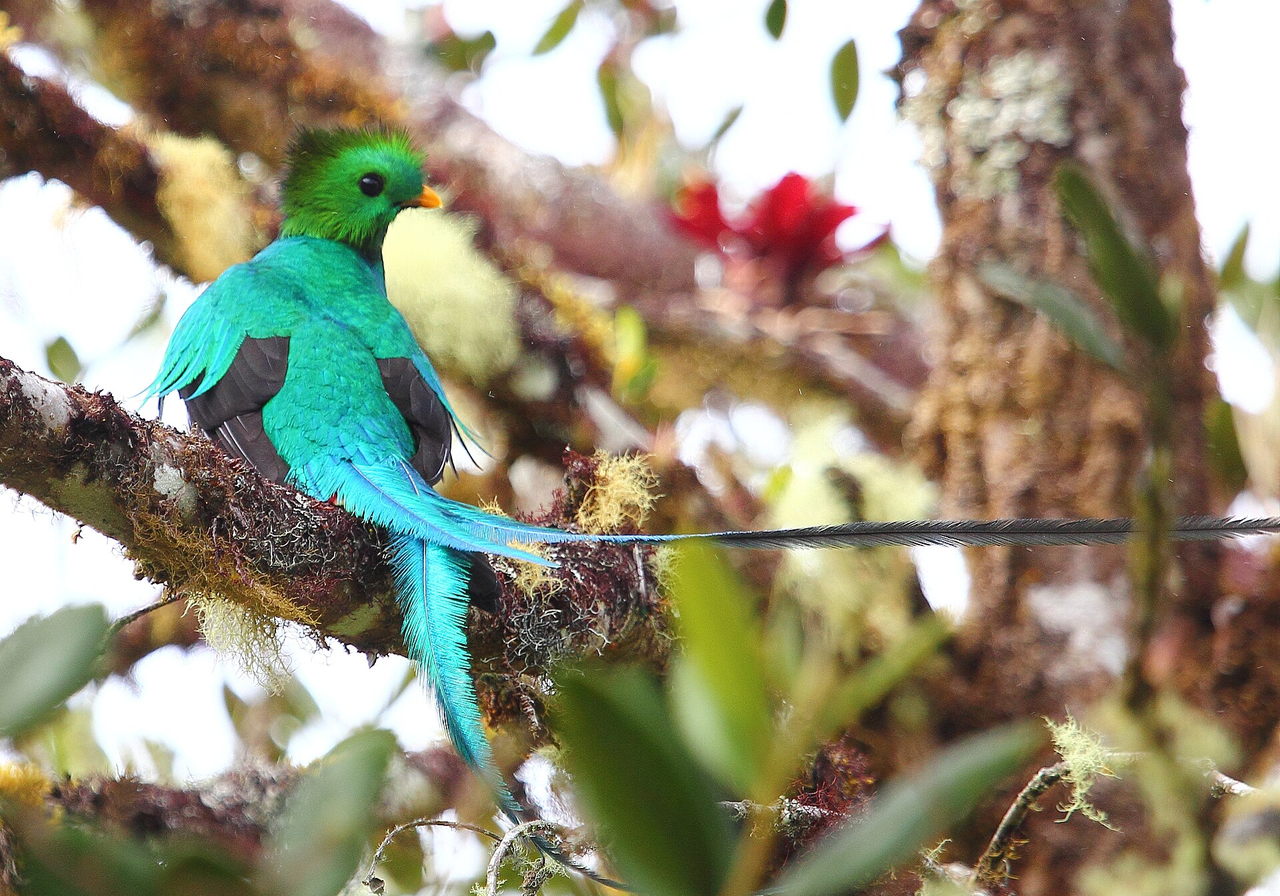
The resplendent quetzal (Pharomachrus mocinno) is a bird of the family Trogonidae, in the order Trogoniformes.
Quick answer
The resplendent quetzal (Pharomachrus mocinno) is a brilliant green bird of the cloud forests of Central America, from southern Mexico to Panama. Its body is about 35 cm long, and the male's iridescent tail plumes can add up to 90 cm. It eats mainly fruit of the laurel family, which look like tiny avocados. It is listed as Near Threatened on the IUCN Red List (assessed 2022), with a decreasing population.
Top questions about the Resplendent Quetzal
Resplendent Quetzal facts at a glance
- Length 35 cm
| Scientific name | Pharomachrus mocinno |
|---|---|
| Diet | Mainly fruit of the laurel family; also insects and small animals |
| Habitat | Cool, moist cloud forest and montane forest canopy |
| Body length | About 35 cm |
| Male tail plumes | Up to 90 cm |
| Range | Southern Mexico to Panama |
| Conservation status | Near Threatened (IUCN Red List, assessed 2022) |
| Kingdom | Animalia |
|---|---|
| Phylum | Chordata |
| Class | Aves |
| Order | Trogoniformes |
| Family | Trogonidae |
| Genus | Pharomachrus |
Where it lives
The resplendent quetzal (Pharomachrus mocinno) is native to Cloud and montane forests of southern Mexico, Guatemala, Honduras, El Salvador, Nicaragua, Costa Rica and Panama. — recorded across North America in this guide’s range summary.
For occurrence records, see GBIF species search and sources below.
The plumes
The male's most striking feature is its iridescent green tail plumes, which can be up to 90 cm long, more than twice the length of its body.
Wild avocados
Quetzals prefer the fruit of the laurel family, which look like miniature avocados. The birds swallow the fruit and later drop the seeds, which helps the trees to spread.
Sacred bird
The Maya treated quetzal feathers as worth their weight in gold, and only nobles and priests could wear them. Killing a quetzal was a capital crime.
Status
The quetzal is legally protected in Mexico, Guatemala, Costa Rica and Panama, although the law is hard to enforce in remote forest. The IUCN Red List classes it as Near Threatened with a decreasing population, and records it in seven countries from Mexico to Panama.
Explore the Resplendent Quetzal
Close relatives
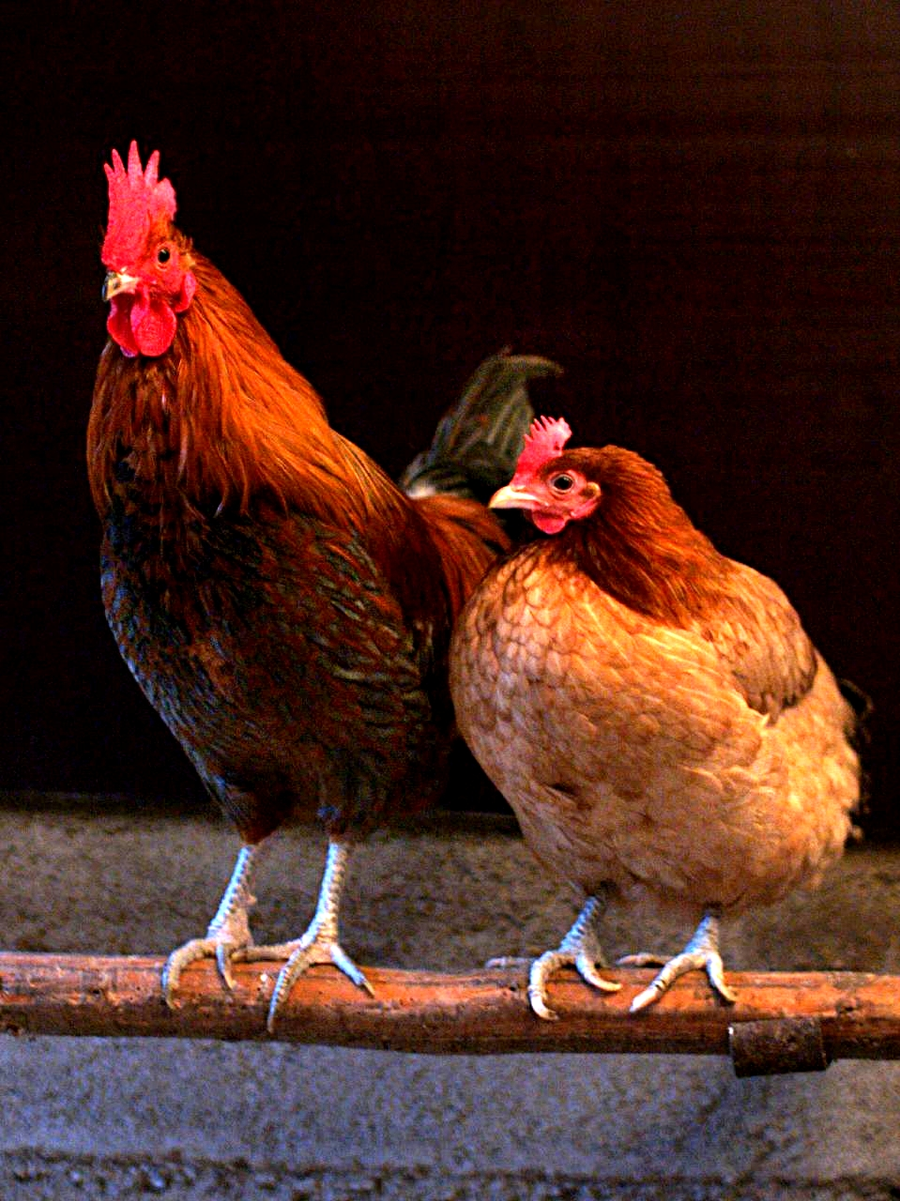
- Chicken Same class
- Wandering Albatross Same class
- Southern Cassowary Same class
- California Condor Same class
Range & geography
Did you know? Resplendent Quetzal facts
- Among the Maya, only nobles and priests were allowed to wear quetzal feathers.
- The IUCN Red List records the quetzal between 170 and 3,420 metres above sea level.
Conservation status of the Resplendent Quetzal
The resplendent quetzal (Pharomachrus mocinno) is listed as Near Threatened on the IUCN Red List. Near Threatened (NT) means a species does not yet qualify as threatened but is close to it, or likely to become so in the near future without ongoing conservation. It is a watch-list category just below Vulnerable.
Resplendent Quetzal (Pharomachrus mocinno) was most recently assessed for the IUCN Red List in 2022. View the full IUCN assessment .
Frequently asked questions about the Resplendent Quetzal
Where do resplendent quetzals live?
In cloud forest and montane forest from southern Mexico through Central America to Panama.
How long is a quetzal's tail?
The male's tail plumes can reach about 90 cm, on a body only about 35 cm long.
What do quetzals eat?
Mainly fruit of the laurel family, which resemble tiny avocados, plus some insects and small animals.
Sources & references
This guide is compiled and reviewed against established zoological and conservation references. Key sources for the Resplendent Quetzal:
-
IUCN Red List of Threatened Species
Conservation status (Near Threatened) reflects the IUCN Red List category for Pharomachrus mocinno, most recently assessed in 2022.
-
iNaturalist — observations & photos
Search citizen-science observations and community IDs for Pharomachrus mocinno. Useful for range checks and recent sightings — not a substitute for formal Red List status.
-
GBIF — occurrence data
Global Biodiversity Information Facility species search for Pharomachrus mocinno. Explore published occurrence records used in range research.
-
eBird — bird observations
Cornell Lab eBird target search for Resplendent Quetzal. Check recent checklists and seasonal abundance where birders report this species.
- IUCN Red List of Threatened Species: Pharomachrus mocinno (assessed 2022). Checked 16 November 2026.
IUCN Red List category Near Threatened, assessed 2022; population trend decreasing; native range.
- Animal Diversity Web: Pharomachrus mocinno. University of Michigan Museum of Zoology.
Size, lifespan, range, diet and behaviour.
-
Global Animal Guide editorial standards
How we research, source, review, and update every guide for accuracy.