Pangolin
Manis spp.
Quick answer
Pangolins are shy, ant- and termite-eating mammals covered in overlapping keratin scales — the only mammals with this armour. Eight species live in Africa and Asia; all face severe pressure from illegal wildlife trade. Adults weigh roughly 2–35 kg depending on species and can live around 20 years in the wild.
Pangolin facts at a glance
| Scientific name | Manis spp. |
|---|---|
| Diet | Ants and termites |
| Habitat | Tropical and subtropical forests and savannas in Africa and Asia |
| Lifespan | Up to 20 years in the wild (longer in captivity) |
| Weight | 2–35 kg (4–77 lb) depending on species |
| Top speed | Slow walker; can roll into an armoured ball when threatened |
| Conservation status | Critically Endangered (IUCN) |
| Kingdom | Animalia |
|---|---|
| Phylum | Chordata |
| Class | Mammalia |
| Order | Pholidota |
| Family | Manidae |
| Genus | Manis |
What is a group of pangolins called?
Group name (collective noun)
A group of Pangolins is called a roll.
Baby name
A baby Pangolin is called a pup.
Explore more animal collective nouns and baby animal names .
Scales and specialised feeding
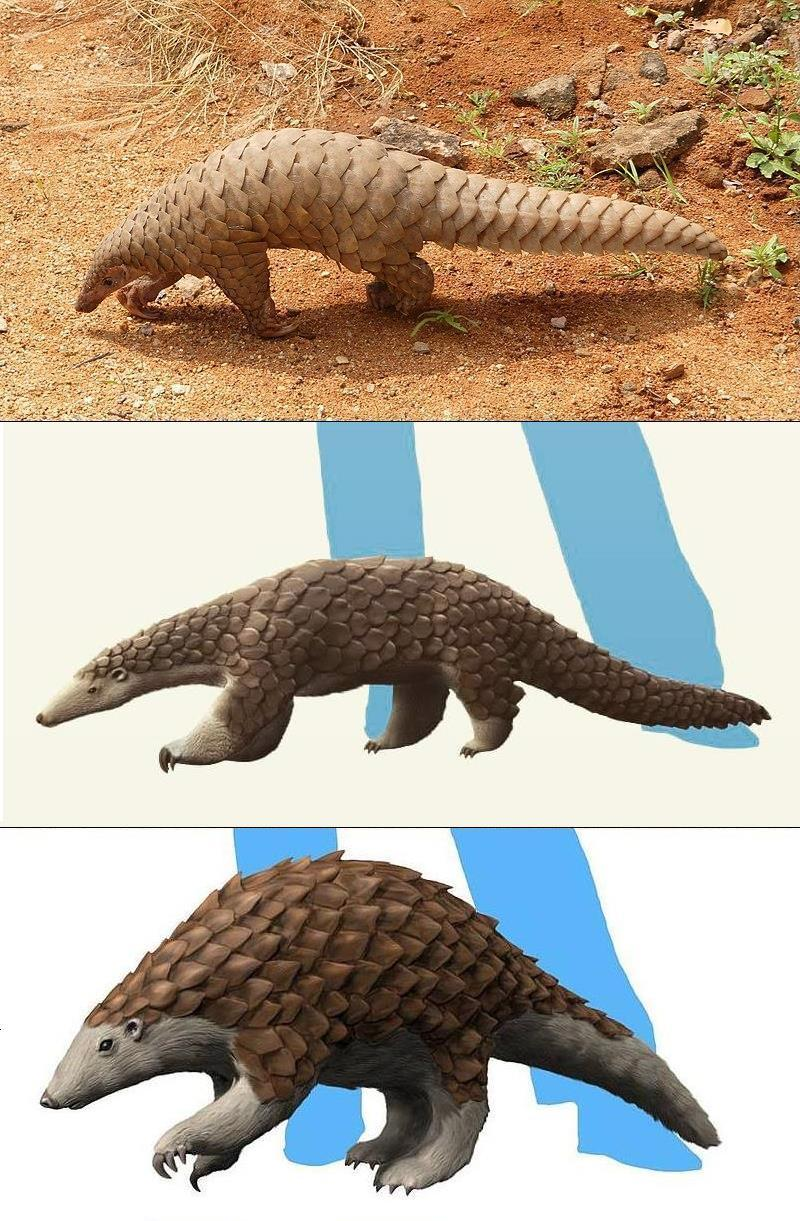
Pangolin scales are made of keratin — the same protein as human fingernails — and overlap like roof tiles. They have no teeth; a sticky tongue up to 40 cm long reaches into termite mounds and ant nests, while powerful claws tear open insect colonies.
Nocturnal and solitary
Most pangolins forage alone at night, relying on smell to locate insect colonies. When threatened they curl into a tight ball that protects the soft belly, presenting only hardened scales to predators such as leopards and hyenas.
Trafficking crisis
Pangolins are the most trafficked mammals on Earth. Scales are wrongly used in traditional medicine despite no proven efficacy, and meat is sold as a luxury. All eight species are now protected under CITES Appendix I, yet poaching and habitat loss continue.
Conservation efforts
Rescue centres, anti-poaching patrols, and demand-reduction campaigns operate across Africa and Southeast Asia. Seizures of tonnes of scales show the scale of illegal trade — protecting forest habitat and prosecuting traffickers remain urgent priorities.
Explore the Pangolin
Collections
Did you know? Pangolin facts
- Pangolins are the only mammals covered in keratin scales — the same protein as human fingernails.
- A single pangolin can consume up to 70 million ants and termites in a year using a tongue longer than its body.
- When threatened, pangolins roll into an armoured ball that most predators cannot open.
- All eight pangolin species are threatened by illegal wildlife trade — the most trafficked mammals on Earth.
Diet & feeding
Specialist myrmecophages eating ants and termites almost exclusively, locating nests by smell and excavating with powerful foreclaws.
Adaptations
- Keratin scales overlap like roof tiles and detach easily to entangle predators.
- Powerful claws tear open termite mounds; no teeth — food is ground in the stomach with ingested grit.
- A sticky tongue up to 40 cm extends into insect nests while the nostrils close against bites.
Behaviour & ecology
- Strictly nocturnal and solitary outside breeding — scent marks define home ranges.
- Young ride on the mother's tail or back for the first weeks after birth.
Communication
- Scent marking from anal glands communicates territory and reproductive status.
- Soft hissing and puffing when rolled in defence.
Habitat & range
Forests and savannas across Africa and Asia, from rainforest floor to dry woodland where ants and termites are abundant.
Ecological role
Ant and termite population control — pangolins regulate insect colonies that would otherwise damage trees and crops.
Frequently asked questions about the Pangolin
Are pangolins related to anteaters?
No — they look similar because both evolved to eat ants and termites (convergent evolution), but pangolins are related to carnivorans while anteaters are South American xenarthrans.
Are pangolins endangered?
Yes — all eight species are threatened with extinction. Three are Critically Endangered on the IUCN Red List, largely due to illegal wildlife trade.
Do pangolins bite?
They rarely bite; their main defence is rolling into a scaly ball. They may swipe with sharp claws if handled.
Where do pangolins live?
Forests and savannas across sub-Saharan Africa and South and Southeast Asia, including India, China, and Indonesia.
Why are pangolins trafficked?
For their scales (used in traditional medicine) and meat. Trade is illegal under international law, yet remains the primary threat to every species.
What is a group of pangolins called?
A group of Pangolins is called a roll.
What is a baby pangolin called?
A baby Pangolin is called a pup.
Sources & references
This guide is compiled and reviewed against established zoological and conservation references. Key sources for the Pangolin:
-
IUCN Red List of Threatened Species
Conservation status (Critically Endangered) reflects the IUCN Red List category for Manis spp..
- Challender, D. W. et al. (2019). Manis spp. IUCN Red List assessments.
Conservation status and trafficking threat.
- Animal Diversity Web — Manis spp. University of Michigan Museum of Zoology.
Morphology and feeding.
-
Global Animal Guide editorial standards
How we research, source, review, and update every guide for accuracy.