Quick answer
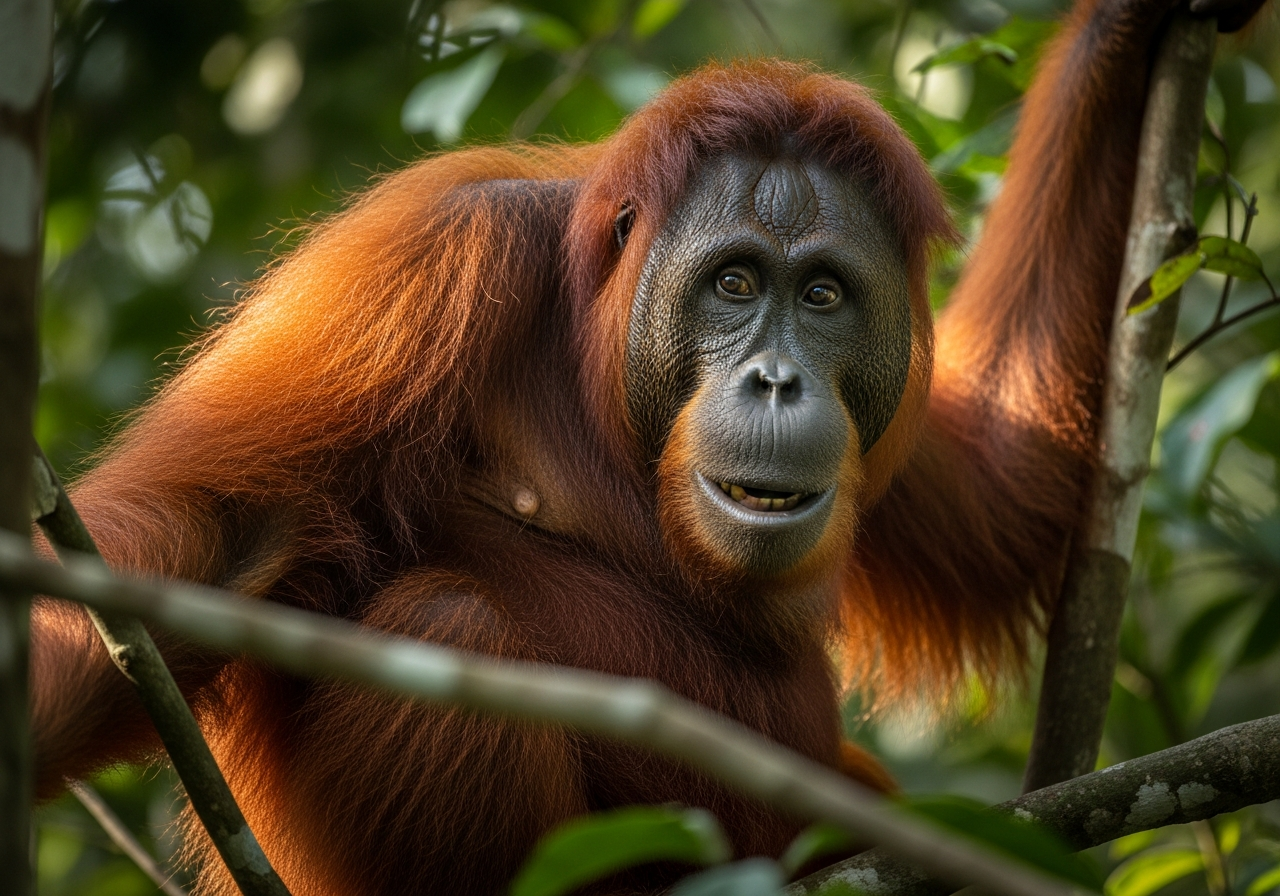
Orangutans are large, intelligent great apes that live in the rainforests of Borneo and Sumatra, the only great apes found in Asia. They spend most of their lives in the trees, swinging through the canopy with long, powerful arms that can span over 2 m (7 ft), and they feed mainly on fruit. Known for their reddish hair and tool use, orangutans are critically endangered, with populations falling sharply due to deforestation. In the wild they can live 35 to 45 years.
Key takeaway
Orangutans are large, intelligent great apes that live in the rainforests of Borneo and Sumatra, the only great apes found in Asia. They spend most of their lives in the trees, swinging through the canopy with long, powerful arms that can span over 2 m (7 ft), and they feed mainly on fruit. Known for their reddish hair and tool use, orangutans are critically endangered, with populations falling sharply due to deforestation. In the wild they can live 35 to 45 years.
Orangutan overview
Orangutan (Pongo pygmaeus) is an mammal listed here as Critically Endangered. Typical weight 30–90 kg (66–200 lb); lifespan around 35–45 years in the wild.
Orangutan ecology
Diet: Omnivore (mostly fruit). Habitat: Tropical rainforest canopy. Movement and social systems reflect those pressures across the native range.
Orangutans and people
Learn before you travel or keep related pets. Wild orangutans are not toys; captive care needs species-specific husbandry.
Status and further reading
Conservation label in our guides: Critically Endangered. See the full Orangutan profile for taxonomy, FAQs, and related topic guides on this site.
Behavior and intelligence
Orangutans are among the most intelligent animals, capable of using and even making simple tools, such as sticks to extract insects or leaves used as umbrellas and gloves. They are largely solitary compared with other great apes, with adult males living alone and females accompanied only by their offspring. They build a fresh nest of branches and leaves high in the trees to sleep each night. Their name comes from Mal
Diet and feeding
Orangutans are omnivores whose diet is dominated by fruit, especially energy-rich figs and the spiky durian. They also eat leaves, bark, flowers, insects, and occasionally eggs. Because fruiting is patchy in the rainforest, orangutans range widely and remember the locations and seasons of fruit trees across large areas. By spreading seeds in their droppings, they help regenerate the forest.
Sources
Orangutan FAQs
What are key facts about orangutans?
Orangutans are large, intelligent great apes that live in the rainforests of Borneo and Sumatra, the only great apes found in Asia. They spend most of their lives in the trees, swinging through the canopy with long, powerful arms that can span over 2 m (7 ft), and they feed mainly on fruit. Known for their reddish hair and tool use, orangutans are critically endangered, with populations falling sharply due to deforestation. In the wild they can live 35 to 45 years.
What is the scientific name of the orangutan?
Pongo pygmaeus — used in research and conservation listings for orangutans.
What do orangutans eat?
Orangutans eat mostly fruit, with seasonal and regional variation in Tropical rainforest canopy.
Where do orangutans live?
They are associated with Tropical rainforest canopy. Local presence depends on food, cover, and human land use.
What is the conservation status of orangutans?
Listed in our guides as Critically Endangered. Check the IUCN Red List and national assessments for the latest formal category.