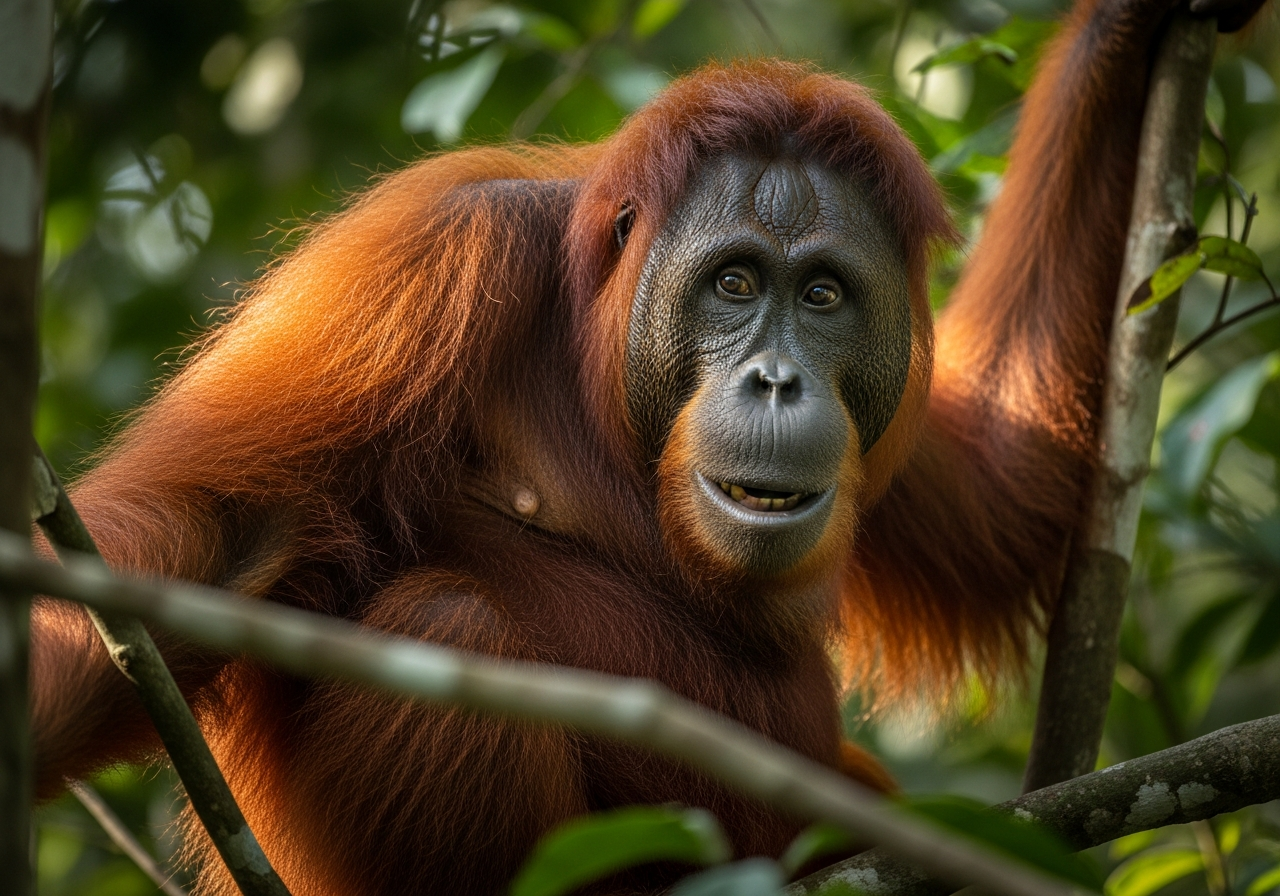
Quick answer
Wild orangutans often live about 30–40 years. Captives with veterinary care can exceed that. All three species are Critically Endangered: Bornean Pongo pygmaeus, Sumatran P. abelii, Tapanuli P. tapanuliensis. They live on Borneo and Sumatra — not Africa. Figures checked 13 August 2026.
How long do orangutans live in the wild?
Treat 30–40 years as a planning range for animals that reach adulthood. Many never do. “Typically 35–45 years” hung on Pongo pygmaeus alone was the thin version of this page. Body size (often cited around 30–90 kg) is not an age table.
What shortens orangutan lives?
Logging, oil-palm conversion, fire, the illegal pet trade, and conflict killing. Predation is not the main adult story. Ranking threats changes by island. A Tapanuli road is not a Sabah fire season.
What helps orangutans live longer?
Standing forest, fewer fires, and rescue that aims at release. Captive veterinary care extends some lives; it does not replace peat swamp. Never bait wild apes. Selfie tourism is not a longevity programme.
How do life stages change the risk?
Infants stay with mothers for years. A birth every six to eight years cannot replace a shot female. Orphans taken for the pet trade are a stolen generation, not a nursery success story. Older animals lose canopy access when forest is cut from under them.
Does the map cap the years?
Yes. Two islands, three Critically Endangered species, canopy that an ape cannot commute across an oil-palm block. They are not African apes. Empty forest empties the age table.
Why does Critically Endangered still truncate averages?
Because people still clear forest faster than orangutans replace themselves. Do not flatten the genus to pygmaeus. WARN’s orangutan appeal describes proposed partner rehabilitation including East Kalimantan forest school — not every rehab centre, and not African ape programmes..
Sources
Orangutan FAQs
How long do orangutans live?
Wild orangutans often live about 30–40 years. Captives with veterinary care can exceed that. Slow reproduction — a birth roughly every six to eight years — means each adult death is a long hole. All three species are Critically Endangered. A named zoo birthday is not a Borneo census.
Do all three species live the same span?
Treat the same planning range. Bornean Pongo pygmaeus, Sumatran P. abelii and Tapanuli P. tapanuliensis are all Critically Endangered. Do not hang the genus on pygmaeus. Tapanuli’s tiny count truncates averages faster than a 30–40 year label implies. They are not chimps.
What shortens orangutan lives?
Logging, oil-palm conversion, fire, the pet trade, and conflict killing. They are not African apes and they are not chimps — those threats sit on different continents. “Listed in our guides as Critically Endangered” was the thin status line that skipped the three-species split.
What actually helps them live longer?
Standing forest and rescue that aims at release. World Animal Rescue Network’s orangutan appeal describes proposed partner rehabilitation including East Kalimantan forest school — not every rehab centre, and not gorilla or chimpanzee programmes..
Who this page is for. This page is a species lifespan range. Skip it if you need a prognosis for one named animal.