Image sourcing: see credits & licences
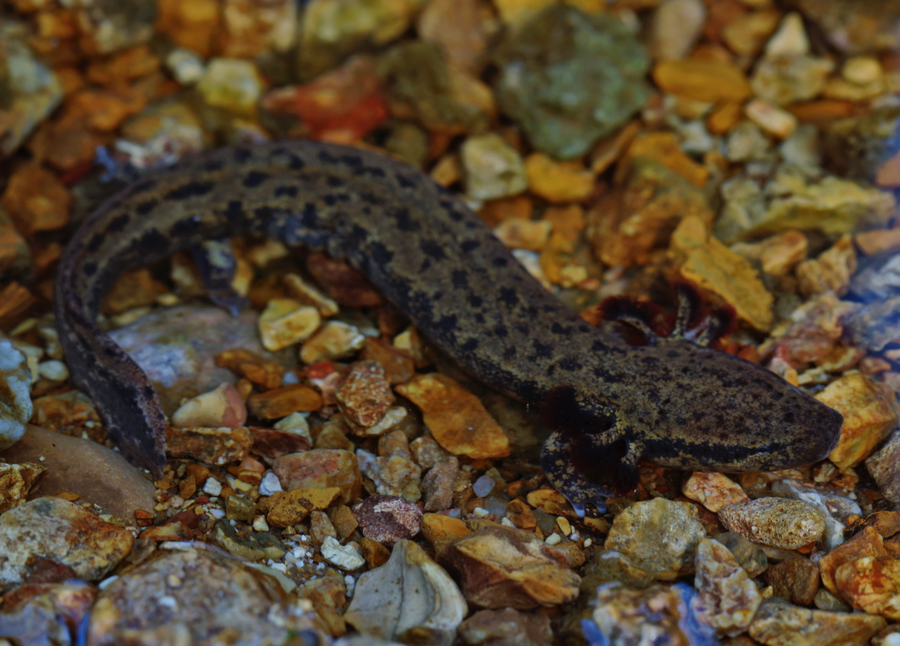
The mudpuppy (Necturus maculosus) is an amphibian of the family Proteidae, in the order Urodela.
Quick answer
The mudpuppy (Necturus maculosus) is a fully aquatic salamander of eastern North American lakes and rivers that keeps external gills for life. Adults reach about 30 cm, eat crayfish and other invertebrates, and are listed Least Concern — though often unfairly blamed by anglers and discarded when hooked.
Top questions about the Mudpuppy
Mudpuppy facts at a glance
- Weight 150 g
- Length 30 cm
- Top speed 2 km/h
- Lifespan 20 years
| Scientific name | Necturus maculosus |
|---|---|
| Diet | Carnivore |
| Habitat | Permanent lakes, rivers, and canals |
| Lifespan | Around 20 years in the wild (varies by population and captivity). |
| Weight | About 0.15 kg typical adult mass (sex and region vary). |
| Top speed | Up to roughly 2 km/h when moving at speed. |
| Conservation status | Least Concern (IUCN) |
| Kingdom | Animalia |
|---|---|
| Phylum | Chordata |
| Class | Amphibia |
| Order | Urodela |
| Family | Proteidae |
| Genus | Necturus |
Where it lives
The mudpuppy (Necturus maculosus) is native to Lakes and rivers of eastern North America from Canada to the Mississippi basin. — recorded across North America in this guide’s range summary.
For occurrence records, see GBIF species search and sources below.
How big is a mudpuppy?
An adult mudpuppy measures 30 cm long — about 17% of the height of an average adult person (1.73 m) — and weighs around 150 g, a small fraction of an average adult’s body weight (70 kg).
Length vs an average adult’s height (to scale)
What is a group of mudpuppies called?
Group name (collective noun)
A group of Mudpuppies is called a colony.
Baby name
A baby Mudpuppy is called a larva.
Explore more animal collective nouns and baby animal names .
Forever larval look
Bushy external gills and a paddle tail persist into adulthood (neoteny). Four toes on the hind feet help distinguish them from hellbenders. They rarely leave water.
Crayfish and aquatic prey
Diet includes crayfish, insect larvae, worms, small fish, and amphibian eggs scavenged on the bottom. Across its range it is tied to permanent lakes, rivers, and canals, and field accounts emphasise this species’ distinctive ecology rather than generic habitat labels.
Great Lakes to Mississippi basin
Permanent lakes, rivers, and canals of eastern North America from southern Canada through the Mississippi basin. Across its range it is tied to permanent lakes, rivers, and canals, and field accounts emphasise this species’ distinctive ecology rather than generic habitat labels.
Misunderstood and Least Concern
Still widespread, but siltation, chemical pollution, and wanton killing by fishers reduce local stocks. They are harmless to game-fish populations at natural densities.
Explore the Mudpuppy
Close relatives
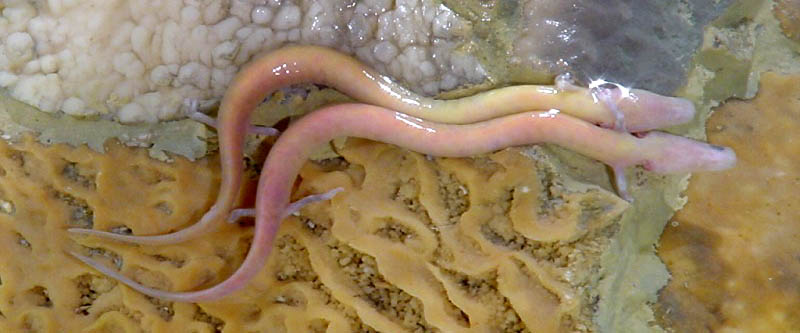
- Olm Same family
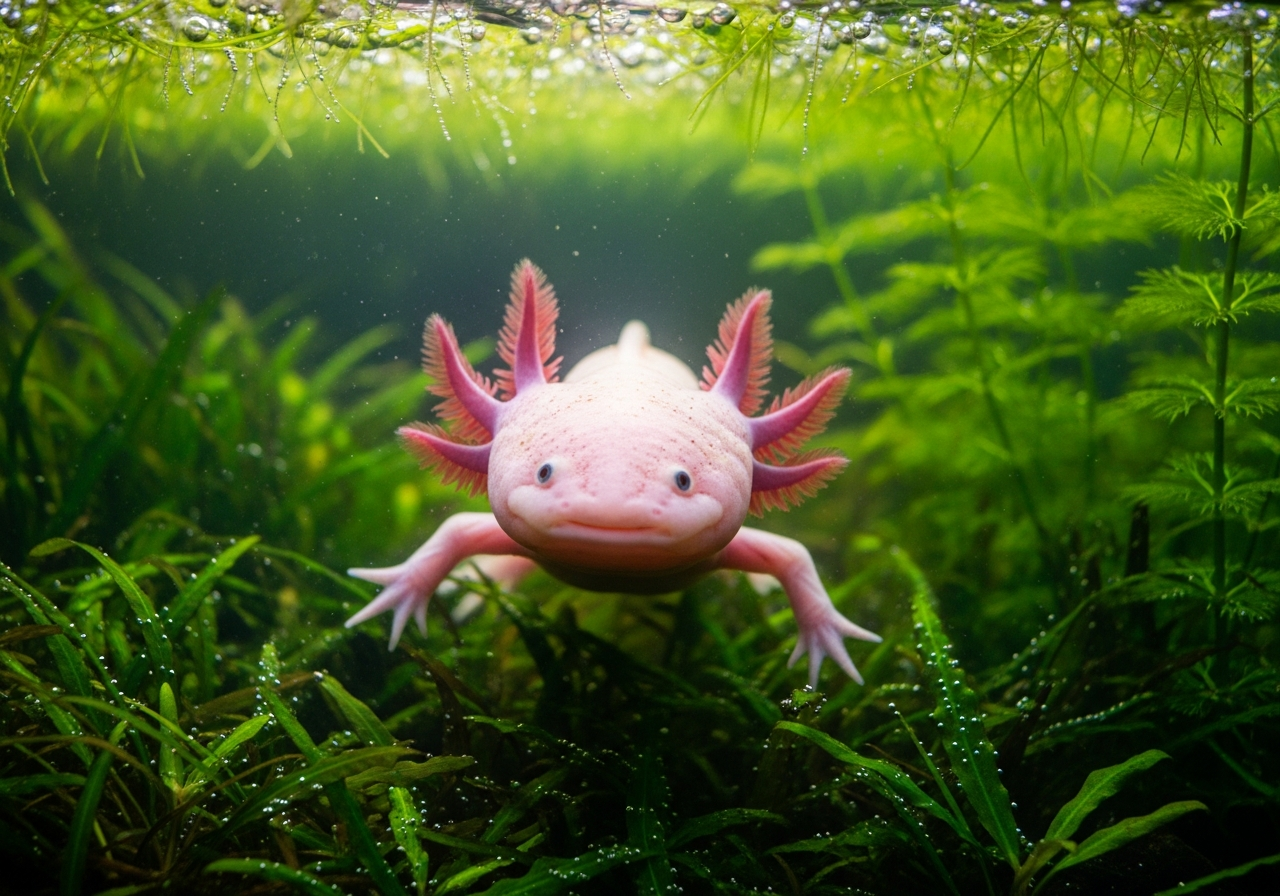
- Axolotl Same order
- Chinese Giant Salamander Same order
- Smooth Newt Same order
Range & geography
Conservation status of the Mudpuppy
The mudpuppy (Necturus maculosus) is listed as Least Concern on the IUCN Red List. Least Concern (LC) is the IUCN's lowest-risk category, assigned to widespread, abundant species that have been evaluated and found not to be threatened. It does not mean a species faces no pressures — only that it is not currently at risk of extinction.
The mudpuppy (Necturus maculosus) is assessed on the IUCN Red List. Look up on the IUCN Red List .
Frequently asked questions about the Mudpuppy
Do mudpuppies ever lose their gills?
No — they retain external gills throughout life as permanently aquatic adults.
Are mudpuppies the same as hellbenders?
No — hellbenders are larger Cryptobranchus without bushy external gills as adults; mudpuppies are Necturus.
Do mudpuppies bark?
The name is folk etymology; they do not bark like dogs.
What do mudpuppies eat?
Crayfish, aquatic insects, worms, and occasional small fish.
Where do mudpuppies live?
Lakes and rivers of eastern North America from Canada to the Mississippi basin.
What is a group of mudpuppies called?
A group of Mudpuppies is called a colony.
What is a baby mudpuppy called?
A baby Mudpuppy is called a larva.
Sources & references
This guide is compiled and reviewed against established zoological and conservation references. Key sources for the Mudpuppy:
-
IUCN Red List of Threatened Species
Conservation status (Least Concern) reflects the IUCN Red List category for Necturus maculosus.
-
iNaturalist — observations & photos
Search citizen-science observations and community IDs for Necturus maculosus. Useful for range checks and recent sightings — not a substitute for formal Red List status.
-
GBIF — occurrence data
Global Biodiversity Information Facility species search for Necturus maculosus. Explore published occurrence records used in range research.
-
Global Animal Guide editorial standards
How we research, source, review, and update every guide for accuracy.