Muskox
Ovibos moschatus
Quick answer
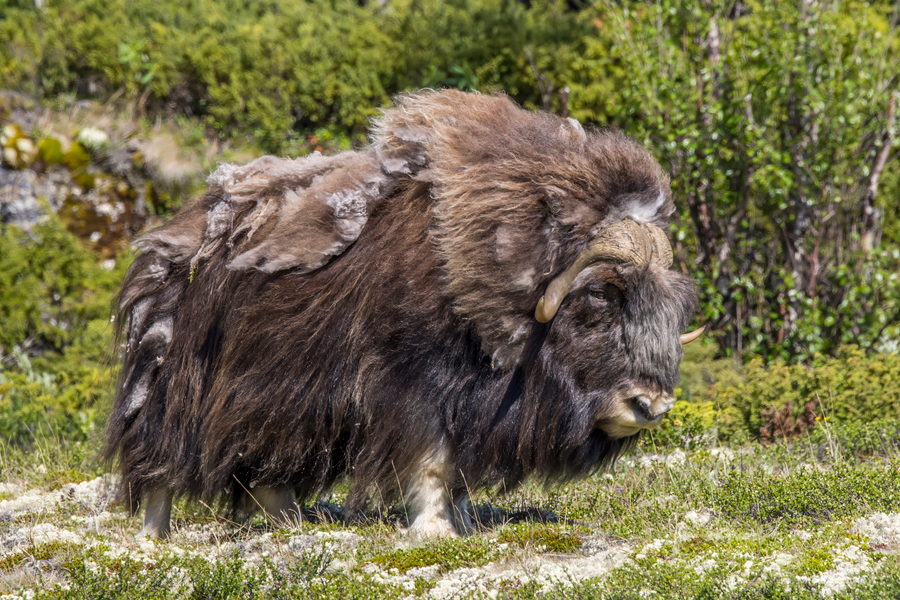
Muskoxen are shaggy Arctic bovids that form defensive circles when threatened, presenting horns outward to protect calves. They weigh up to 400 kg (880 lb), produce fine qiviut underwool, and live in Canada, Greenland, and reintroduced populations in Alaska and Scandinavia.
Muskox facts at a glance
| Scientific name | Ovibos moschatus |
|---|---|
| Diet | Grasses, sedges, willows, and mosses |
| Habitat | Arctic tundra and taiga of Canada, Greenland, and Alaska |
| Lifespan | 12–20 years in the wild |
| Weight | 180–400 kg (400–880 lb); bulls heavier |
| Top speed | Up to 60 km/h (37 mph) in short charges |
| Conservation status | Least Concern (IUCN) |
| Kingdom | Animalia |
|---|---|
| Phylum | Chordata |
| Class | Mammalia |
| Order | Artiodactyla |
| Family | Bovidae |
| Genus | Ovibos |
Where it lives
Arctic tundra of Canada and Greenland, with reintroduced populations in Alaska and Scandinavia.
What is a group of muskoxes called?
Group name (collective noun)
A group of Muskoxes is called a herd.
Baby name
A baby Muskox is called a calf.
Explore more animal collective nouns and baby animal names .
Circle defence
When wolves approach, adults form a ring horns-outward with calves hidden inside — one of the most effective group defences in the Arctic. Bulls clash during rut, reaching speeds that belie their bulk.
Qiviut and insulation
Muskoxen shed a soft underwool called qiviut in spring — finer than cashmere and exceptionally warm. Outer guard hairs shed snow and wind, allowing survival at −40 °C.
Reintroduction success
Hunted to extinction in Alaska and Scandinavia by the 1920s, muskoxen were reintroduced successfully from Greenland stock. Populations now support limited sustainable harvest and tourism.
Climate and range
Warming Arctic may expand shrub habitat in some areas but increase parasite pressure and rain-on-snow events that lock food under ice. Most muskoxen remain Least Concern with stable northern populations.
Explore the Muskox
Range & geography
Frequently asked questions about the Muskox
Is muskox wool soft?
Yes — qiviut shed naturally in spring is among the finest and warmest natural fibres, softer than sheep wool.
Are muskoxen aggressive?
Generally calm but bulls charge during rut and groups will defend calves from wolves or dogs.
Where do muskoxen live?
Arctic Canada, Greenland, and Alaska, with reintroduced herds in Norway and Sweden.
What do muskoxen eat?
Arctic plants — sedges, grasses, willow leaves, and mosses — digging through snow in winter.
How do muskoxen survive wolves?
They form defensive circles with horns facing outward, protecting calves in the centre.
What is a group of muskoxes called?
A group of Muskoxes is called a herd.
What is a baby muskox called?
A baby Muskox is called a calf.
Sources & references
This guide is compiled and reviewed against established zoological and conservation references. Key sources for the Muskox:
-
IUCN Red List of Threatened Species
Conservation status (Least Concern) reflects the IUCN Red List category for Ovibos moschatus.
-
Global Animal Guide editorial standards
How we research, source, review, and update every guide for accuracy.