Image sourcing: see credits & licences
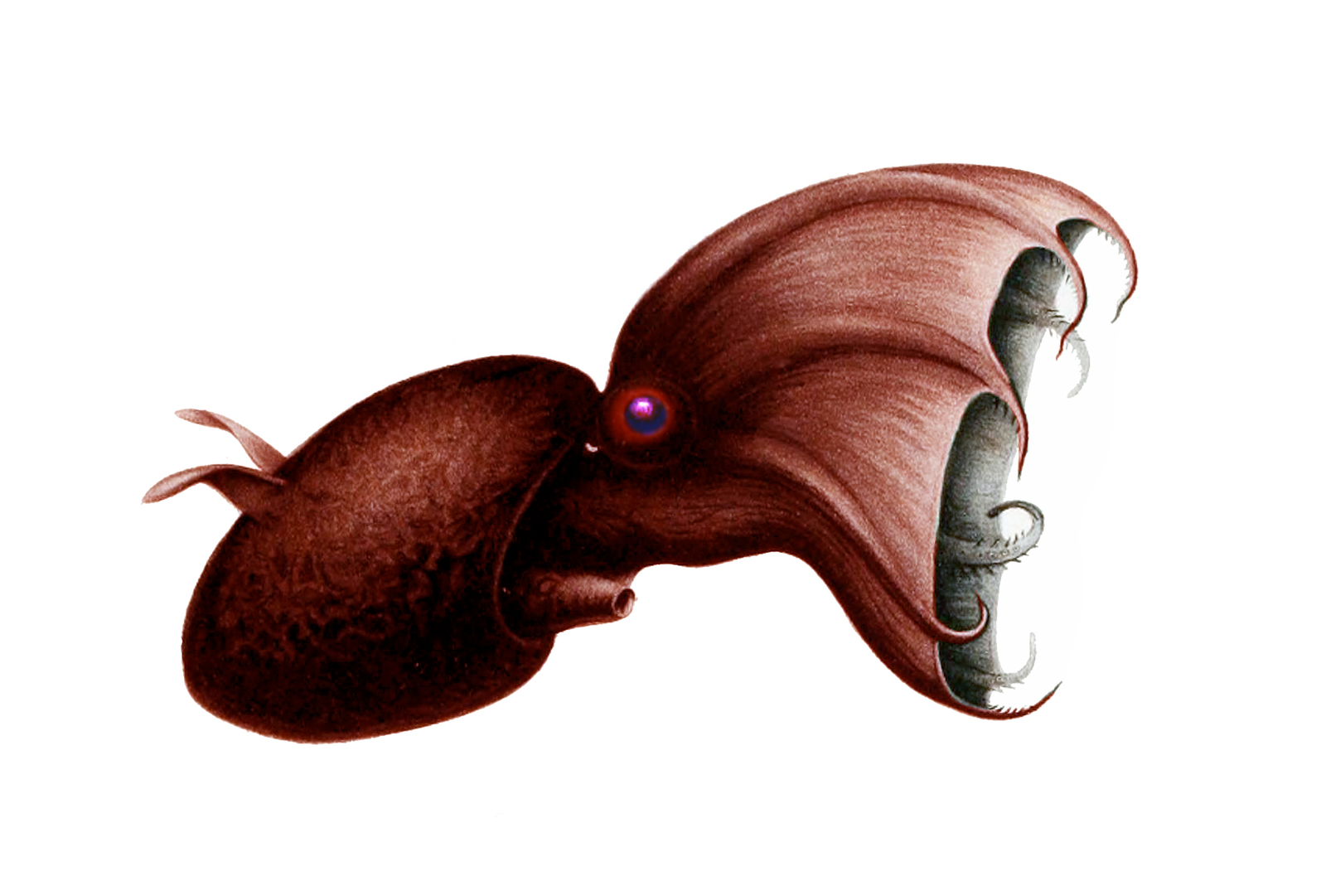
The vampire squid (Vampyroteuthis infernalis) is a cephalopod mollusc of the family Vampyroteuthidae, in the order Vampyromorphida.
Quick answer
The vampire squid (Vampyroteuthis infernalis) is a deep-sea cephalopod that turns its cape inside out and eats marine snow, not blood. Adults reach 30 cm and are Least Concern.
Top questions about the Vampire Squid
Vampire Squid facts at a glance
- Weight 700 g
- Length 30 cm
- Top speed 3 km/h
- Lifespan 8 years
| Scientific name | Vampyroteuthis infernalis |
|---|---|
| Diet | Detritivore |
| Habitat | Deep midwater |
| Lifespan | 8–10 years |
| Weight | 0.5–1 kg |
| Top speed | up to 3 km/h |
| Conservation status | Least Concern (IUCN) |
| Kingdom | Animalia |
|---|---|
| Phylum | Mollusca |
| Class | Cephalopoda |
| Order | Vampyromorphida |
| Family | Vampyroteuthidae |
| Genus | Vampyroteuthis |
Where it lives
The vampire squid (Vampyroteuthis infernalis) is native to Oxygen-minimum zones of deep oceans worldwide. — recorded across North America, South America, Africa, Asia, Oceania in this guide’s range summary.
For occurrence records, see GBIF species search and sources below.
How big is a vampire squid?
An adult vampire squid measures 30 cm long — about 17% of the height of an average adult person (1.73 m) — and weighs around 700 g, about 1% of an average adult’s body weight (70 kg).
Length vs an average adult’s height (to scale)
What is a group of vampire squid called?
Group name (collective noun)
A group of Vampire Squid is called a school.
Baby name
A baby Vampire Squid is called a juvenile.
Explore more animal collective nouns and baby animal names .
Cape of cirri, not a bloodsucker
A dark webbing between arms can invert like a vampire cloak, exposing soft cirri tipped with suckers. Red-blue photophores dot the skin. It is not a true squid or octopus but its own order.
Marine snow specialist
Detritus, dead plankton, and gel particles are collected with sticky filaments on cirri — unusual among cephalopods that usually hunt live prey.
Oxygen-minimum zones worldwide
Temperate and tropical deep midwaters with low oxygen. Vertical migration places it in food-rich layers at night.
Secure in the abyss
Least Concern with huge deep habitat and no fishery. ROV footage made it an icon of deep-sea biology despite the scary name.
Explore the Vampire Squid
Close relatives
- Octopus Same class
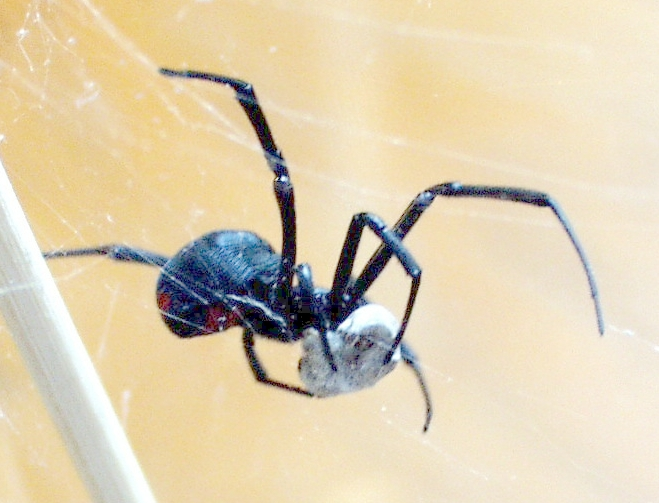
- Black Widow Same class
- Jellyfish Same class
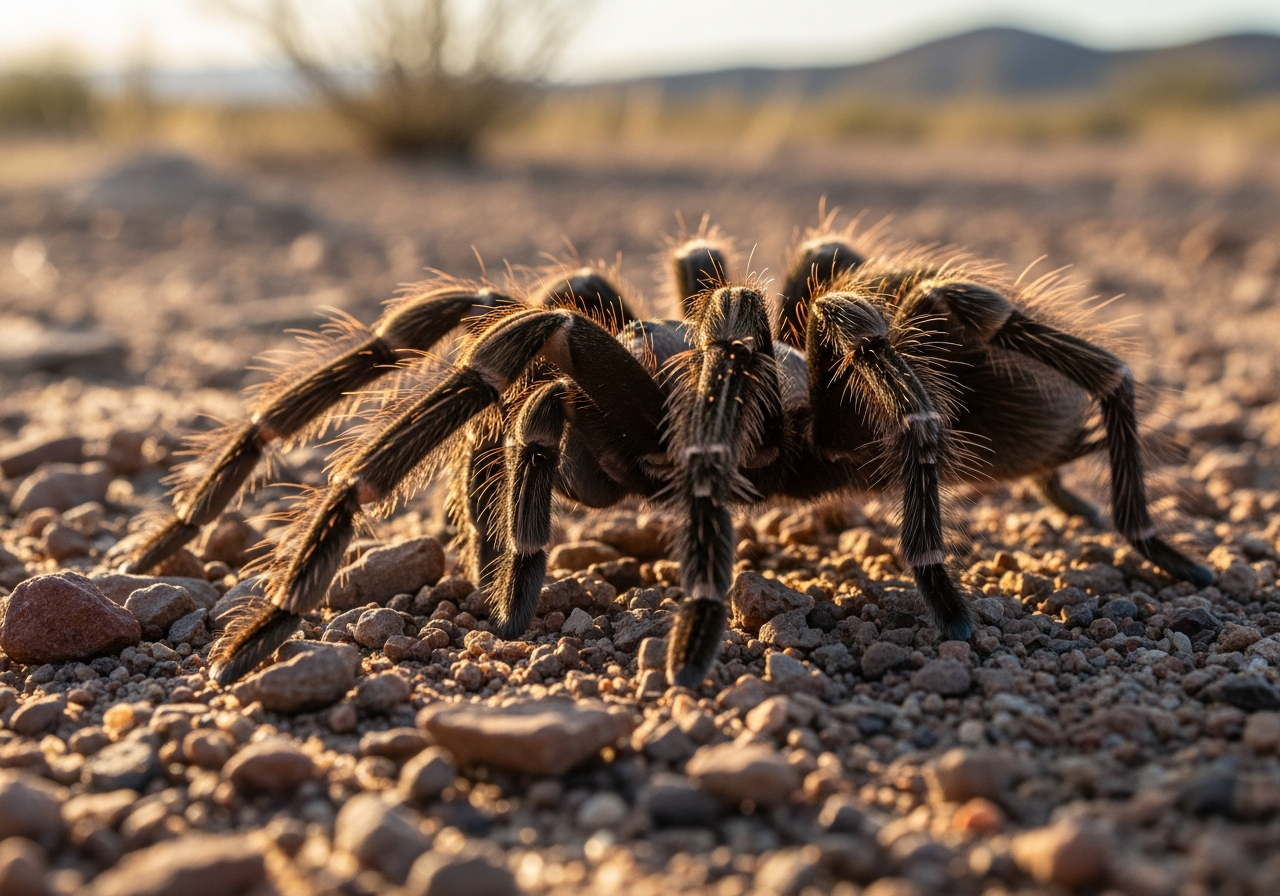
- Tarantula Same class
Conservation status of the Vampire Squid
The vampire squid (Vampyroteuthis infernalis) is listed as Least Concern on the IUCN Red List. Least Concern (LC) is the IUCN's lowest-risk category, assigned to widespread, abundant species that have been evaluated and found not to be threatened. It does not mean a species faces no pressures — only that it is not currently at risk of extinction.
The vampire squid (Vampyroteuthis infernalis) is assessed on the IUCN Red List. Look up on the IUCN Red List .
Frequently asked questions about the Vampire Squid
Do vampire squids drink blood?
No — they eat marine snow (detritus and dead plankton); the name refers to their dark cape-like webbing.
What happens when a vampire squid is threatened?
It inverts its webbed arms to expose spiny cirri and can release bioluminescent mucus.
Is a vampire squid a true squid?
It sits in its own order Vampyromorphida, separate from squids and octopuses.
How deep do vampire squids live?
Hundreds to about 900 m in oxygen-poor midwaters worldwide.
What is marine snow?
Slowly sinking detritus and dead plankton that feeds many deep animals.
What is a group of vampire squid called?
A group of Vampire Squid is called a school.
What is a baby vampire squid called?
A baby Vampire Squid is called a juvenile.
Sources & references
This guide is compiled and reviewed against established zoological and conservation references. Key sources for the Vampire Squid:
-
IUCN Red List of Threatened Species
Conservation status (Least Concern) reflects the IUCN Red List category for Vampyroteuthis infernalis.
-
iNaturalist — observations & photos
Search citizen-science observations and community IDs for Vampyroteuthis infernalis. Useful for range checks and recent sightings — not a substitute for formal Red List status.
-
GBIF — occurrence data
Global Biodiversity Information Facility species search for Vampyroteuthis infernalis. Explore published occurrence records used in range research.
-
Global Animal Guide editorial standards
How we research, source, review, and update every guide for accuracy.