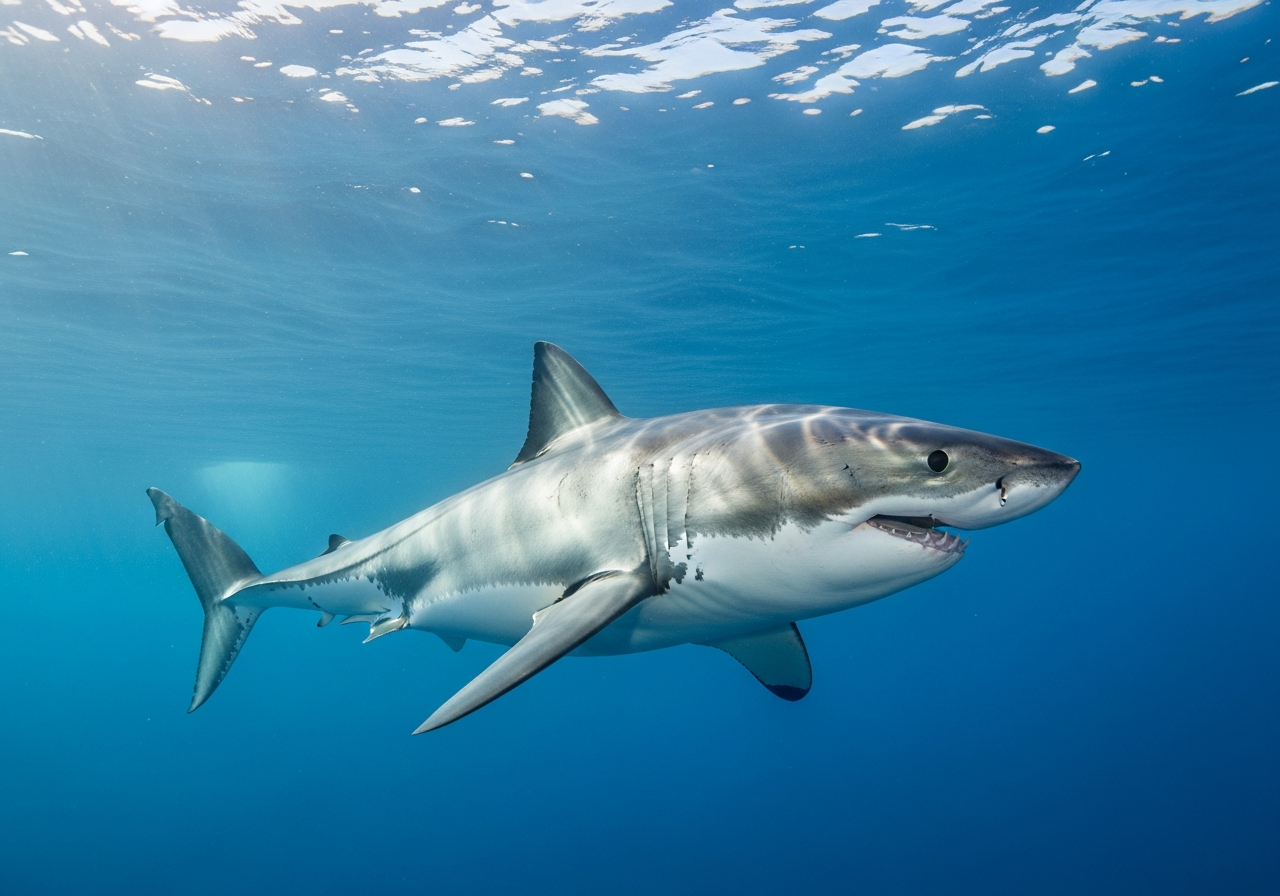
Quick answer
Great white sharks can injure people, but attacks are rare and usually non-fatal. Risk scales with size (up to 1,100 kg), hunting behaviour near seal colonies, and human activity — not with sensational portrayals of mindless killers.
Key takeaway
Great whites are the largest predatory fish and can deliver devastating bites, yet unprovoked attacks on swimmers are uncommon globally. Most incidents involve surfers or divers mistaken for seals, spearfishermen with attached fish, or curiosity bites that the shark does not follow up.
Realistic risk from great white sharks
Globally, confirmed unprovoked bites by all shark species number in the low hundreds per year, with great whites involved in a fraction of cases. Millions of people swim and surf in great white range annually. The shark is not a natural hunter of humans — most bites are investigative, and the animal often withdraws after one strike. Fatalities are very uncommon, and people kill far more great whites than the reverse.
When great white shark encounters turn dangerous
Risk rises near seal and sea-lion colonies where adults hunt from below, especially at dawn and dusk. Surfers on boards can silhouette like a seal. Spearfishing leaves blood and struggling fish that attract investigation. Murky water, river mouths, and steep drop-offs where sharks patrol increase surprise encounters. Chumming for tourism or fishing can habituate sharks to boats and people.
Great white shark capability
Large females exceed 1,100 kg and 4.6 m, with serrated teeth replaced continuously — thousands over a lifetime. Partly warm-blooded muscles allow bursts to about 56 km/h. Breaching attacks launch multi-hundred-kilogram bodies clear of the water. Ampullae of Lorenzini detect the faint electric fields of prey. A single bite can cause catastrophic trauma even when the shark does not return.
Safety around great white sharks
Heed local advisories, avoid swimming at dawn and dusk near seal colonies, and stay in groups when possible. Surfers should know seasonal shark presence at famous hotspots. Do not spearfish or dump fish waste near swimmers. Cage-diving and research operations should follow ethical distance rules. If bitten, apply pressure, exit the water calmly, and seek emergency care immediately.
Senses and hunting
Great whites smell dilute blood, hear low-frequency vibrations, and detect bioelectric fields through pores in the snout. Adults ambush seals and sea lions from below with explosive speed — the classic breaching attack filmed off South Africa and Australia. Young sharks eat fish and rays before shifting to warm-blooded prey as they grow. Understanding this hunting logic explains why surfers and wetsuited divers sometimes trigger investigation bites.
Habitat and range
Great white sharks live in cool and temperate coastal waters around the world. Well-known hotspots include the coasts of South Africa, southern Australia, California, and the northeastern United States. Satellite tracking shows migrations of thousands of kilometres between feeding and breeding areas. Knowing when sharks seasonally aggregate near beaches helps communities manage risk without needless panic.
Sources
Great White Shark FAQs
Are great white sharks dangerous?
Great white sharks can cause serious injury when they bite, but attacks on humans are rare. Most bites are exploratory — the shark usually leaves after a single strike. People are not natural prey; risk rises in seal colonies, murky water, and when spearfishing attracts attention.
What is the scientific name of the great white shark?
Carcharodon carcharias — used in research and conservation listings for great white sharks.
What do great white sharks eat?
Young great whites eat fish and rays; adults hunt seals, sea lions, and small whales. They ambush warm-blooded prey from below with explosive breaching attacks.
Where do great white sharks live?
They inhabit cool and temperate coastal waters worldwide, including South Africa, southern Australia, California, and the northeastern United States.
What is the conservation status of great white sharks?
Listed in our guides as Vulnerable. Check the IUCN Red List and national assessments for the latest formal category.
Who this page is for.This page is realistic risk, not medical advice after a bite or attack.