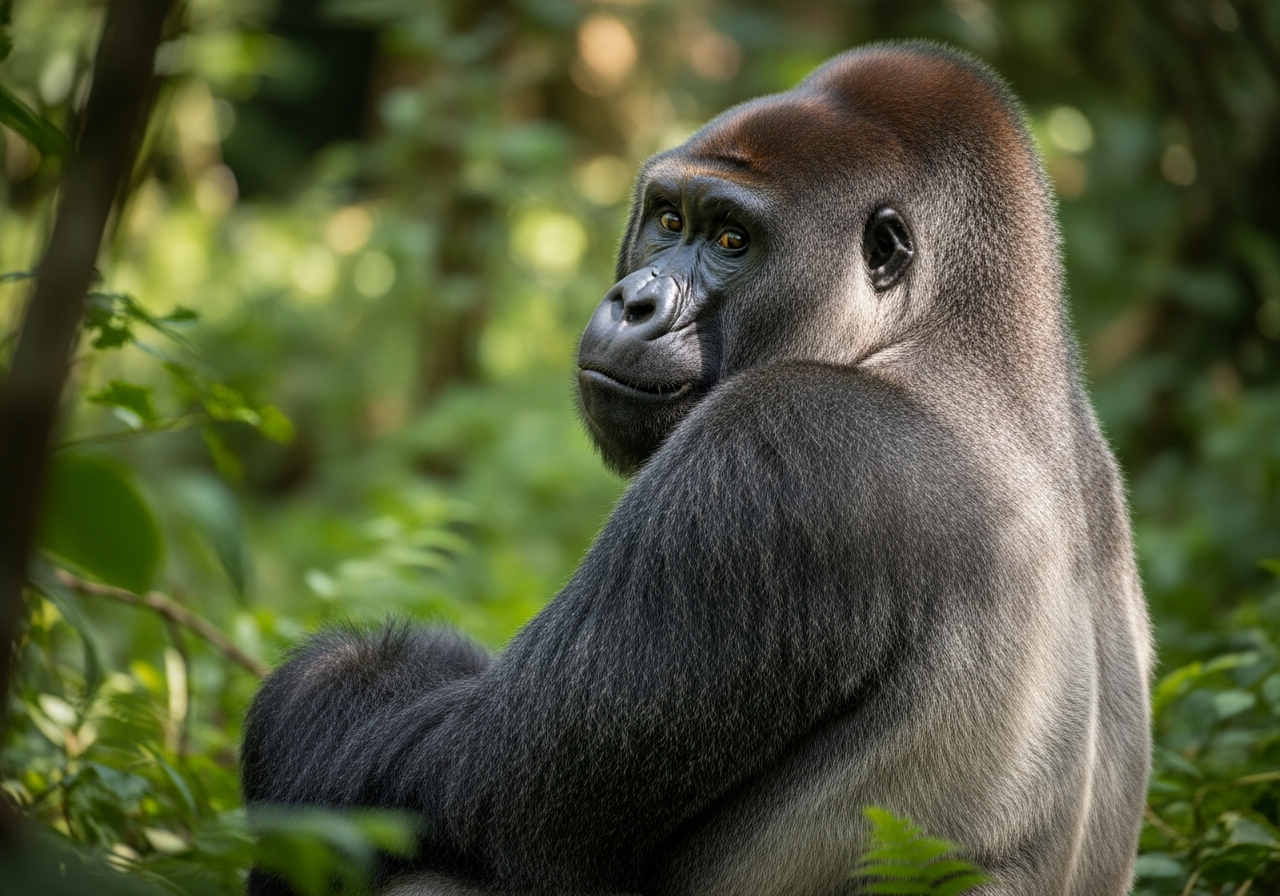
Quick answer
Yes — both species are IUCN Critically Endangered: western gorillas (Gorilla gorilla) and eastern gorillas (Gorilla beringei). Mountain gorillas, a subspecies, recovered to more than 1,000 and are listed Endangered, but they remain conservation-dependent. Treating “the gorilla” as one number hides Grauer’s collapse and Cross River’s few hundred. Figures checked 13 August 2026.
Are both gorilla species Critically Endangered?
Yes. IUCN lists western gorillas and eastern gorillas as Critically Endangered. Mountain gorillas were downlisted to Endangered as a subspecies after intensive protection, but eastern gorillas as a species stay CR because Grauer’s gorillas keep falling. Western lowland gorillas can look abundant in a documentary and still meet CR decline criteria. A single “gorilla” label is the mistake this page exists to stop.
What is driving the decline?
Bushmeat hunting and snares, Ebola outbreaks that can kill most of a western lowland population, logging and mining roads, and disease spillover from people — gorillas have no immunity to human respiratory viruses. Ranking those threats changes by forest. Virunga’s snare-and-tourism story is not a Cross River fragment on the Nigeria–Cameroon border.
Is the outlook the same for every gorilla?
No. Mountain gorillas rose from fewer than 620 in the 1980s to more than 1,000 in Virunga and Bwindi — a real, conservation-dependent recovery. Grauer’s gorillas lost a large share of their range in eastern DRC. Cross River gorillas have almost no demographic buffer. Western lowland numbers are larger and still listed CR. IUCN’s Green Status called mountain gorillas “Largely Depleted” and conservation-dependent: stop the work and the gain reverses.
What actually helps?
Fund rangers, veterinary intervention, and community forests — not orphan-as-pet tourism. WARN’s country programmes fund partner veterinary and rescue work in East Africa. Do not send gorilla readers to an orangutan appeal. WARN does not run gorilla camps.
Does a plant diet mean gorillas are safe from people?
No. Adults may eat on the order of 18 kg of vegetation a day. Strength is for intra-group display and feeding, not a reason to approach. Crop-edge conflict happens where farms replace forest. Diet details live on the what-gorillas-eat guide; this page is the extinction listing.
Sources
Gorilla FAQs
Are gorillas endangered?
Both living species are Critically Endangered: western gorillas (Gorilla gorilla) and eastern gorillas (Gorilla beringei). Mountain gorillas, an eastern subspecies, recovered past 1,000 and are listed Endangered, but they remain conservation-dependent. A Virunga trekking success is not a species-wide all-clear for Grauer’s or Cross River gorillas.
How many gorillas are left?
Do not cite one global headcount. Western lowland gorillas still number in the low hundreds of thousands but are listed CR because of rapid past decline plus Ebola and hunting. Cross River gorillas are a few hundred. Mountain gorillas exceed 1,000 in Virunga and Bwindi. Grauer’s gorillas have lost most of their 1990s range in eastern DRC. Always name the taxon and the year.
Are mountain gorillas the same as western gorillas?
No. Mountain gorillas (Gorilla beringei beringei) live in Rwanda, Uganda and DRC highlands. Western gorillas occupy Congo Basin forest. Mixing them produces the false story that Volcanoes National Park permits protect Gabon’s forests. See the mountain-gorilla endangered guide for that subspecies.
What actually helps gorillas?
Anti-snare patrols, Ebola-safe tourism rules, and keeping forest standing. Cub selfies and orphan-as-pet stories do not. World Animal Rescue Network describes proposed veterinary and rescue work via country programmes — not an orangutan appeal and not a WARN-run gorilla camp.
Who this page is for. This page explains IUCN-style status. Skip it if you need an emergency wildlife-rescue number.