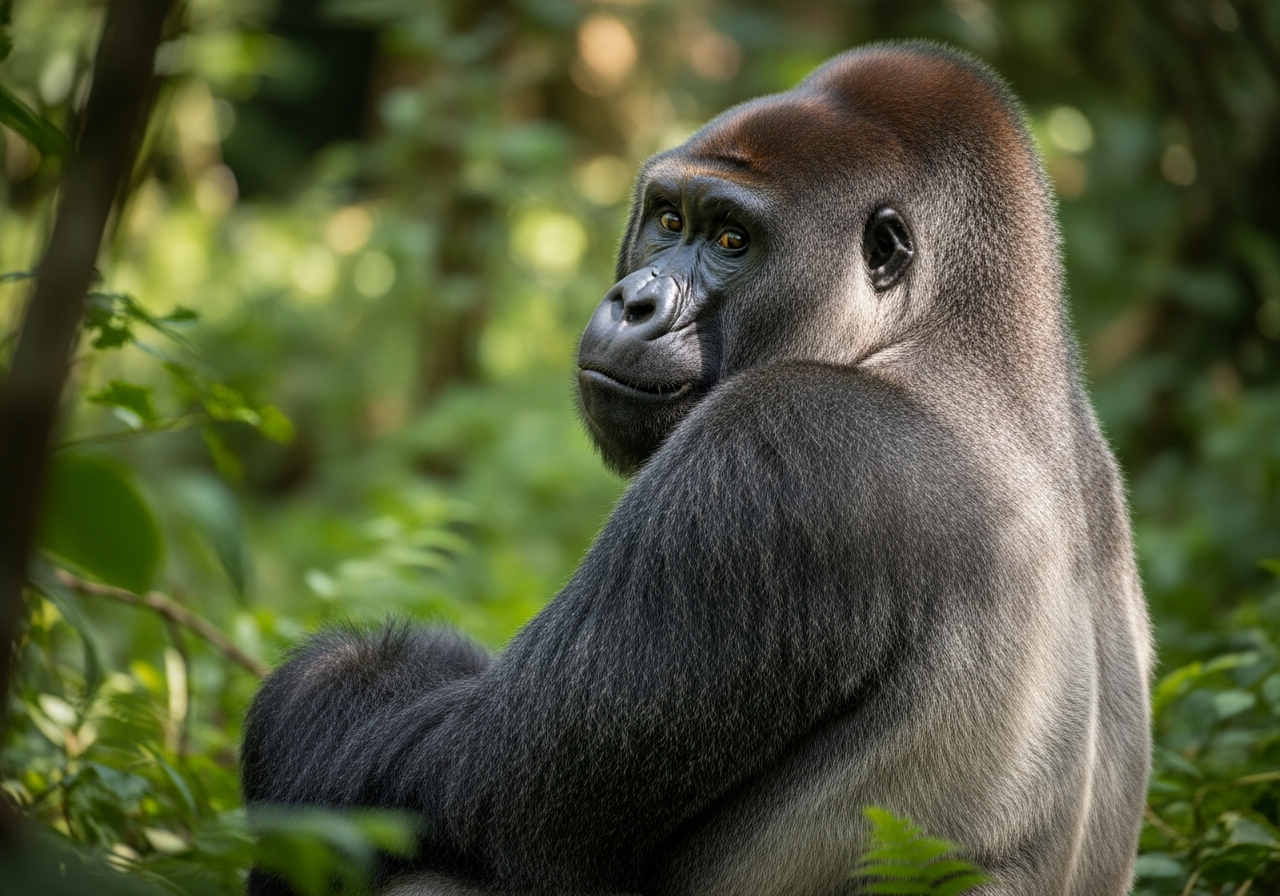
Quick answer
Gorillas live only in central African forest. Western gorillas (Gorilla gorilla) occupy the Congo Basin; eastern gorillas (Gorilla beringei) live in eastern DRC, Uganda and Rwanda. They are not Asian apes and not savanna grazers. Both species are Critically Endangered. Figures checked 13 August 2026.
Which forests, which species?
Western gorillas use lowland and swamp forest from Gabon and Cameroon across the Congo Basin. Eastern gorillas split between Grauer’s gorillas in eastern DRC lowland and montane forest, and mountain gorillas in Virunga and Bwindi cloud forest. Cross River gorillas cling to highland fragments on the Nigeria–Cameroon border. None of that is “tropical and montane forest” as a single blob labelled only Gorilla gorilla.
What microhabitats do they use?
Fruiting groves, bamboo zones, and nest sites with cover. Groups build a fresh nest of branches each night — ground or tree — then move on. Edge clearings can look convenient on a map and still be snare fields. Specialists such as Cross River gorillas fail when the remaining fragments lose connectivity.
How do people shrink the map?
Logging concessions, mining roads, charcoal, and farms punch holes that hunters then use. This is not a “suburbs create opportunity” story. Fragmentation isolates groups, raises inbreeding risk, and puts gorillas on crop edges where snares wait. Civil conflict in eastern DRC has been especially costly for Grauer’s gorillas.
What does conservation geography require?
Both species are Critically Endangered. Linked habitat beats a single fenced postcard park. Watch from a distance; never feed wild gorillas. Mountain-gorilla tourism can fund rangers in Virunga and Bwindi without transferring that model, unchanged, to unhabituated western lowland groups.
How does diet pin them to forest?
Herbivores that process tens of kilograms of vegetation a day cannot commute across a logging grid. Western fruit-followers need continuous canopy; mountain folivores need highland bamboo and browse. Lose either and the range map shrinks faster than a census can catch up.
Western versus eastern — why the split matters
Two species, four subspecies, zero wild range outside Africa. WARN’s country programmes fund partner veterinary and rescue work in East Africa. Do not map gorillas to an orangutan appeal. WARN does not run gorilla camps.
Sources
Gorilla FAQs
Where do gorillas live?
Only in central African forest. Western gorillas (Gorilla gorilla) occupy the Congo Basin — Gabon, Cameroon, Republic of Congo, Central African Republic, Equatorial Guinea, Angola’s Cabinda, and DRC. Eastern gorillas (Gorilla beringei) live in eastern DRC, Uganda and Rwanda. There is no Asian gorilla and no savanna species.
Do mountain gorillas live in the same places as western gorillas?
No. Mountain gorillas are restricted to the Virunga volcanoes (Rwanda, Uganda, DRC) and Bwindi Impenetrable Forest in Uganda. Western lowland gorillas live in lowland rainforest hundreds of kilometres west. A Volcanoes National Park permit does not protect a Gabon concession.
Are gorillas in Asia or zoos the same as wild range?
Wild gorillas are African only. Captive collections are not a second wild range. Night nests of branches — built fresh each evening on the ground or in trees — mark used home ranges. Suburbs and farms are not gorilla habitat; they are the edge that produces snares and crop raids.
What actually protects gorilla range?
Linked forest, anti-snare patrols, and keeping mining roads from opening hunting access. World Animal Rescue Network describes proposed veterinary and rescue work via country programmes in East Africa — not an orangutan appeal. WARN does not run gorilla camps.
Who this page is for. This page is native range and habitat, not a sighting hotline.