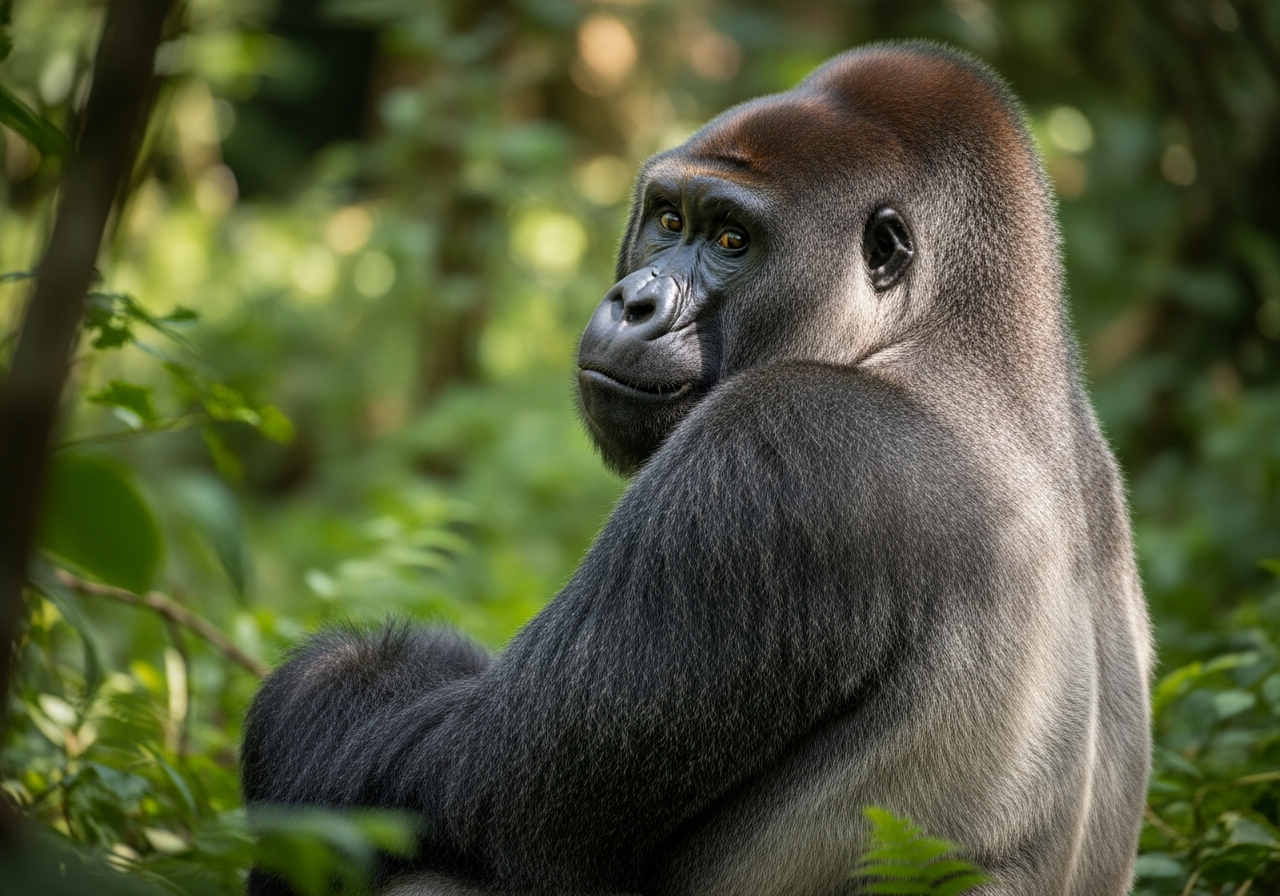
Quick answer
Gorillas are herbivores. Western lowland groups eat more fruit when the forest provides it; mountain gorillas eat more leaves, stems, pith and bamboo. Adults may eat on the order of 18 kg of vegetation a day. They are not a truncated diet template — and they are not pets you feed. Figures checked 13 August 2026.
What do gorillas actually eat?
Leaves, stems, shoots, pith, bark, fruit, and sometimes ants or termites. Western lowland gorillas (Gorilla gorilla gorilla) follow fruiting trees. Mountain gorillas fold bamboo into the same day’s menu because highland fruit is scarce. “Herbivore (mostly)” was a template hole, not a diet. Anatomy — large guts, grinding teeth — is built for plants, not for a meat-eater story.
How do gorillas find food?
Silverbacks lead day ranges. Groups remember fruiting trees and seasonal bamboo flushes. Lean months mean more fibrous fallback foods and longer travel, not a switch to hunting deer. Infants nurse and then sample what the group is already processing. A tourist fruit pile short-circuits that learning and pulls groups onto roads.
What do gorillas do for the forest?
They open canopy gaps, dump seeds in dung, and keep some plants browsed. That is forest engineering, not a zoo exhibit. Empty gorilla range is a quieter, less seeded forest — one reason snare removal is habitat work, not only animal-welfare work.
Does feeding start conflict?
Yes. Never feed wild gorillas. Habituation plus food raises injury risk and can lead to lethal management. Snares set for duiker and bushpig catch gorilla hands and feet. Crop-edge gardens are a diet map of lost forest, not proof that gorillas “prefer” maize.
If they eat plants, why are they so strong?
Folivory still needs bulk processing — hence the 18 kg figure — and males compete with muscle, not with hunting. Strength is not a reason to approach. WARN’s country programmes fund partner veterinary and rescue work in East Africa, not an orangutan appeal and not a WARN-run gorilla camp.
Sources
Gorilla FAQs
What do gorillas eat?
Gorillas are herbivores. Western lowland groups eat more fruit when the forest provides it; mountain gorillas eat more leaves, stems, pith and bamboo because highland fruit is scarce. Adults may eat on the order of 18 kg of vegetation a day. Occasional ants or termites do not make them omnivores in the tourist-brochure sense.
Do western and mountain gorillas eat the same things?
No. Western lowland gorillas (Gorilla gorilla gorilla) travel farther for ripe fruit. Mountain gorillas (Gorilla beringei beringei) are folivores in bamboo and montane forest. That is why a zoo “gorilla mix” is not a species diet sheet, and why crop-edge conflict looks different in Gabon than in Bwindi.
Do gorillas hunt or eat meat?
Wild gorillas do not hunt ungulates. They may take insects. Silverback strength is for display, feeding and group defence — not a licence to feed them or to stage a fight. Never offer food to wild gorillas; habituation plus snacks is a disease and injury pipeline.
How does diet link to conservation?
When farms replace forage routes, gorillas raid crops and die to snares set for other animals. Keeping forest standing is diet conservation. World Animal Rescue Network describes proposed veterinary and rescue work via East Africa programmes — not an orangutan appeal.
Who this page is for. This page is about wild diet. Skip it if you need a captive feeding plan from a veterinarian.