Quick answer
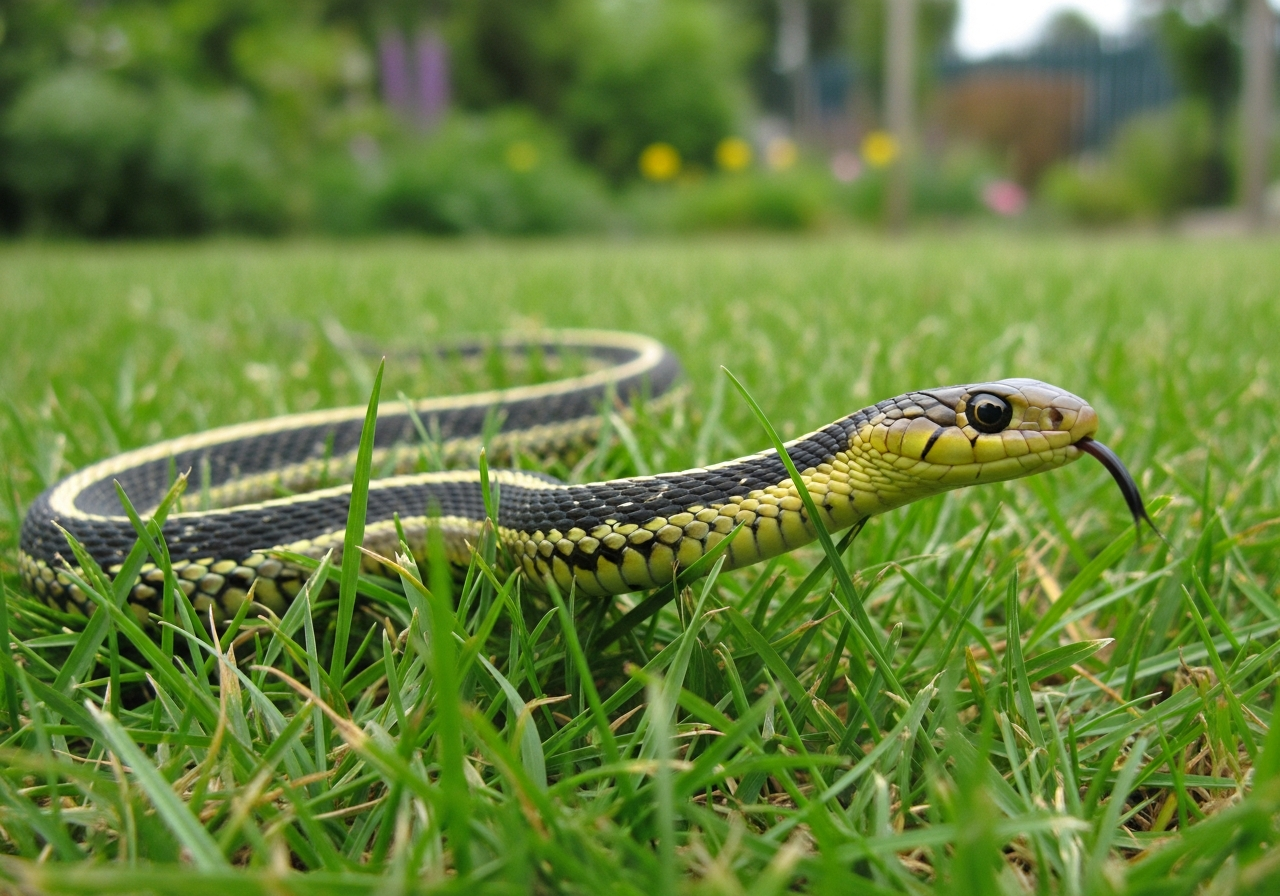
The garter snake is one of the most common and widespread snakes in North America, found in meadows, marshes, woodlands, and gardens from Canada to Mexico. It is a slender snake, typically 0.5 to 1.3 m long and about 150 g, usually striped in yellow or green along a darker body. Harmless to people, it slithers actively by day hunting worms, amphibians, and fish, and lives around four to ten years.
Top questions about the Garter Snake
Garter Snake facts at a glance
- Weight 150 g
- Length 70 cm
- Top speed 5 km/h
- Lifespan 8 years
| Scientific name | Thamnophis sirtalis |
|---|---|
| Diet | Carnivore |
| Habitat | Meadows, marshes, woodlands, and gardens |
| Lifespan | 4–10 years in the wild |
| Length | 0.5–1.3 m (1.5–4.3 ft) |
| Weight | About 150 g (5 oz) |
| Conservation status | Least Concern (IUCN) |
| Kingdom | Animalia |
|---|---|
| Phylum | Chordata |
| Class | Reptilia |
| Order | Squamata |
| Family | Colubridae |
| Genus | Thamnophis |
Where it lives
The garter snake (Thamnophis sirtalis) is native to Meadows, marshes, and gardens across North America, one of the most widespread snakes on the continent. — recorded across North America in this guide’s range summary.
For occurrence records, see GBIF species search and sources below.
How big is a garter snake?
An adult garter snake measures 70 cm long — about 40% of the height of an average adult person (1.73 m) — and weighs around 150 g, a small fraction of an average adult’s body weight (70 kg).
Length vs an average adult’s height (to scale)
What is a group of garter snakes called?
Group name (collective noun)
A group of Garter Snakes is called a nest. It is also known as a den.
Baby name
A baby Garter Snake is called a snakelet.
Explore more animal collective nouns and baby animal names .
Appearance and identification
Garter snakes are best known for the long stripes that run the length of the body, usually one down the back and one along each side, in yellow, green, or cream against brown, grey, or black. Adults are slim and typically measure 0.5 to 1.3 m (about 1.5 to 4.3 ft) and weigh around 150 g. There are many regional colour forms, so patterning varies widely across the species' huge range. The keeled scales give the skin a slightly rough, matte look rather than a glossy sheen.
Diet and hunting
The garter snake is a carnivore with a broad appetite, eating earthworms, slugs, amphibians, small fish, and the occasional rodent or nestling. It slithers actively through vegetation and shallow water by day, using sight and a flicking tongue to track prey rather than lying in wait. Some populations tolerate the toxins of newts and toads that would poison other predators. Prey is seized in the jaws and swallowed whole, as the snake has no venom potent enough to subdue large animals.
Habitat and range
Few snakes are as adaptable, and the garter snake ranges from Canada through the United States into Mexico across an enormous variety of habitats. It thrives in damp meadows, marshes, pond edges, woodland, and suburban gardens, rarely far from water. This tolerance of cool climates lets it live farther north than almost any other North American snake. Its willingness to live alongside people makes it one of the reptiles most familiar to gardeners.
Reproduction and hibernation
Garter snakes give birth to live young rather than laying eggs, producing litters that can number from a handful to several dozen. In colder regions they spend winter in communal dens called hibernacula, sometimes gathering by the hundreds or thousands in the same rocky shelter. When they emerge in spring, males may form writhing mating balls around a single female. The newborn snakes are fully independent from birth and receive no parental care.
Defence and predators
When threatened, a garter snake first tries to flee, slithering quickly into cover. If cornered it may flatten its body, strike, or release a foul-smelling musk from glands near the tail to deter a predator. Its saliva contains a mild toxin that helps subdue small prey but is harmless to humans, causing at most minor irritation. Hawks, larger snakes, raccoons, and domestic cats are among its many predators.
Lifespan and conservation
In the wild garter snakes typically live four to ten years, though predation means many do not survive their first year. The species is listed as Least Concern by the IUCN and remains abundant across its range. A few localised subspecies, such as the San Francisco garter snake, are threatened by habitat loss and are protected. For the species as a whole, adaptability and a varied diet keep populations healthy.
Dig deeper into the Garter Snake
- Garter Snake: Key Facts
Garter Snakes (Thamnophis sirtalis) are reptiles found across North America. One of North America's most common and widespread snakes.
- How Long Do Garter Snakes Live?
Garter Snake lifespan is typically 4–10 years in the wild. What shortens or extends life, life stages, and status (Least Concern).
- What Do Garter Snakes Eat?
What garter snakes eat: Carnivore, foraging style, and seasonal shifts in Meadows, marshes, woodlands, and gardens.
- Where Do Garter Snakes Live?
Where garter snakes live: Meadows, marshes, woodlands, and gardens, native range cues, and human overlap. Status Least Concern.
Explore the Garter Snake
Related Reptiles
Range & geography
Did you know? Garter Snake facts
- The common garter snake is a small, slender snake found across much of North America, recognized by the light stripes running along its dark body.
- Garter snakes are essentially harmless to humans. They produce a mild toxin in their saliva that helps subdue small prey, but it poses no real danger to people, and bites are rare.
- Garter snakes are carnivores that eat earthworms, frogs, toads, fish, slugs, and small rodents. Some can even eat toxic amphibians that would poison other animals.
- In the wild, common garter snakes usually live around 4 to 10 years, though they can live longer in captivity with steady food and protection from predators.
- Yes. Garter snakes help control slugs, insects, and rodents, making them welcome visitors to many gardens. They are gentle and pose no threat to people or pets.
- Conservation: Least Concern (IUCN).
Diet & feeding
Garter Snake feeds primarily as a carnivore. Garter snakes are active by day and thrive in a wide range of habitats, from wetlands to suburban gardens. They are cold-tolerant and range farther north than almost any other American snake, surviving harsh winters by gathering in large communal dens called hibernacula. Whe
Adaptations
- Garter snakes are active by day and thrive in a wide range of habitats, from wetlands to suburban gardens. They are cold-tolerant and range farther north than almost any other American snake, surviving harsh winters by gathering in large communal dens called hibernacula. When threatened they may release a foul-smelling musk rather than biting.
- These snakes are carnivores that eat earthworms, amphibians, fish, slugs, and small rodents. Some populations can eat toxic newts and toads that would poison other predators, thanks to a built-up resistance to the toxins. Their saliva is mildly toxic to small prey but harmless to humans.
Behaviour & ecology
- Garter snakes are active by day and thrive in a wide range of habitats, from wetlands to suburban gardens. They are cold-tolerant and range farther north than almost any other American snake, surviving harsh winters by gathering in large communal dens called hibernacula. When threatened they may release a foul-smelling musk rather than biting.
- These snakes are carnivores that eat earthworms, amphibians, fish, slugs, and small rodents. Some populations can eat toxic newts and toads that would poison other predators, thanks to a built-up resistance to the toxins. Their saliva is mildly toxic to small prey but harmless to humans.
- The common garter snake ranges across most of North America, from Canada to the Gulf coast, in meadows, marshes, woodlands, farmland, and gardens. They are usually found near water or damp ground where their prey is abundant. Their adaptability makes them one of the most frequently encountered snakes on the continent.
Communication
- Scent marking, body posture, and head-bobbing or tail signals communicate threat and dominance.
- Vocalisations are limited in many reptiles but hissing or bellowing occurs in some groups.
Habitat & range
Meadows, marshes, woodlands, and gardens
Ecological role
Garter Snake acts as a predator that helps regulate prey populations and maintain balance in meadows, marshes, woodlands, and gardens.
Conservation status of the Garter Snake
The garter snake (Thamnophis sirtalis) is listed as Least Concern on the IUCN Red List. Least Concern (LC) is the IUCN's lowest-risk category, assigned to widespread, abundant species that have been evaluated and found not to be threatened. It does not mean a species faces no pressures — only that it is not currently at risk of extinction.
The garter snake (Thamnophis sirtalis) is assessed on the IUCN Red List. Look up on the IUCN Red List .
Frequently asked questions about the Garter Snake
Are garter snakes dangerous to humans?
No. Garter snakes are essentially harmless to people; they have only a very mild toxin in their saliva that helps them subdue small prey. A bite may cause minor irritation or swelling but is not medically dangerous.
What do garter snakes eat?
They are carnivores that eat earthworms, slugs, amphibians such as frogs and toads, small fish, and occasionally rodents or nestlings. They hunt actively by day, tracking prey by sight and scent.
How big do garter snakes get?
Most garter snakes are 0.5 to 1.3 m long (about 1.5 to 4.3 ft) and weigh around 150 g. They are slender snakes, so even the longest individuals stay lightweight.
Do garter snakes lay eggs?
No, garter snakes give birth to live young rather than laying eggs. A single female can produce anywhere from a few to several dozen fully independent offspring in a litter.
How long do garter snakes live?
In the wild they usually live four to ten years, although heavy predation means many die young. Individuals in captivity can live somewhat longer under stable conditions.
Where are garter snakes found?
They range across North America from Canada to Mexico and live in meadows, marshes, woodlands, pond edges, and gardens. Their tolerance of cool climates lets them live farther north than almost any other North American snake.
What is a group of garter snakes called?
A group of Garter Snakes is called a nest. It is also known as a den.
What is a baby garter snake called?
A baby Garter Snake is called a snakelet.
Sources & references
This guide is compiled and reviewed against established zoological and conservation references. Key sources for the Garter Snake:
-
IUCN Red List of Threatened Species
Conservation status (Least Concern) reflects the IUCN Red List category for Thamnophis sirtalis.
-
iNaturalist — observations & photos
Search citizen-science observations and community IDs for Thamnophis sirtalis. Useful for range checks and recent sightings — not a substitute for formal Red List status.
-
GBIF — occurrence data
Global Biodiversity Information Facility species search for Thamnophis sirtalis. Explore published occurrence records used in range research.
- IUCN Red List — Thamnophis sirtalis.
Conservation status (Least Concern) and population trends.
- Animal Diversity Web — Thamnophis sirtalis. University of Michigan Museum of Zoology.
Life history, morphology, and range.
- Wikipedia — Garter Snake.
General taxonomy and overview (cross-check primary sources).
-
Global Animal Guide editorial standards
How we research, source, review, and update every guide for accuracy.