Image sourcing: see credits & licences
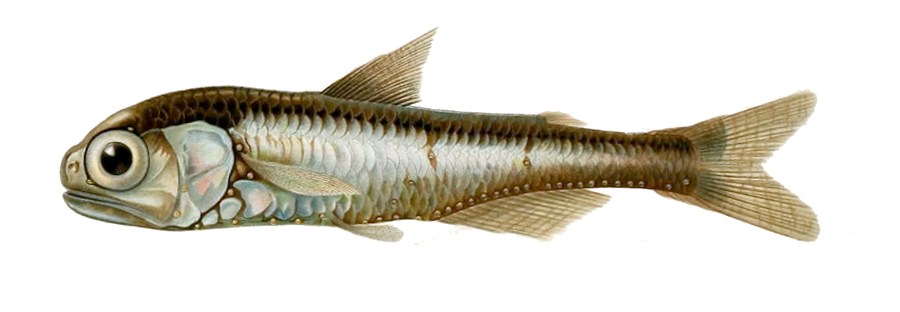
The lanternfish (Myctophum punctatum) is a ray-finned fish of the family Myctophidae, in the order Myctophiformes.
Quick answer
The spotted lanternfish (Myctophum punctatum) is a keystone mesopelagic fish whose daily vertical migration moves carbon through ocean food webs. Adults reach 8 cm and are Least Concern.
Top questions about the Lanternfish
Lanternfish facts at a glance
- Weight 8 g
- Length 8 cm
- Top speed 5 km/h
- Lifespan 4 years
| Scientific name | Myctophum punctatum |
|---|---|
| Diet | Carnivore (zooplankton) |
| Habitat | Open ocean midwaters |
| Lifespan | 3–5 years |
| Weight | 0.005–0.01 kg |
| Top speed | up to 5 km/h |
| Conservation status | Least Concern (IUCN) |
| Kingdom | Animalia |
|---|---|
| Phylum | Chordata |
| Class | Actinopterygii |
| Order | Myctophiformes |
| Family | Myctophidae |
| Genus | Myctophum |
Where it lives
The lanternfish (Myctophum punctatum) is native to Temperate and subtropical Atlantic mesopelagic zone. — recorded across North America, Europe, Africa in this guide’s range summary.
For occurrence records, see GBIF species search and sources below.
How big is a lanternfish?
An adult lanternfish measures 8 cm long — about 5% of the height of an average adult person (1.73 m) — and weighs around 8 g, a small fraction of an average adult’s body weight (70 kg).
Length vs an average adult’s height (to scale)
What is a group of lanternfish called?
Group name (collective noun)
A group of Lanternfish is called a shoal.
Baby name
A baby Lanternfish is called a larva.
Explore more animal collective nouns and baby animal names .
Lights of the twilight zone
Photophores along the flank produce species-specific glow patterns for schooling and camouflage. Huge eyes and silver sides suit life 200–1000 m deep.
Zooplankton commuter
Nightly ascents to surface waters harvest copepods and krill; daytime descent hides from predators. Billions of individuals make this the world's most abundant vertebrate migration.
Temperate Atlantic midwaters
Myctophum punctatum ranges the temperate and subtropical North Atlantic mesopelagic zone. The wider lanternfish family dominates deep oceans globally.
Invisible backbone of fisheries
Least Concern with astronomical numbers. They transfer surface production to tuna, squid, and deep-diving whales — supporting commercial fisheries indirectly.
Explore the Lanternfish
Close relatives
- Great White Shark Same class
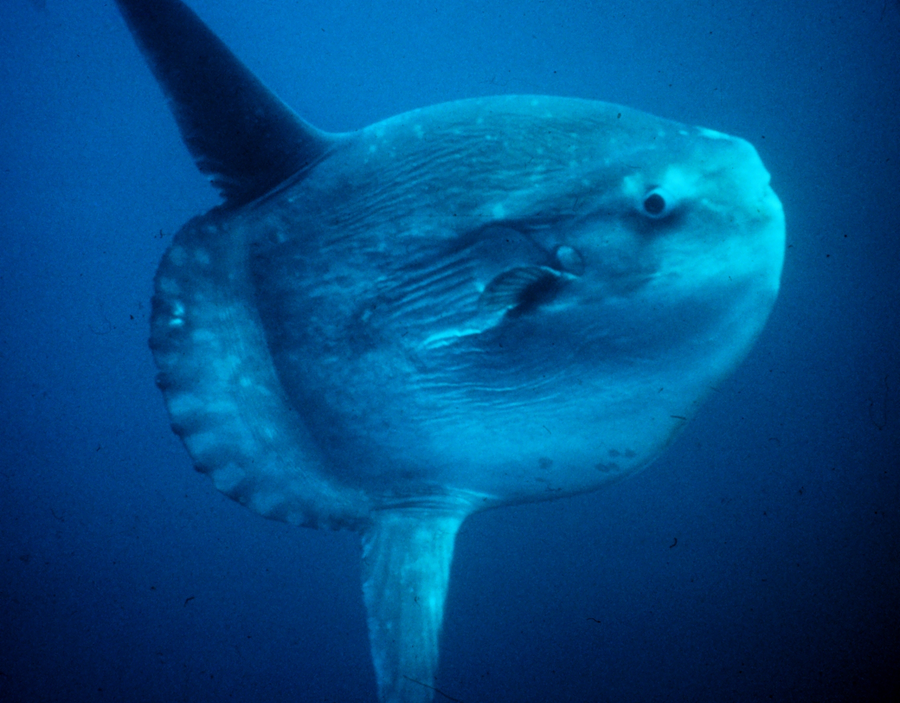
- Ocean Sunfish Same class
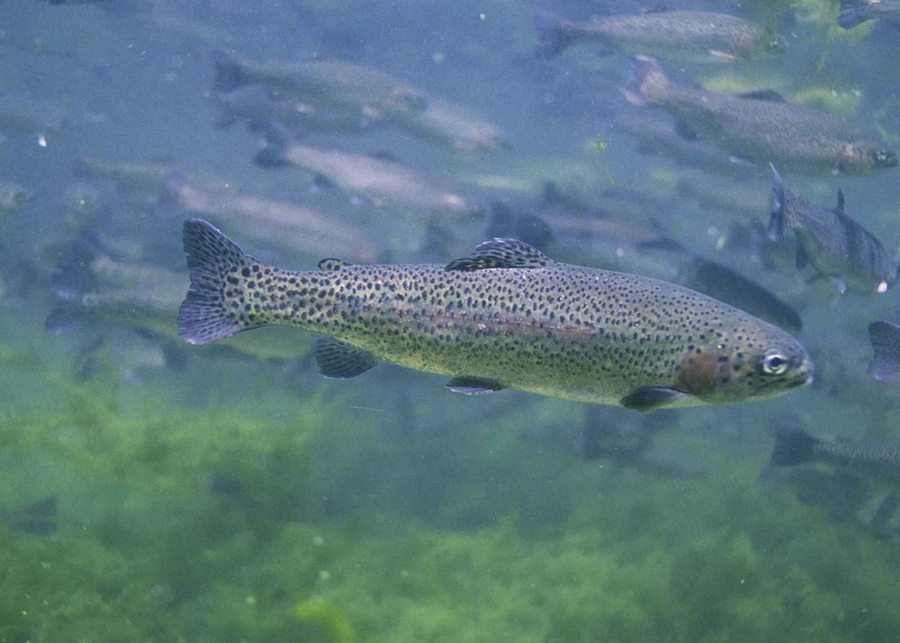
- Rainbow Trout Same class
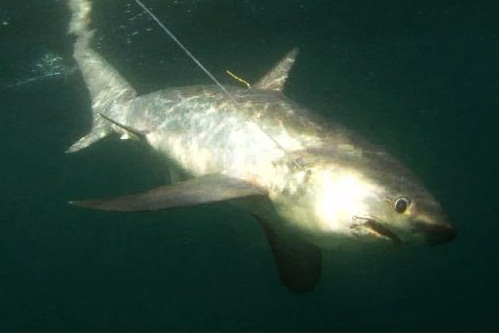
- Thresher Shark Same class
Range & geography
Conservation status of the Lanternfish
The lanternfish (Myctophum punctatum) is listed as Least Concern on the IUCN Red List. Least Concern (LC) is the IUCN's lowest-risk category, assigned to widespread, abundant species that have been evaluated and found not to be threatened. It does not mean a species faces no pressures — only that it is not currently at risk of extinction.
The lanternfish (Myctophum punctatum) is assessed on the IUCN Red List. Look up on the IUCN Red List .
Frequently asked questions about the Lanternfish
Why are they called lanternfish?
Bioluminescent photophores dotted along the body resemble tiny lanterns in the deep sea.
Do lanternfish migrate daily?
Yes — they rise toward the surface at night and sink hundreds of metres by day.
How important are lanternfish to oceans?
They are among the most abundant vertebrates and channel plankton energy to larger predators.
How big is a spotted lanternfish?
About 6–8 cm — small but extraordinarily numerous.
What eats lanternfish?
Tuna, squid, dolphins, and deep-diving seabirds depend on lanternfish migrations.
What is a group of lanternfish called?
A group of Lanternfish is called a shoal.
What is a baby lanternfish called?
A baby Lanternfish is called a larva.
Sources & references
This guide is compiled and reviewed against established zoological and conservation references. Key sources for the Lanternfish:
-
IUCN Red List of Threatened Species
Conservation status (Least Concern) reflects the IUCN Red List category for Myctophum punctatum.
-
iNaturalist — observations & photos
Search citizen-science observations and community IDs for Myctophum punctatum. Useful for range checks and recent sightings — not a substitute for formal Red List status.
-
GBIF — occurrence data
Global Biodiversity Information Facility species search for Myctophum punctatum. Explore published occurrence records used in range research.
-
Global Animal Guide editorial standards
How we research, source, review, and update every guide for accuracy.