Image sourcing: see credits & licences
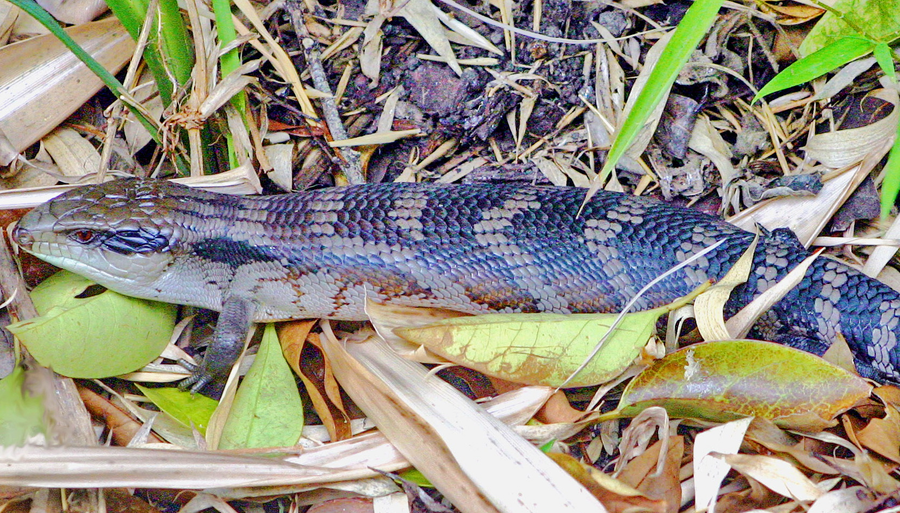
The blue-tongued skink (Tiliqua scincoides) is a reptile of the family Scincidae, in the order Squamata.
Quick answer
The blue-tongued skink (Tiliqua scincoides) is a stocky Australian lizard that flashes a cobalt tongue to startle predators. It is an omnivore of woodland, scrub, and suburban gardens in eastern and northern Australia, weighs about 0.5 kg, bears live young, and is listed Least Concern.
Top questions about the Blue-tongued Skink
Blue-tongued Skink facts at a glance
- Weight 500 g
- Length 45 cm
- Top speed 5 km/h
- Lifespan 20 years
| Scientific name | Tiliqua scincoides |
|---|---|
| Diet | Omnivore |
| Habitat | Woodland, scrub, and suburban gardens |
| Lifespan | Around 20 years in the wild (varies by population and captivity). |
| Weight | About 0.5 kg typical adult mass (sex and region vary). |
| Top speed | Up to roughly 5 km/h when moving at speed. |
| Conservation status | Least Concern (IUCN) |
| Kingdom | Animalia |
|---|---|
| Phylum | Chordata |
| Class | Reptilia |
| Order | Squamata |
| Family | Scincidae |
| Genus | Tiliqua |
Where it lives
The blue-tongued skink (Tiliqua scincoides) is native to Eastern and northern Australia; related species across Australia and New Guinea. — recorded across Oceania in this guide’s range summary.
For occurrence records, see GBIF species search and sources below.
How big is a blue-tongued skink?
An adult blue-tongued skink measures 45 cm long — about 26% of the height of an average adult person (1.73 m) — and weighs around 500 g, about 1% of an average adult’s body weight (70 kg).
Length vs an average adult’s height (to scale)
What is a group of blue-tongued skinks called?
Group name (collective noun)
A group of Blue-tongued Skinks is called a lounge.
Baby name
A baby Blue-tongued Skink is called a neonate.
Explore more animal collective nouns and baby animal names .
Blue tongue bluff
When threatened, the skink puffs its body, hisses, and displays the vivid blue tongue — a sudden colour contrast that may deter predators. Smooth overlapping scales and short legs suit shuffling through leaf litter.
Omnivore of the leaf litter
Diet mixes snails, beetles, caterpillars, flowers, fruits, and fungi. In suburban gardens they often eat pet food left outdoors and garden snails — sometimes welcomed as pest controllers.
Eastern and northern Australia
Woodland, scrub, and suburban gardens across eastern and northern Australia; related Tiliqua species occur elsewhere in Australia and New Guinea.
Garden ally, road risk
Least Concern, but cars, cats, and habitat clearing reduce local numbers. Live-bearing reproduction (neonates rather than eggs) means females invest heavily in few young.
Explore the Blue-tongued Skink
Close relatives
- Black Mamba Same order
- Inland Taipan Same order
- Copperhead Same order
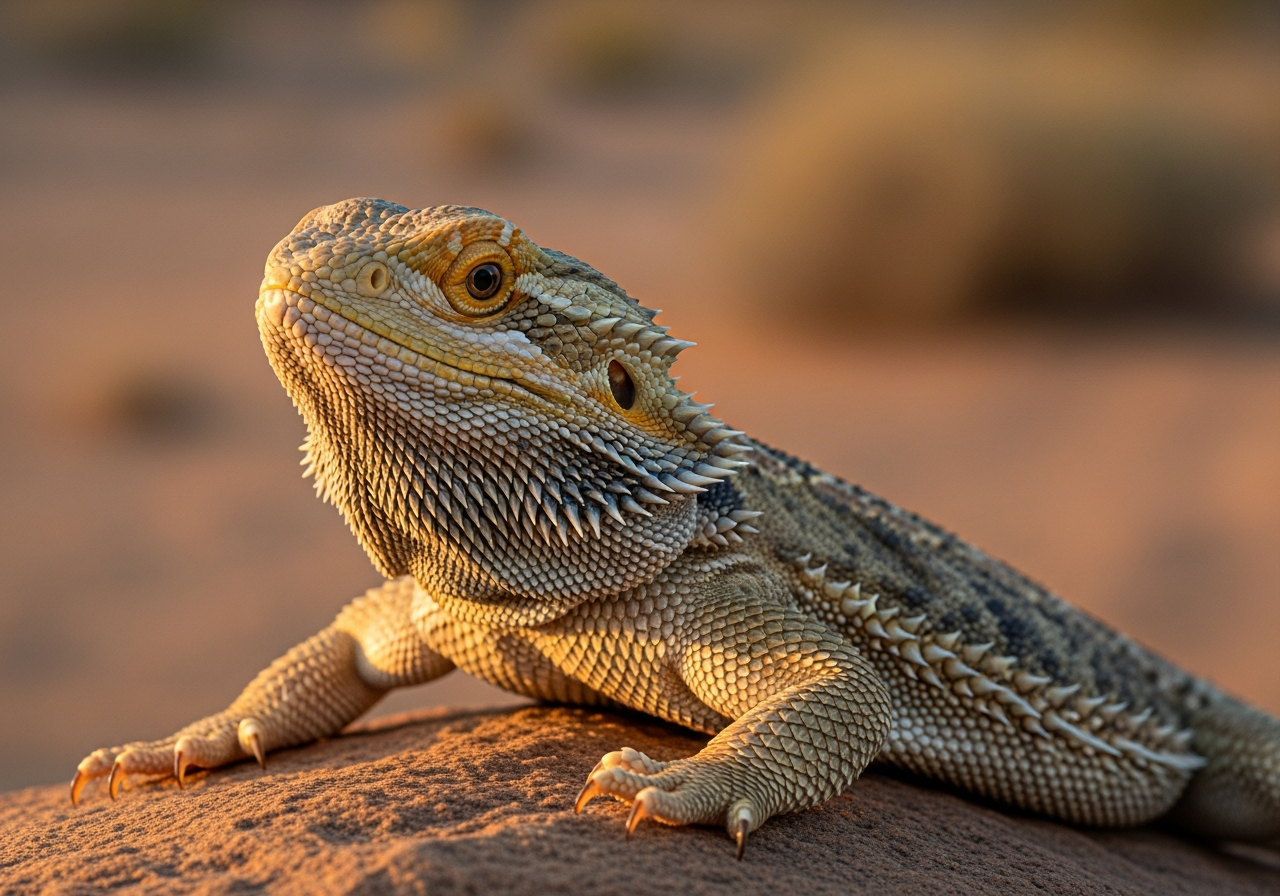
- Bearded Dragon Same order
Range & geography
Conservation status of the Blue-tongued Skink
The blue-tongued skink (Tiliqua scincoides) is listed as Least Concern on the IUCN Red List. Least Concern (LC) is the IUCN's lowest-risk category, assigned to widespread, abundant species that have been evaluated and found not to be threatened. It does not mean a species faces no pressures — only that it is not currently at risk of extinction.
The blue-tongued skink (Tiliqua scincoides) is assessed on the IUCN Red List. Look up on the IUCN Red List .
Frequently asked questions about the Blue-tongued Skink
Why do blue-tongued skinks have blue tongues?
The sudden flash of blue against a pink mouth is thought to startle predators during threat displays.
Do blue-tongued skinks lay eggs?
No — Tiliqua scincoides gives birth to live young.
Are blue-tongued skinks venomous?
No. They may bite if handled roughly, but they are not venomous.
What do blue-tongued skinks eat in gardens?
Snails, insects, soft plant matter, and sometimes leftover pet food — they are true omnivores.
Where do blue-tongued skinks live?
Eastern and northern Australia in woodland, scrub, and suburban gardens.
What is a group of blue-tongued skinks called?
A group of Blue-tongued Skinks is called a lounge.
What is a baby blue-tongued skink called?
A baby Blue-tongued Skink is called a neonate.
Sources & references
This guide is compiled and reviewed against established zoological and conservation references. Key sources for the Blue-tongued Skink:
-
IUCN Red List of Threatened Species
Conservation status (Least Concern) reflects the IUCN Red List category for Tiliqua scincoides.
-
iNaturalist — observations & photos
Search citizen-science observations and community IDs for Tiliqua scincoides. Useful for range checks and recent sightings — not a substitute for formal Red List status.
-
GBIF — occurrence data
Global Biodiversity Information Facility species search for Tiliqua scincoides. Explore published occurrence records used in range research.
-
Global Animal Guide editorial standards
How we research, source, review, and update every guide for accuracy.