Image sourcing: see credits & licences
Quick answer
The Atlantic puffin (Fratercula arctica) is a clown-billed auk of North Atlantic cliffs from Maine and Newfoundland to Iceland, Norway, and the British Isles. It catches small fish such as sand eels, nests in burrows, and is listed Vulnerable as warming seas and food shortages cut breeding success in parts of its range.
Top questions about the Atlantic Puffin
Also available in Español (Frailecillo atlántico)
Atlantic Puffin facts at a glance
- Weight 450 g
- Length 30 cm
- Top speed 80 km/h
- Lifespan 20 years
| Scientific name | Fratercula arctica |
|---|---|
| Diet | Carnivore (small fish) |
| Habitat | Sea cliffs and open ocean |
| Lifespan | Around 20 years in the wild (varies by population and captivity). |
| Weight | About 0.45 kg typical adult mass (sex and region vary). |
| Top speed | Up to roughly 80 km/h when moving at speed. |
| Conservation status | Vulnerable (IUCN) |
| Kingdom | Animalia |
|---|---|
| Phylum | Chordata |
| Class | Aves |
| Order | Charadriiformes |
| Family | Alcidae |
| Genus | Fratercula |
Where it lives
The atlantic puffin (Fratercula arctica) is native to North Atlantic cliffs from Maine and Newfoundland to Iceland, Norway, and the British Isles. — recorded across North America, Europe in this guide’s range summary.
For occurrence records, see GBIF species search and sources below.
How big is a atlantic puffin?
An adult atlantic puffin measures 30 cm long — about 17% of the height of an average adult person (1.73 m) — and weighs around 450 g, about 1% of an average adult’s body weight (70 kg).
Length vs an average adult’s height (to scale)
What is a group of atlantic puffins called?
Group name (collective noun)
A group of Atlantic Puffins is called a circus.
Baby name
A baby Atlantic Puffin is called a puffling.
Explore more animal collective nouns and baby animal names .
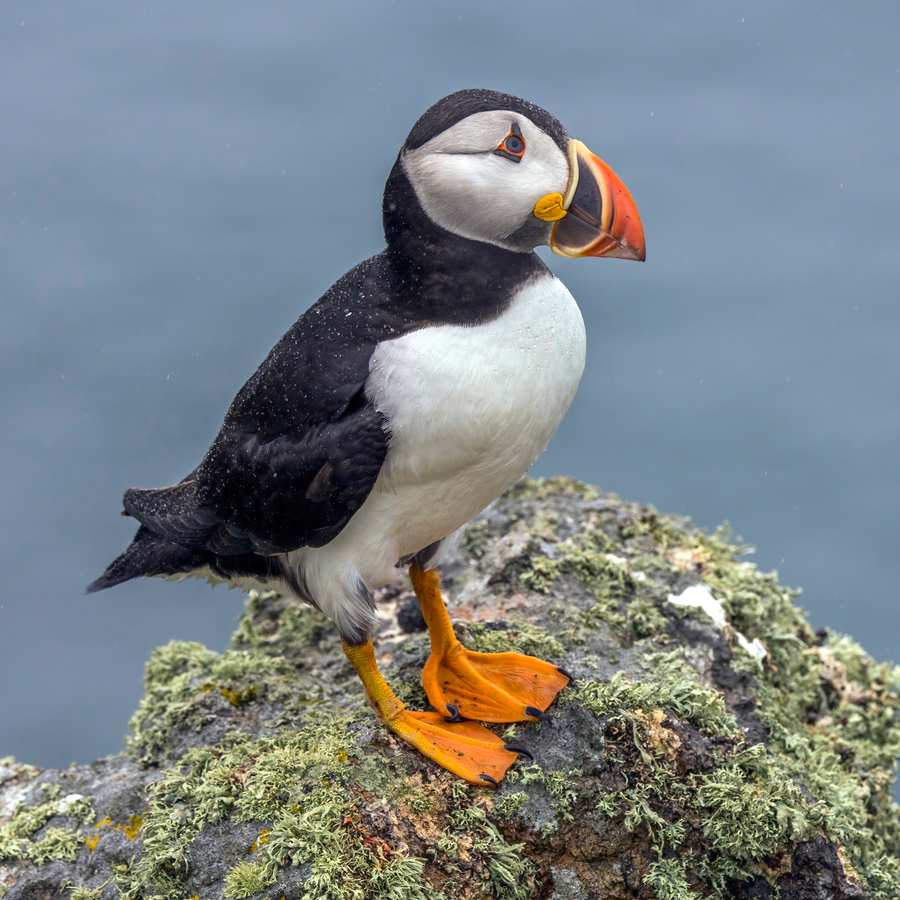
Colourful bill, black-and-white body
Breeding adults sport a triangular multicoloured bill that sheds outer plates after the season. Wings beat rapidly in flight; underwater they "fly" with wings to chase fish. Bright orange feet help with landing on cliffs.
Sand eels and crosswise fish
Parents carry multiple small fish — often sand eels, herring, or capelin — lined crosswise in the bill thanks to spines on the tongue and palate. Chicks (pufflings) are fed in burrows until they fledge alone at night.
North Atlantic cliff colonies
Sea cliffs and offshore islands from Maine and Newfoundland across Iceland, Norway, Faroes, and British Isles. Winters are spent on the open North Atlantic.
Vulnerable to prey collapse
IUCN lists Atlantic puffins Vulnerable. Warming waters can push sand eel and other prey beyond reach of colonies, and introduced rats or cats devastate burrow nests on some islands.
Explore the Atlantic Puffin
Related Birds
Collections
Conservation status of the Atlantic Puffin
The atlantic puffin (Fratercula arctica) is listed as Vulnerable on the IUCN Red List. Vulnerable (VU) means a species faces a high risk of extinction in the medium-term future. It is the lowest-risk of the three 'threatened' IUCN categories — one step below Endangered, which is itself below Critically Endangered — and is often an early warning that a population is in trouble.
Main threats to the atlantic puffin
- Climate-driven shifts in sandeel and prey abundance
- Bycatch in fishing gear
- Oil spills and marine pollution
- Disturbance at breeding colonies
Atlantic Puffin (Fratercula arctica) was most recently assessed for the IUCN Red List in 2018. Look up on the IUCN Red List .
Frequently asked questions about the Atlantic Puffin
How do puffins hold so many fish?
Spines on the tongue and roof of the mouth pin fish while the bird catches more, lining them crosswise in the bill.
What is a baby puffin called?
A young atlantic puffin is called a puffling (Fratercula arctica; diet: Carnivore (small fish)).
Why are Atlantic puffins Vulnerable?
Breeding failures linked to shifting fish prey, plus predation by introduced mammals on some islands, have driven declines in parts of the range.
Can puffins fly and swim?
Yes — they fly with rapid wingbeats and pursue fish underwater using their wings.
Where do Atlantic puffins nest?
In burrows or rock crevices on North Atlantic sea cliffs and islands. Native range summary: North Atlantic cliffs from Maine and Newfoundland to Iceland, Norway, and the British Isles.
What is a group of atlantic puffins called?
A group of Atlantic Puffins is called a circus.
What is a baby atlantic puffin called?
A baby Atlantic Puffin is called a puffling.
Sources & references
This guide is compiled and reviewed against established zoological and conservation references. Key sources for the Atlantic Puffin:
-
IUCN Red List of Threatened Species
Conservation status (Vulnerable) reflects the IUCN Red List category for Fratercula arctica, most recently assessed in 2018.
-
iNaturalist — observations & photos
Search citizen-science observations and community IDs for Fratercula arctica. Useful for range checks and recent sightings — not a substitute for formal Red List status.
-
GBIF — occurrence data
Global Biodiversity Information Facility species search for Fratercula arctica. Explore published occurrence records used in range research.
-
eBird — bird observations
Cornell Lab eBird target search for Atlantic Puffin. Check recent checklists and seasonal abundance where birders report this species.
-
Global Animal Guide editorial standards
How we research, source, review, and update every guide for accuracy.