Chinese
Quick answer
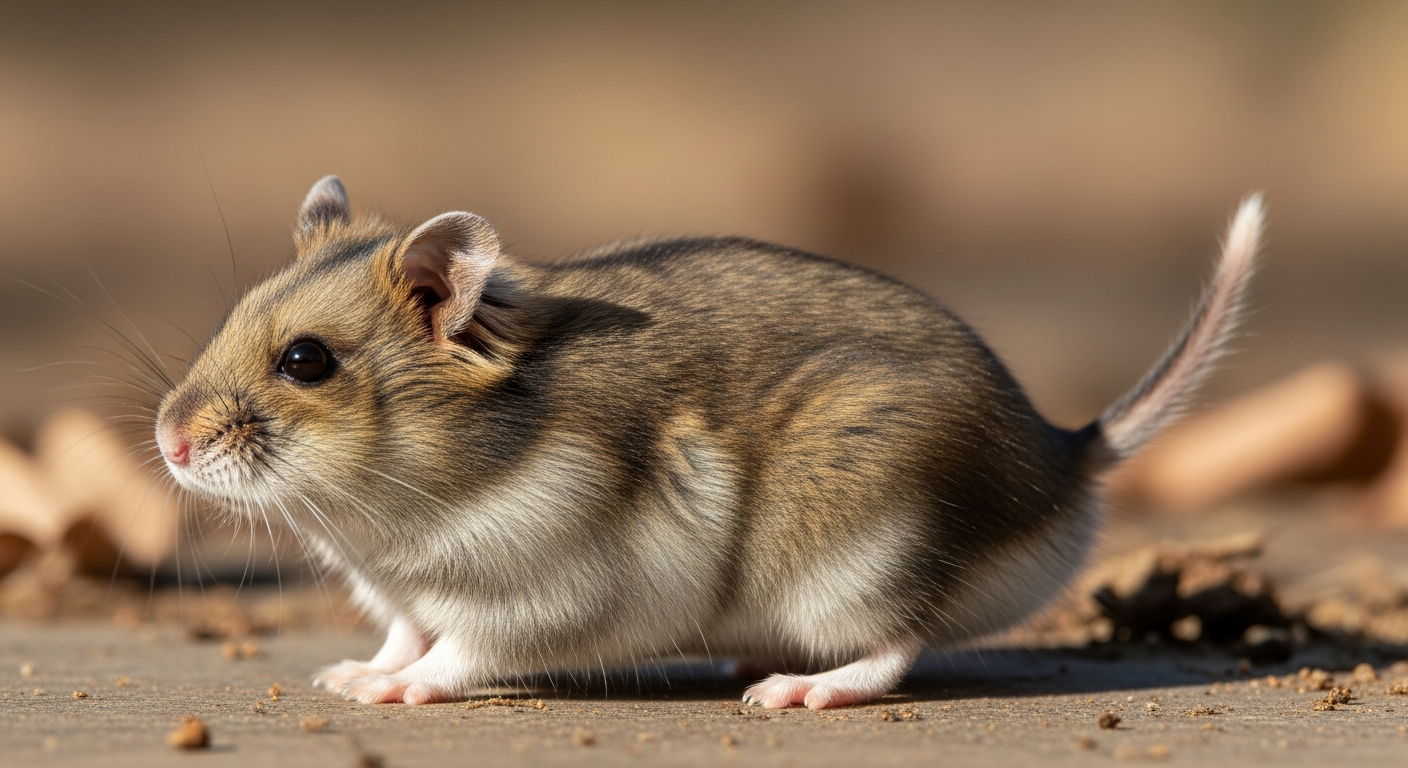
The Chinese hamster is a slim, mouse-like hamster from northern China and Mongolia, notable for its longer body and short gripping tail. Often gentle once tame, it is agile and quick, and like the Russian dwarfs it can be prone to diabetes.
Chinese at a glance
| Origin | Northern China and Mongolia |
|---|---|
| Size | Small (8–12 cm) |
| Weight | 30–45 g |
| Lifespan | 2–3 years |
| Coat | Short fur, usually brown with a dark dorsal stripe; low grooming needs |
| Temperament | Gentle, shy, agile |
| Good with | Calm older children and adults, patient gentle handlers |
History of the Chinese
The Chinese hamster comes from the deserts of northern China and Mongolia and was long used in laboratory research before becoming a pet. Although often grouped with the dwarf hamsters, it is not a true dwarf and has a more elongated, mouse-like shape with a noticeably longer tail. Its calm nature once tamed has made it a favorite among keepers who enjoy a quieter, more delicate hamster.
Interesting facts about the Chinese
- The Chinese hamster has a longer, prehensile-like tail it can use for grip.
- It is not a true dwarf despite often being sold alongside dwarf hamsters.
- Its slim, mouse-like body sets it apart from rounder Syrian hamsters.
- Once tame, many Chinese hamsters are calm and happy to cling to a hand.
Common health issues in the Chinese and how to help
Like all hamster breeds, the Chinese can be more prone to a few specific health conditions. Knowing the early signs helps you act quickly — always consult a qualified vet for diagnosis and treatment.
Diabetes
What it is: Chinese hamsters can be prone to diabetes, which may cause increased drinking and urination, weight changes, and low energy.
How to help: A low-sugar diet without fruit or sweet treats helps lower the risk, and a vet can diagnose diabetes and guide ongoing dietary care.
Overgrown teeth
What it is: Their continuously growing front teeth can overgrow if they wear unevenly, leading to drooling, dropped food, or reluctance to eat.
How to help: Offer safe wood chews to encourage natural wear, and have a vet trim the teeth and check the mouth if overgrowth develops.
Mites and skin problems
What it is: Hamsters can develop skin mites that cause itching, scaly skin, or patchy fur loss, often when stressed or unwell.
How to help: Keep the cage clean and dry, and see a vet for diagnosis and prescribed treatment if scratching or hair loss appears.
This is general information for owners, not veterinary advice. If you are worried about your hamster's health, contact your vet.
Frequently asked questions about the Chinese
Is the Chinese hamster a dwarf hamster?
The Chinese hamster is often sold alongside dwarf hamsters but is not a true dwarf. It has a slimmer, more mouse-like body and a longer tail than the Russian dwarf types.
Are Chinese hamsters good pets?
Yes, Chinese hamsters can make gentle, calm pets once tamed, and many enjoy clinging to a hand. They are agile and quick, so careful handling helps prevent escapes.
Can Chinese hamsters live together?
Chinese hamsters are best kept alone, as adults often become territorial. Some are kept in same-sex pairs from a young age, but owners should watch for fighting and separate them if needed.