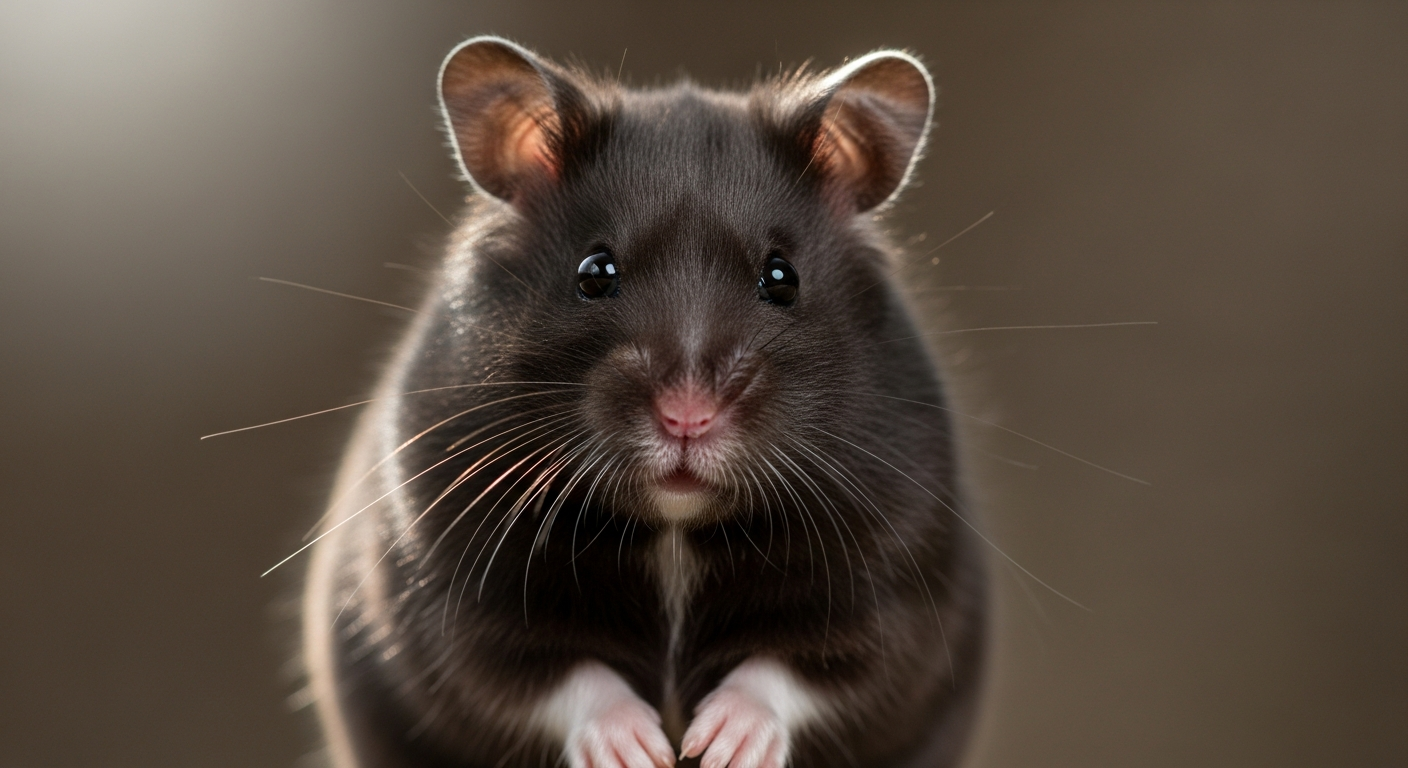
Black Bear (Syrian)
Quick answer
The Black Bear hamster is a solid black color variety of the Syrian hamster, named for its dark, bear-like coat. It shares the Syrian's larger size, gentle temperament, and need to live alone.
Black Bear (Syrian) at a glance
| Origin | Syria (color variety of the Syrian hamster) |
|---|---|
| Size | Large for a hamster (13–18 cm) |
| Weight | 120–200 g |
| Lifespan | 2–3 years |
| Coat | Short dense solid black fur; easy to groom |
| Temperament | Calm, gentle, solitary |
| Good with | Beginners, families with older children, single-pet homes |
History of the Black Bear (Syrian)
The Black Bear hamster is a color variety of the Syrian, developed by breeders selecting for a deep, solid black coat. The melanistic coloring first appeared in Syrian lines and was popularized as a striking pet that resembled a tiny black bear. Like all Syrians, it descends from the small founding group caught in Syria in 1930 and carries the same solitary nature and easygoing temperament.
Interesting facts about the Black Bear (Syrian)
- The Black Bear is simply a solid black coloring of the Syrian hamster.
- Its dark, plush coat gives it a resemblance to a miniature black bear.
- Some have a small white patch on the chest or paws.
- Like every Syrian, it must live alone to avoid serious fighting.
Common health issues in the Black Bear (Syrian) and how to help
Like all hamster breeds, the Black Bear (Syrian) can be more prone to a few specific health conditions. Knowing the early signs helps you act quickly — always consult a qualified vet for diagnosis and treatment.
Wet tail
What it is: As a Syrian, the Black Bear can develop wet tail, a serious bacterial illness causing watery diarrhea, a soiled rear, lethargy, and loss of appetite.
How to help: Because it advances quickly, take the hamster to a vet promptly for diagnosis and prescribed treatment, and keep handling calm and the cage clean to reduce stress.
Overgrown teeth
What it is: Continuously growing front teeth can overgrow if they wear unevenly, causing drooling, dropped food, or difficulty eating.
How to help: Provide safe wood chews to support natural wear, and have a vet trim the teeth and check for underlying causes if overgrowth appears.
Cheek pouch problems
What it is: Syrians can develop impacted or infected cheek pouches when sticky food or bedding becomes lodged, shown by a swelling that does not empty.
How to help: Avoid sharp or sticky foods and fluffy bedding, and have a vet gently examine and clear the pouch if a swelling persists.
This is general information for owners, not veterinary advice. If you are worried about your hamster's health, contact your vet.
Frequently asked questions about the Black Bear (Syrian)
Is the Black Bear hamster a separate breed?
No, the Black Bear hamster is a solid black color variety of the Syrian hamster, not a different species. It has the same size, care needs, and solitary nature as other Syrians.
Are Black Bear hamsters friendly?
Yes, Black Bear hamsters tend to be calm and gentle like other Syrians, and they handle well with patient, regular contact. Their larger size makes them easier to hold than dwarf hamsters.
Can Black Bear hamsters live with others?
No, as Syrians they are solitary and must live alone. Housing two together risks serious fighting, so each one needs its own cage.