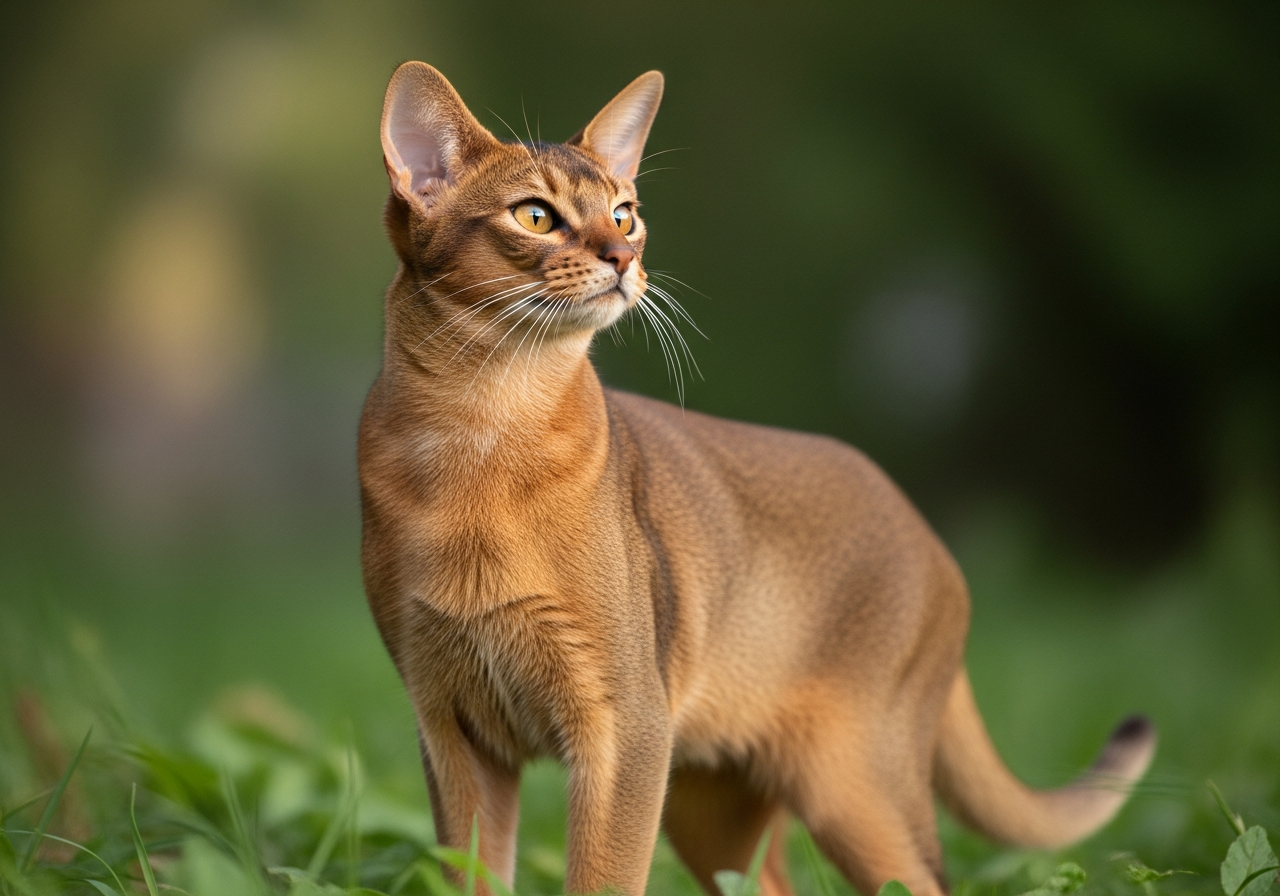
Abyssinian
Quick answer
The Abyssinian is a slender, athletic cat with a distinctive warm, ticked coat. One of the oldest known breeds, it is endlessly curious, agile, and playful, constantly exploring and engaging with its surroundings and people.
Abyssinian at a glance
| Origin | Southeast Asia and Ethiopia |
|---|---|
| Size | Medium (3–5 kg) |
| Weight | 3–5 kg (6–11 lb) |
| Lifespan | 12–15 years |
| Coat | Short, fine, ticked coat; minimal grooming needed |
| Temperament | Active, curious, playful |
| Good with | Active owners, interactive families, multi-pet homes |
History of the Abyssinian
The Abyssinian is one of the oldest recognized cat breeds, though its exact origins are debated. It was named after Abyssinia (modern Ethiopia), where early imported cats were said to come from, but genetic studies suggest roots near the coast of Southeast Asia and the Indian Ocean. The breed was developed and standardized in Britain in the late 1800s, with its agouti ticked coat resembling that of ancient Egyptian cat depictions. It remains a popular, active, intelligent companion worldwide.
Interesting facts about the Abyssinian
- Each Abyssinian hair has multiple bands of color, creating a warm ticked effect.
- The breed resembles cats depicted in ancient Egyptian art.
- Abyssinians are highly active and love climbing to high vantage points.
- They are known for being curious and involved in everything their owners do.
Love cats but can't take one in? You can sponsor a cat welfare programme through World Animal Rescue Network, which helps community cats get food and veterinary care.
Common health issues in the Abyssinian and how to help
Like all cat breeds, the Abyssinian can be more prone to a few specific health conditions. Knowing the early signs helps you act quickly — always consult a qualified vet for diagnosis and treatment.
Progressive retinal atrophy
What it is: This inherited eye condition gradually reduces vision and can lead to blindness over time.
How to help: A vet or eye specialist can diagnose it, and cats adapt well in a stable home; genetic testing of breeding cats helps prevent it.
Dental disease (gingivitis)
What it is: Abyssinians can be prone to gum inflammation and tartar buildup, which may cause bad breath or sore gums.
How to help: Regular tooth brushing and dental checkups help, and a vet can provide professional cleanings when needed.
Patellar luxation
What it is: Some Abyssinians can have kneecaps that slip out of place, causing an occasional skip in their step.
How to help: A vet can assess severity and recommend management ranging from weight control to corrective options in more significant cases.
This is general information for owners, not veterinary advice. If you are worried about your cat's health, contact your vet.
Frequently asked questions about the Abyssinian
Where do Abyssinian cats come from?
Despite being named after Abyssinia (Ethiopia), genetic evidence suggests Abyssinians likely originated near the coast of Southeast Asia and the Indian Ocean. The modern breed was developed and standardized in Britain in the late 1800s.
Are Abyssinian cats good pets?
Yes, for active households. Abyssinians are intelligent, curious, and playful, thriving on interaction and stimulation. They enjoy climbing and exploring and prefer not to be left alone for long.
What does an Abyssinian's coat look like?
Abyssinians have a short, fine coat with 'ticking,' where each hair has bands of color. This gives a warm, glowing, almost wild appearance and requires very little grooming.