Quick guide
- Carrion Crow — all black; alone or in pairs; no bare face patch
- Rook — bare grey face patch; colonial; baggy thigh feathers
- Jackdaw — small; grey nape; pale eye; short 'tchack' call
- Magpie — unmistakable black-and-white with very long tail
- Jay — pinkish-brown with blue wing flash; white rump in flight
- Raven — largest; wedge tail; deep croaking 'kronk'
How to identify a UK crow (corvid)
Tell apart Britain's six corvids — carrion crow, rook, jackdaw, magpie, jay, and raven — using size, the face and bill, plumage, and behaviour.
- 1
Judge the size. Compare the bird to a familiar species. A jackdaw is clearly smaller than a pigeon, a carrion crow is pigeon-sized or larger, and a raven is huge — roughly buzzard-sized with a wedge-shaped tail.
- 2
Check the face and bill. On all-black birds, look at the face: a bare, pale grey patch at the base of the bill means rook, a clean fully feathered black face means carrion crow, and a grey nape with a pale eye means jackdaw.
- 3
Look for colour and tail shape. A long iridescent black-and-white tail is a magpie; a pinkish-brown body with a bright blue wing flash and a white rump in flight is a jay.
- 4
Note the behaviour and call. A flock of large black birds feeding together in a field is almost certainly rooks, while crows are usually alone or in pairs. A deep, hollow 'kronk' confirms a raven.
The corvid family
Carrion Crow
~45–52 cm (similar to pigeon/woodpigeon)Corvus corone
Key marks: All black — bill, legs, plumage; smooth throat; usually alone or in pairs
Call: Harsh, flat 'kraah kraah'
Habitat: Farmland, woodland, parks, coast, suburbs — the most widespread corvid
Social: Solitary or in pairs; never dense flocks
The 'default' large black crow in Britain
Rook
~44–46 cm (similar to Carrion Crow but often appears bulkier)Corvus frugilegus
Key marks: Bare grey-white face patch at base of bill (adults); baggy thigh feathers; peaked crown
Call: Cawing 'kaah' — often multiple birds together
Habitat: Farmland and open countryside near trees; rarely in urban centres
Social: Highly colonial — breeds in rookeries, forages in flocks
If you see many large black crows together in a field, they are almost certainly Rooks
Jackdaw
~30–34 cm — noticeably smaller than crowsCorvus monedula
Key marks: Small and compact; grey nape and side of head; pale grey/white eye; black cap
Call: Short, bright 'tchack' or 'kya' — very distinctive
Habitat: Farmland, cliff faces, old buildings, parks, churchyards
Social: Pairs for life; flocks with Rooks; nests in cavities (chimneys, cliff holes)
Size and the silvery eye clinch the ID; the call is unmistakable
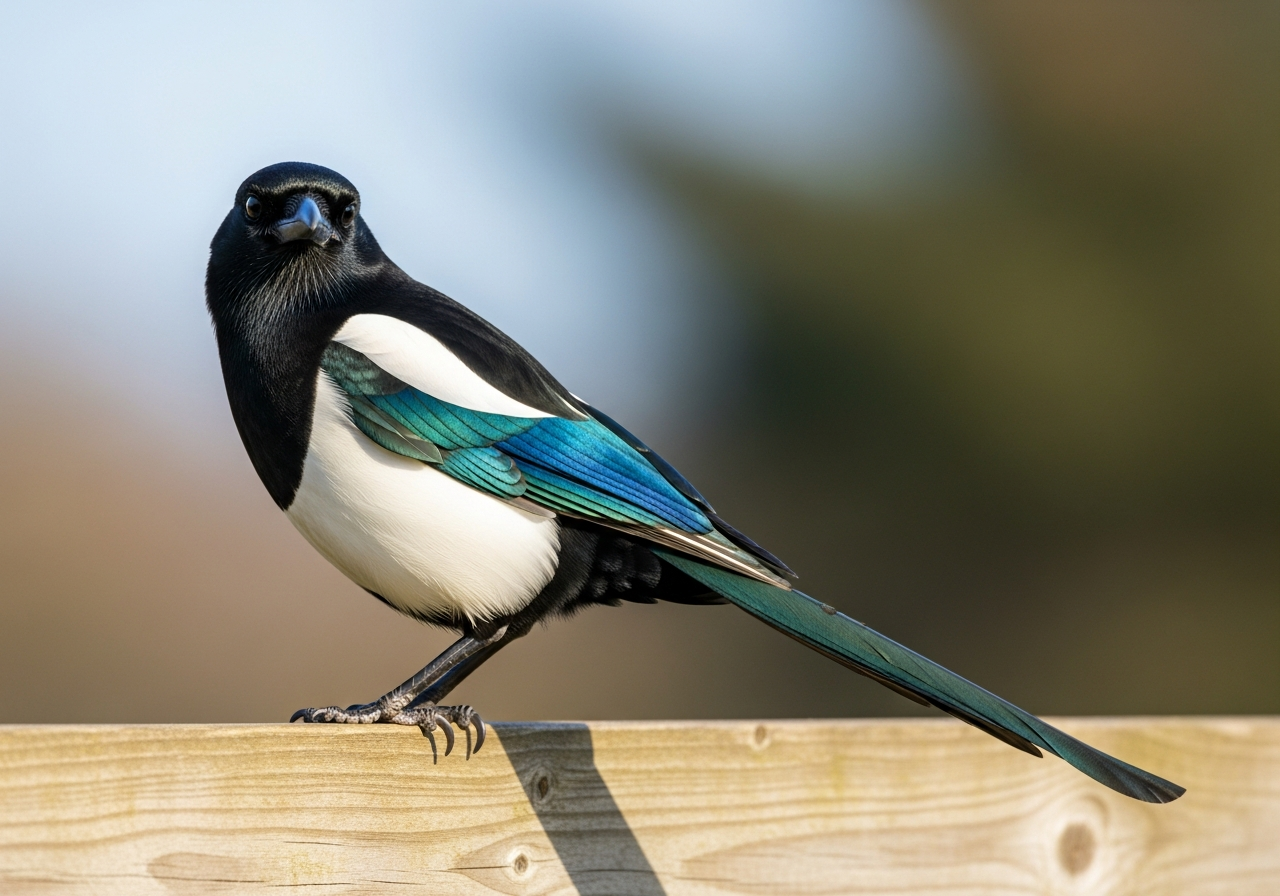
Magpie
~44–46 cm including long tailPica pica
Key marks: Bold black and white; very long graduated tail (iridescent blue-green); rounded wings
Call: Rapid, chattering rattle 'cak-cak-cak-cak'
Habitat: Farmland, hedgerows, suburban gardens, parks — very adaptable
Social: Pairs; loose gatherings in winter
Unmistakable in the UK — no other bird shares its black-and-white-long-tail combination
Jay
~34–35 cmGarrulus glandarius
Key marks: Pinkish-brown body; bright blue wing flash with black bars; white rump visible in flight; black moustache
Call: Harsh screech; also mimics other birds
Habitat: Broadleaved and mixed woodland; parks and large gardens near trees
Social: Usually alone or in pairs
Often heard before seen — the screech call in woodland is usually a Jay. Blue wing flash visible even briefly in flight.
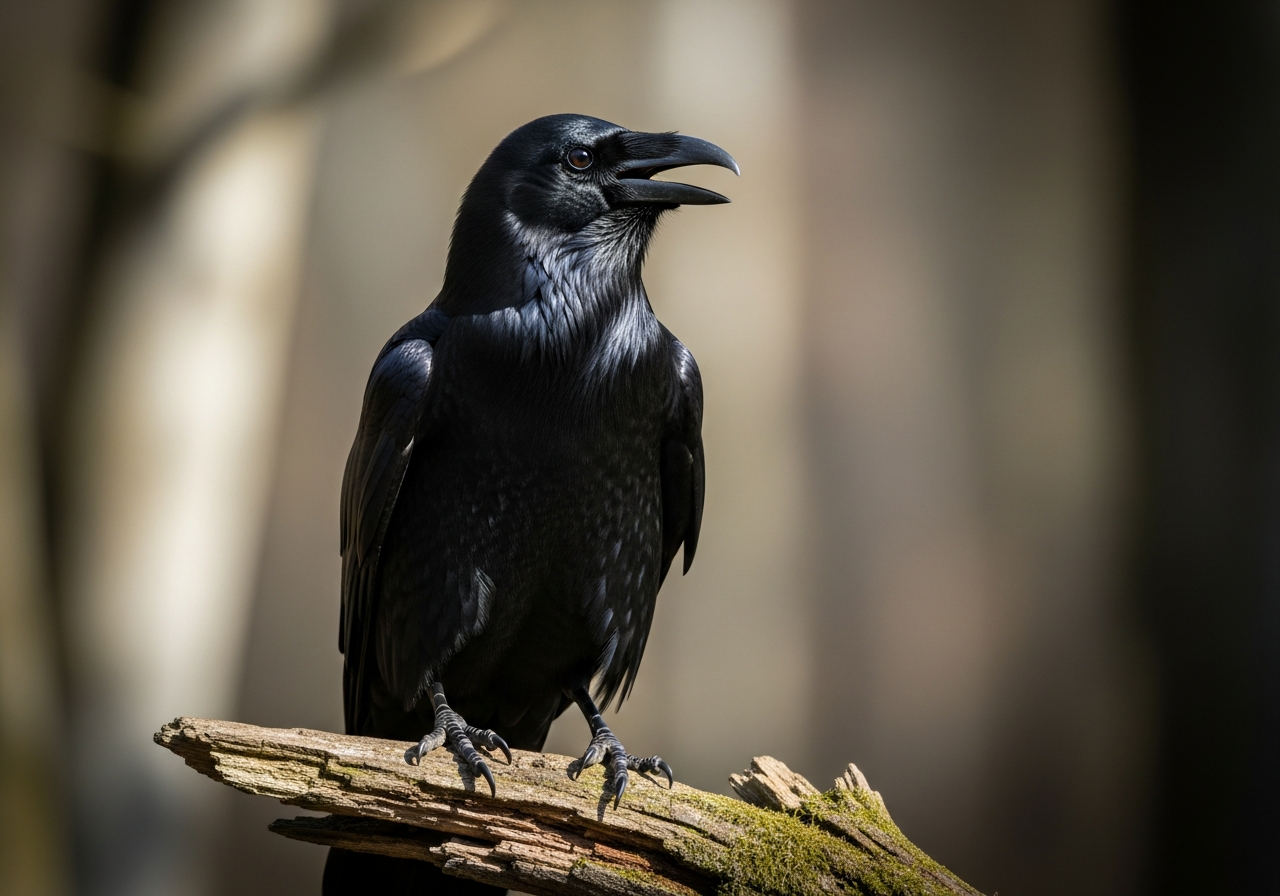
Raven
~54–67 cm — by far the largest corvid, buzzard-sizedCorvus corax
Key marks: All black; wedge-shaped tail in flight; heavy curved bill; shaggy throat feathers
Call: Deep, hollow 'kronk' or resonant croak
Habitat: Mountains, moorland, sea cliffs, remote woodland; spreading in some lowland areas
Social: Pairs; rarely large flocks
See also the Crow vs Raven comparison guide for a detailed breakdown of the raven vs carrion crow
UK crows: FAQs
How do you tell a rook from a carrion crow?
The most reliable mark is the face: adult rooks have a pale, bare, grey-whitish skin patch at the base of the bill, giving them a ghostly or masked look. Carrion crows have all-black faces and bills. Rooks also have a peaked crown, baggy thigh feathers, and are strongly colonial — if you see a dozen large black corvids feeding in a stubble field, they are almost certainly rooks.
What is a murder of crows?
A 'murder' is the collective noun for a group of crows, derived from old folk traditions that associated large crow gatherings with death and ill omen. Crows are not particularly social birds — they usually live in pairs rather than large flocks — so a 'murder' is a romantic but rarely applicable term in British fields, where large black flocks are usually rooks rather than carrion crows.
Are magpies corvids?
Yes. Magpies, jays, jackdaws, rooks, crows, ravens, nutcrackers, and choughs are all members of the family Corvidae — the corvids. They share the family's characteristic intelligence, adaptability, and omnivorous diet. The Eurasian magpie is known for complex social behaviour and, like other corvids, has passed self-recognition tests that few animals outside great apes achieve.
Why do jackdaws have pale eyes?
The pale grey-white or silvery iris of the adult jackdaw is used in social signalling — dominant birds stare directly at subordinates, and the pale eye makes the direction of the stare visible from a distance. Younger jackdaws have darker eyes that lighten as they mature. It is one of the fastest field marks for picking out jackdaws in a mixed corvid flock.
Are crows and ravens different species?
Yes. Carrion crows and ravens are both in the genus Corvus but are separate species (Corvus corone and Corvus corax respectively). Ravens are significantly larger, with a wedge-shaped tail, shaggy throat feathers, and a deep croaking call. For a full breakdown, see the Crow vs Raven comparison guide.
Sources & references
Identification marks and calls are compiled from established field guides and ornithological references for the UK.
-
RSPB wildlife guides
UK and international bird identification.
-
Cornell Lab — All About Birds
Photos, calls, and ID tips for North American species.
-
iNaturalist
Community-verified species observations worldwide.
- Global Animal Guide editorial standards